What Are the Possible Side Effects of Hypromellose?
Hypromellose is generally considered safe and is widely used in vitamins and medicines. Most people can take it without any problems. However, in some cases—especially for sensitive individuals or under special conditions—it may cause a few side effects.
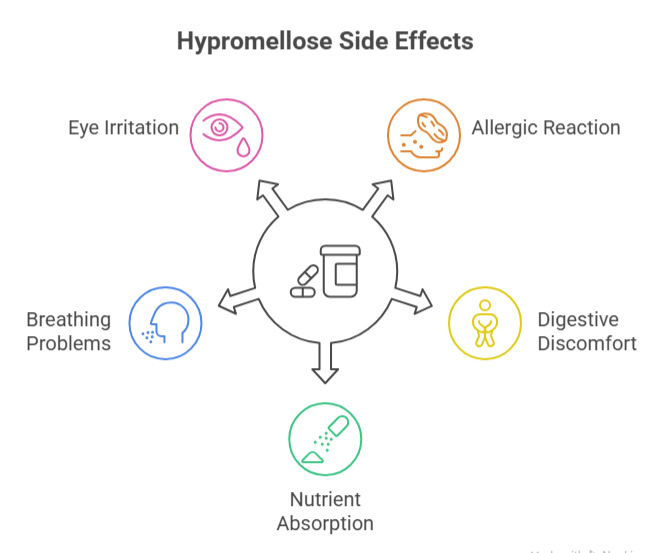
One possible issue is an allergic reaction, although this is very rare. Some people’s immune systems may treat hypromellose as a harmful substance. This can lead to symptoms like skin rash, itching, or swelling. In very serious cases, it may cause breathing difficulty, which needs immediate medical attention.
Another possible side effect is digestive discomfort. Since hypromellose acts a bit like dietary fiber, it can affect how the digestive system works. Some people may feel nausea, stomach pain, bloating, or even have diarrhea. These symptoms are usually mild and temporary, and they are more likely to happen if someone takes a large amount or has a sensitive stomach.
Hypromellose may also affect how the body absorbs nutrients, but this is mostly a theoretical concern. It can form a gel-like substance in the gut, which might slow down the absorption of certain vitamins or minerals. However, in normal use—such as in standard vitamin supplements—this effect is very small and usually not noticeable.
In addition, breathing problems can occur if a person inhales large amounts of hypromellose powder. This is mainly a concern in factories or during manufacturing, not for everyday consumers. It may cause coughing or shortness of breath if inhaled in large quantities.
There is also a chance of eye irritation if hypromellose comes into direct contact with the eyes. This may lead to redness, watering, or discomfort. Again, this is more likely during handling of raw materials rather than from using finished products like capsules.
Overall, these side effects are uncommon and usually mild. For people taking vitamins that contain hypromellose, the risk is very low. Still, it’s a good idea to pay attention to how your body reacts. If you notice any unusual symptoms, stop using the product and consult a doctor—especially if you have allergies or existing health conditions.