

Functional ingredients for texture, stability, process performance, and product consistency.
PRODUCT AT A GLANCE
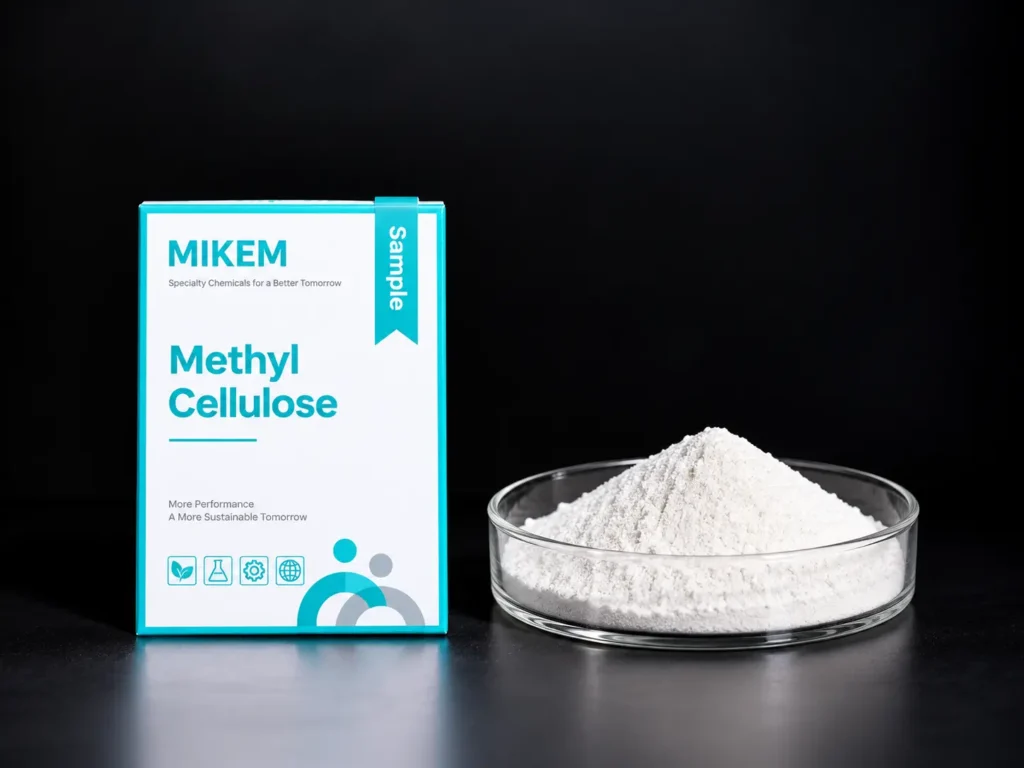
MIKEM Methyl Cellulose Description
MIKEM Methyl Cellulose (MC) is a non-ionic cellulose ether produced from high-purity cellulose. It is widely used in food applications as a functional ingredient to improve texture, stability, water retention, and process performance, helping manufacturers achieve consistent quality in a variety of food products.
Enter your information
Regardless of whether you require general advice or specific support, we are happy to help you.
FUNCTIONAL PERFORMANCE
Functional Properties That Matter in Food Processing
Versatile functionality to meet diverse food formulation and processing needs.
VERSATILE FOOD APPLICATIONS
Applications Across Food Systems
Enhances texture, improves performance, and adds value in a wide variety of food applications.

Bakery Products
Improves texture, moisture retention, and freshness.

Batters & Coatings
Enhances adhesion, crispness, and texture in coated foods.

Plant-Based Foods
Helps bind ingredients, retain moisture, and improve texture.

Sauces & Dressings
Increases stability, viscosity, and texture control.

Frozen & Prepared Foods
Supports structure, moisture retention, and sensory quality.

Desserts & Specialty Foods
Enhances texture, stability, and overall product quality.
YOUR TRUSTED PARTNER
Why Food Manufacturers Choose MIKEM
We combine manufacturing expertise, technical support, and reliable supply to help our customers succeed.

CONSISTENT QUALITY ASSURANCE
Built for Reliable Supply and Consistent Quality
MIKEM is a global supplier of food-grade chemical ingredients. Our Methyl Cellulose (MC) is manufactured in accordance with food safety standards, with a focus on quality, reliability, and regulatory compliance.


COLLABORATIVE INNOVATION
Better Solutions Start With Better Collaboration
We work closely with our customers to understand their formulation and application requirements, and provide tailored solutions with technical expertise and responsive support.

Frequently Asked Questions
Food-grade Methyl Cellulose is commonly used in bakery products, plant-based meat alternatives, sauces, dressings, desserts, and frozen foods. It helps improve texture, control viscosity, retain moisture, and enhance formulation stability. Its functional properties make it particularly useful in products requiring reliable binding and texture control.
Yes. Methyl Cellulose dissolves in cold water to form a viscous solution. For easier preparation, MIKEM MC can first be dispersed in hot water at approximately 80–90°C and then cooled to achieve dissolution. Proper mixing helps prevent lump formation and ensures uniform hydration.
One of the distinctive properties of Methyl Cellulose is its reversible thermal gelation. Unlike many conventional food thickeners, MC can form a gel when heated and return to a solution upon cooling. This characteristic makes it particularly valuable in food formulations requiring heat-activated binding and structural stability.
Methyl Cellulose improves food texture through thickening, binding, emulsification, and moisture retention. It helps maintain product consistency, supports ingredient distribution, and contributes to a smoother mouthfeel. Its film-forming properties can also help create more cohesive food structures.
Yes. Food-grade Methyl Cellulose is widely used as a functional binder in plant-based burgers, sausages, and other meat alternatives. Its heat-induced gelation helps ingredients hold together during cooking, improving structural integrity and supporting a firm, meat-like texture.
As a non-ionic cellulose ether, Methyl Cellulose generally offers good compatibility with many food formulation ingredients, including certain emulsifiers and stabilizers. However, compatibility and performance depend on formulation conditions, ingredient concentrations, temperature, and processing methods. Laboratory testing is recommended before commercial production.
Methyl Cellulose is recognized as food additive E461 and is used in food applications in markets where it is authorized. Its permitted applications and usage conditions depend on local food regulations. Manufacturers should select an appropriate food-grade product and verify compliance with the regulations of their target markets.
The recommended dosage depends on the food application, desired viscosity, texture, processing temperature, and other ingredients. Different formulations may require different concentrations to achieve optimal performance. MIKEM recommends conducting formulation trials to determine the appropriate dosage for each application.
GET IN TOUCH
Build a More Reliable Chemical Supply Chain
Tell us what you’re looking for. Our team will get back to you as soon as possible.