
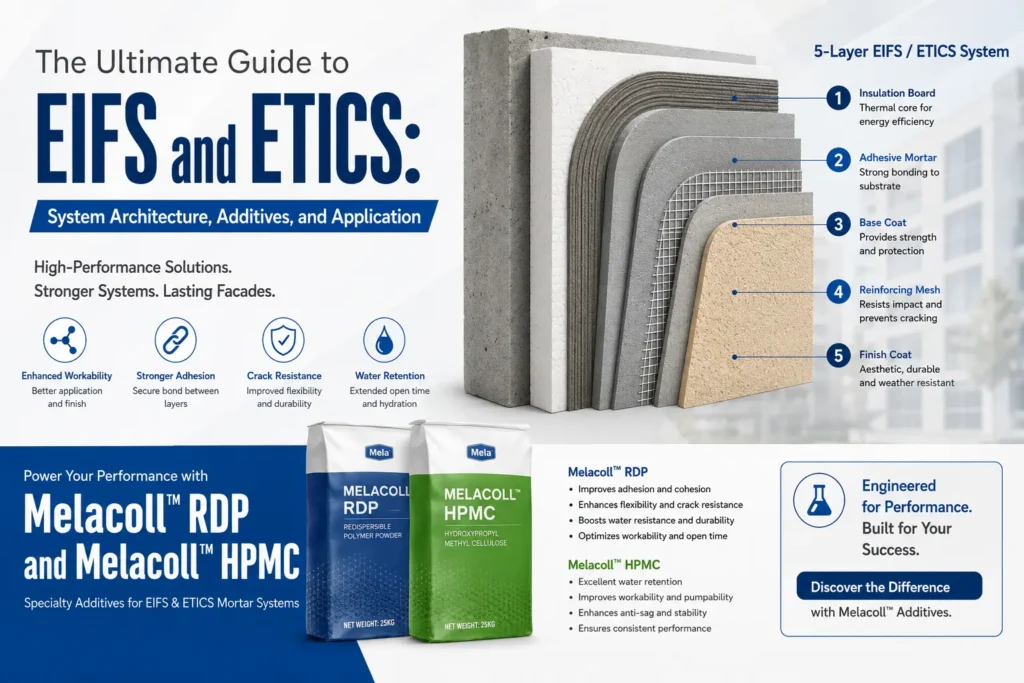
If you are involved in modern construction or building materials, you have likely encountered the terms EIFS (Exterior Insulation and Finishing System) or ETICS (External Thermal Insulation Composite Systems). While EIFS is the standard terminology in North America—focusing heavily on aesthetic integration—ETICS is the preferred term in Europe, where continuous thermal insulation and mechanical fastening are prioritized.
Despite the regional naming differences, the core objective remains identical: to provide buildings with a high-performance, energy-efficient “thermal jacket.” This comprehensive guide breaks down the architecture of EIFS/ETICS, the critical differences between system types, and the underlying chemical additives that dictate their lifespan and durability.
Why is EIFS Revolutionizing Building Efficiency?
Traditional interior insulation often fails to address energy leakage at structural joints. EIFS solves this by placing the insulation layer on the exterior of the building. This architectural shift offers profound advantages:
- Elimination of Thermal Bridges: By continuously wrapping the building’s exterior, EIFS prevents heat transfer through columns and beams, drastically reducing heating and cooling costs.
- Structural Protection: The system shields the underlying structural walls from extreme temperature fluctuations, preventing thermal expansion and contraction that lead to structural cracking.
- Space Optimization: Exterior application means zero loss of valuable interior floor space.
- Moisture Management: Advanced EIFS formulations provide excellent waterproofing while remaining vapor-permeable, preventing interior condensation.
The 5-Layer Architecture of an EIFS System
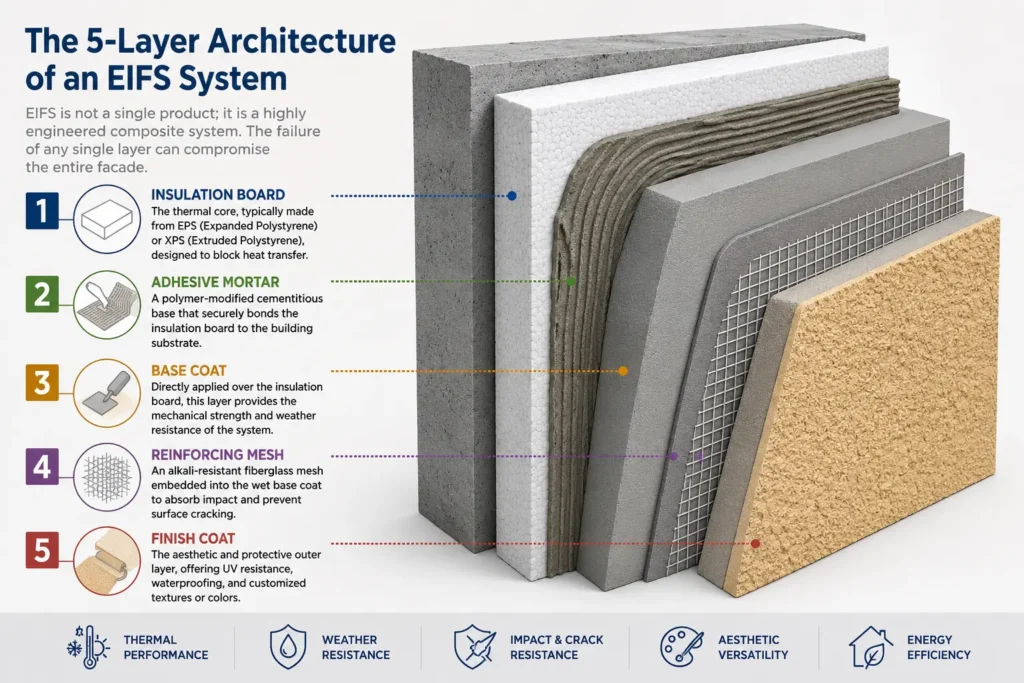
EIFS is not a single product; it is a highly engineered composite system. The failure of any single layer can compromise the entire facade.
- Insulation Board: The thermal core, typically made from EPS (Expanded Polystyrene) or XPS (Extruded Polystyrene), designed to block heat transfer.
- Adhesive Mortar: A polymer-modified cementitious base that securely bonds the insulation board to the building substrate.
- Base Coat: Directly applied over the insulation board, this layer provides the mechanical strength and weather resistance of the system.
- Reinforcing Mesh: An alkali-resistant fiberglass mesh embedded into the wet base coat to absorb impact and prevent surface cracking.
- Finish Coat: The aesthetic and protective outer layer, offering UV resistance, waterproofing, and customized textures or colors.
Classifying EIFS: PB vs. PM Systems
Understanding the binder system used in the bonding and base coats is crucial for selecting the right solution for your project. EIFS is generally divided into two categories:
| Feature | PB EIFS (Polymer-Based) | PM EIFS (Polymer-Modified) |
| Binder Chemistry | 100% Acrylic polymer based. | Cement-based, modified with dry polymer powders (RDP). |
| Flexibility | Highly flexible and tough. | High mechanical strength and rigidity. |
| Impact Resistance | Standard impact resistance. | Extremely high impact and puncture resistance. |
| Thickness | Very thin application. | Thicker, more robust plaster layer. |
| Best Application | Standard residential and commercial facades. | High-traffic areas, ground floors, and high-rise buildings requiring fire resistance. |
Industry Insight: While PB systems are common for standard applications, PM (Polymer-Modified) systems are the absolute standard for demanding environments. The superior mechanical performance of PM EIFS relies entirely on the precise formulation of chemical additives.
The Chemistry Behind EIFS Durability: HPMC and RDP
The secret to a flawless ETICS/EIFS installation lies not just in the insulation board, but in the dry mix mortar additives. The formulation directly impacts workability, bond strength, and long-term weather resistance.
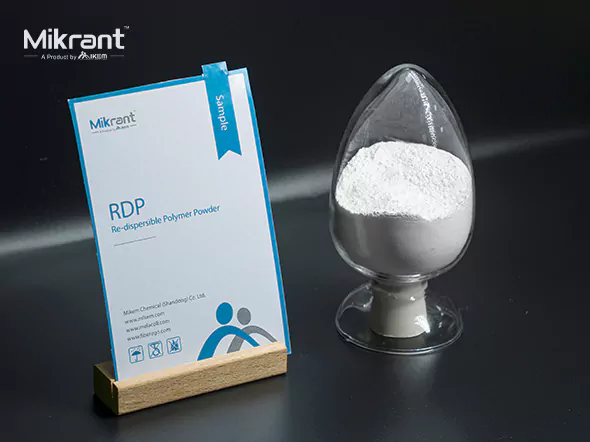
RDP (Redispersible Polymer Powder): The Anchor of the System
In a Polymer-Modified (PM) system, RDP is non-negotiable. When the mortar is mixed with water, the RDP particles disperse and form a continuous, flexible polymer film within the cement matrix.
- Superior Bond Strength: High-quality RDP ensures the adhesive mortar achieves a tensile adhesion strength of >1.0 MPa, easily bonding to difficult substrates like EPS/XPS boards or old concrete.
- Flexibility & Deformation Resistance: The polymer film bridges the micro-gaps in the rigid cement, granting the mortar the flexibility needed to withstand wind loads and thermal expansion without cracking.
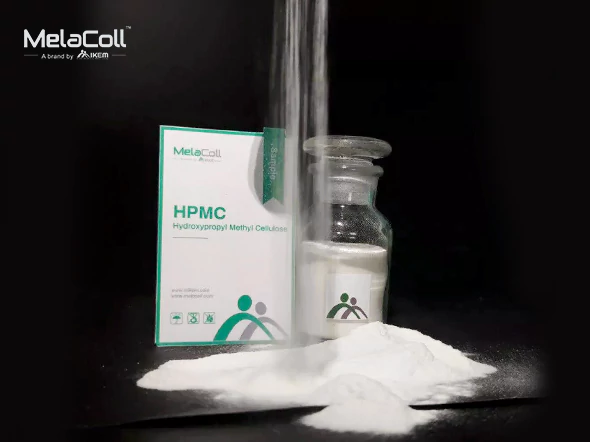
HPMC (Cellulose Ether): The Moisture Guardian
The base coat and adhesive mortar in EIFS are applied in very thin layers. Without proper water retention, the cement will lose moisture to the dry air or the porous insulation board before it can fully hydrate.
- High Water Retention: Premium HPMC can achieve water retention rates exceeding 95%. This guarantees sufficient hydration for the cement, preventing dusting, shrinking, and premature curing.
- Workability: HPMC acts as a rheology modifier, providing excellent slip resistance and making the mortar smooth, non-sticky, and easy for workers to trowel.
Supporting Additives: Starch Ethers & Fibers
- Starch Ethers: Work synergistically with HPMC to increase yield stress, preventing heavy insulation boards from slipping down the wall during initial application.
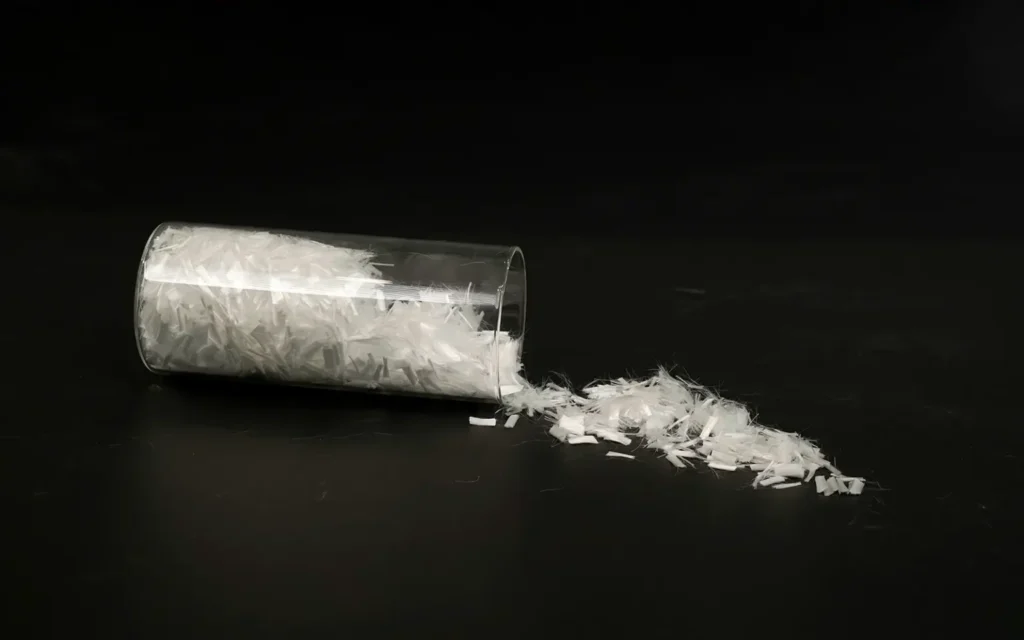
- Polypropylene (PP) Fibers: Distributed in a 3D matrix within the mortar to absorb internal stress, significantly reducing plastic shrinkage and micro-cracking during the drying phase.
Standardized EIFS Installation Process
Even with premium materials, improper installation will lead to system failure. Adhere strictly to these foundational steps:
- Substrate Preparation: Ensure the structural wall is clean, dry, and perfectly flat. Install starter tracks and expansion joints.
- Board Application: Apply the polymer-modified adhesive mortar using the “ribbon and dab” method or full-surface troweling. Press the boards firmly from bottom to top, staggering the joints.
- Mechanical Fastening: After the adhesive cures (typically 24 hours), install specialized mechanical anchors to secure the boards against wind suction.
- Base Coat and Mesh Integration: Trowel a thin layer of the modified base coat, embed the fiberglass mesh smoothly without wrinkles, and apply a second coat to cover the mesh entirely.
- Priming and Finishing: After a minimum 7-day curing period, apply a high-quality primer followed by the final textured or smooth finish coat.
Case Study: Achieving 100% EPS Cohesive Failure with Melacoll™
To understand how critical additive selection is, let’s look at a recent laboratory testing phase conducted by a prominent dry-mix mortar manufacturer based in Eastern Europe.
The Challenge:
The client was facing severe delamination issues during their EIFS/ETICS field tests. Their existing adhesive mortar was failing the standard pull-off tests on EPS (Expanded Polystyrene) boards after a 28-day curing period, especially under freeze-thaw cycling. The failure was occurring at the adhesive interface, meaning the mortar itself was peeling off the board.
The Mikem Solution:
Our technical team analyzed their formulation and recommended a customized blend of Melacoll™ RDP and Melacoll™ HPMC to replace their generic additives.
- Melacoll™ RDP was introduced to significantly enhance the flexibility and tensile adhesion strength.
- Melacoll™ HPMC was calibrated to ensure a >95% water retention rate, giving the cement ample time to hydrate fully without drying out on the porous EPS surface.
The Laboratory Results:
After a 28-day standard curing period and subsequent freeze-thaw conditioning, the new mortar formulation underwent the EN standard pull-off test. The results were definitive:
| Test Metric | Client’s Previous Formula | Melacoll™ Optimized Formula |
| Tensile Adhesion on Concrete | 0.65 MPa | > 1.2 MPa |
| Tensile Adhesion on EPS | < 0.08 MPa (Adhesive Failure) | > 0.15 MPa (100% EPS Failure) |
| Water Retention Rate | 88% | 96.50% |
| Workability / Open Time | 15 Minutes | Extended to 30 Minutes |
What does “100% EPS Failure” mean?
In a successful pull-off test, the bond of the mortar should be stronger than the EPS board itself. When the machine pulled the sample, the EPS board tore apart while the Melacoll™ adhesive remained flawlessly bonded to the wall. This is the ultimate proof of a secure ETICS system.
Elevate Your EIFS Formulations with Melacoll™
The long-term success of an Exterior Insulation and Finishing System is dictated by the microscopic interactions of its chemical components. Choosing inferior additives leads to delamination, water ingress, and catastrophic system failure.
As a leading cellulose ether and redispersible polymer powder manufacturer, Mikem provides engineered chemical solutions designed specifically for demanding ETICS/EIFS applications. By integrating Melacoll™ HPMC and Melacoll™ RDP into your dry mix mortar formulations, you ensure unmatched adhesion, optimal workability, and long-lasting crack resistance.
Why Choose Mikem for Your EIFS Projects?
- Targeted EIFS Solutions: Our Melacoll™ series is explicitly formulated to enhance the bonding strength of both PB and PM systems, securing EPS/XPS boards flawlessly.
- Superior Climate Adaptability: Melacoll™ HPMC retains maximum moisture even under extreme temperatures, ensuring your base coat and adhesive mortar never dry out prematurely.
- Consistent Quality: We deliver stable, high-purity chemical additives that give your construction materials a competitive edge in any market.
Prioritize chemical stability with Mikem, and your exterior wall systems will stand the test of time and weather.
Ready to upgrade your mortar formulations? Reach out to the Mikem technical team today for expert guidance, product data sheets, or to request a sample of our Melacoll™ EIFS additives. Our specialists are available to help you optimize your formulas for peak performance.
