Exterior insulation systems improve a building’s thermal performance by placing insulation on the outside of the wall assembly. In North America, these systems are commonly called EIFS (Exterior Insulation and Finish Systems); in Europe, ETICS means External Thermal Insulation Composite System. The terms describe related approaches, but system designs, approvals, and installation requirements vary by country and by system manufacturer.
An EIFS or ETICS is a coordinated assembly, not a single coating or mortar. This guide outlines common system components, the role of dry-mix additives, and application considerations. Project specifications and the approved system documentation should always govern material selection and installation.
How Exterior Insulation Systems Support Building Performance
Continuous exterior insulation can reduce heat transfer through parts of the wall and help limit thermal bridging when properly designed and installed. It can also protect the underlying wall from some temperature and weather exposure. Actual energy savings, moisture behavior, and durability depend on climate, substrate, detailing, workmanship, and the complete wall assembly.
EIFS/ETICS are not automatically waterproof or vapor-permeable in every configuration. Water management, drainage provisions, flashing, joints, and compatibility with the substrate must follow the project design and system guidance.
Common EIFS and ETICS Components
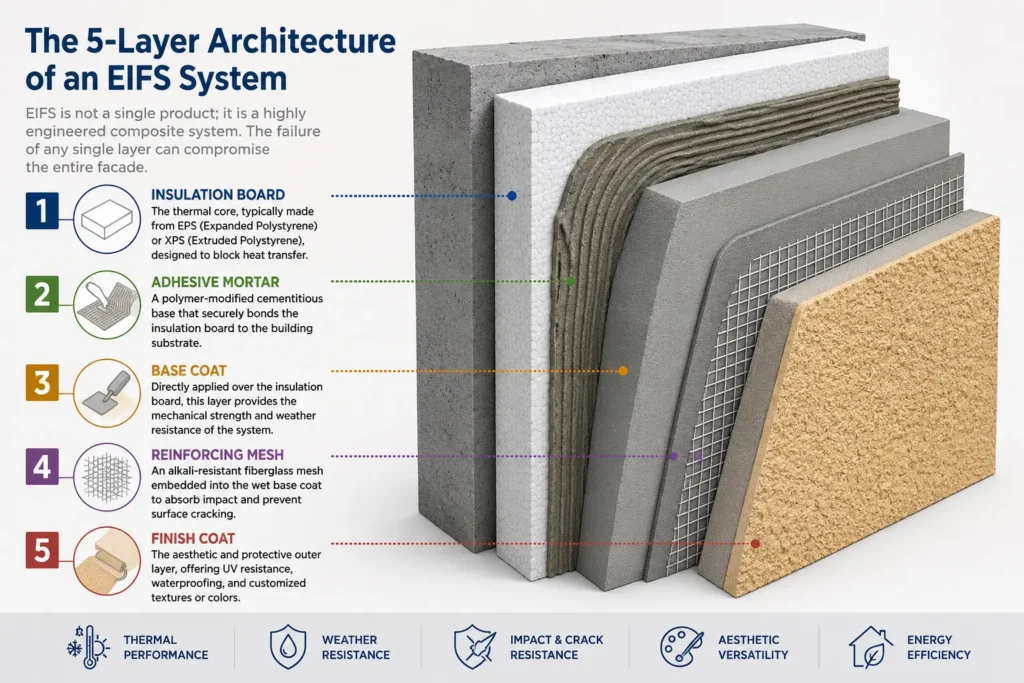
Component arrangements vary, but rendered systems commonly include:
- Substrate and adhesive: The substrate is prepared for the selected bonding method. Adhesive may be used to attach insulation boards.
- Thermal insulation board: Common materials include expanded polystyrene and mineral wool; other materials may be used in approved system designs.
- Mechanical fixings: Anchors or other fixings may supplement or form part of the attachment method, depending on the system and project requirements.
- Reinforced base coat: A coating over the insulation that embeds reinforcing mesh and forms part of the exterior render layer.
- Reinforcing mesh: Typically glass-fiber mesh selected for the system, embedded in the base coat to reinforce the render.
- Primer and finish coat: Where specified, these provide the final surface appearance and contribute to weather protection.
- Accessories: Profiles, corner beads, flashings, and joint components help complete openings, edges, and transitions.
The European Association for ETICS lists adhesive, insulation board, mechanical fixings, reinforced base coat, finish layer, and accessories among typical system components. Specific kits and local requirements may differ.
PB and PM EIFS: Check the System Specification
PB (polymer-based) and PM (polymer-modified) are terms used to distinguish EIFS approaches in some markets. They broadly refer to differences in the binder and coating construction, but the terminology and product details are not universal. Neither label alone establishes impact resistance, fire performance, flexibility, thickness, or suitability for a particular building. Compare complete system documentation, tested performance, local code requirements, and installation instructions.
The Role of Dry-Mix Additives in EIFS and ETICS
In cement-based adhesives and base coats, additives can influence workability, water retention, adhesion, sag resistance, and curing behavior. Their effect depends on the formulation and should be evaluated in the complete mortar system.
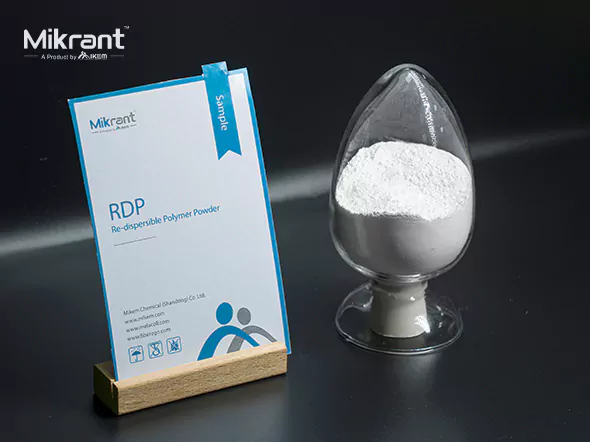
Redispersible Polymer Powder (RDP)
RDP redisperses in water during mixing. As the mortar dries, the polymer can contribute to adhesion and flexibility in the hardened material. The level of performance depends on the selected grade, dosage, cement and filler composition, substrate, and curing conditions. A single tensile adhesion value is not a universal guarantee for EIFS/ETICS applications.
See Mikem’s redispersible polymer powder information.
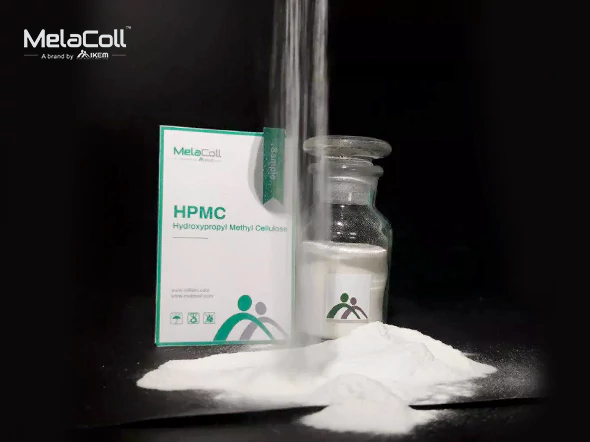
Hydroxypropyl Methylcellulose (HPMC)
HPMC is a cellulose ether used in selected cement-based dry-mix mortars to modify water retention and rheology. Depending on the grade and formulation, it can support workable application and help manage water loss while the cementitious material hydrates. Water-retention results and open time depend on the test method and complete mortar recipe; values such as a fixed percentage should not be treated as universal performance guarantees.
See Mikem’s construction-grade HPMC information.
Starch Ethers and Fibers
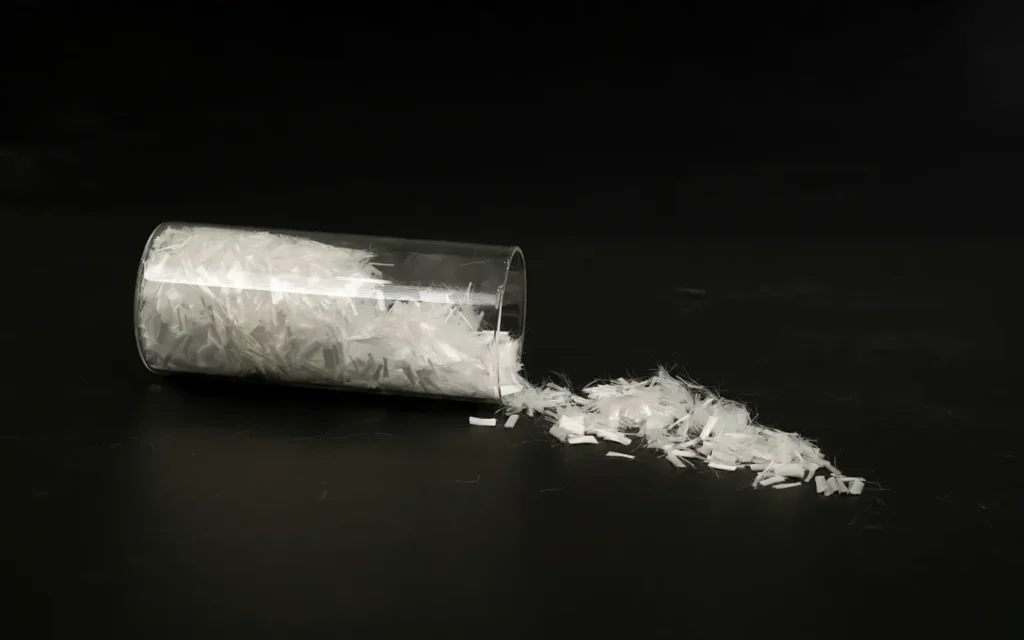
Starch ether may be used in some mortar formulations to adjust consistency and application behavior. Polypropylene fibers may be included in selected mixes to help control plastic-shrinkage cracking. Neither additive replaces correct system design, substrate preparation, reinforcement, movement joints, or curing practices. Results vary with dosage and formulation.
Installation: Follow the Approved System Details
Installation sequences and waiting periods differ among systems and site conditions. A typical project may involve these steps, subject to the manufacturer’s instructions and applicable local requirements:
- Prepare the substrate: Verify that it meets requirements for strength, cleanliness, moisture, and flatness. Complete required profiles and detailing.
- Attach insulation boards: Use the specified adhesive pattern and/or mechanical fixings. Board layout, joint staggering, and fastening depend on the system design.
- Apply the reinforced base coat: Embed the specified mesh in the base coat, with required overlaps and detailing at openings and corners.
- Allow the system to condition: Respect product-specific curing and weather limitations before applying subsequent layers.
- Apply primer and finish, if specified: Use compatible products and follow the approved sequence and environmental limits.
Do not assume that adhesive cure takes a fixed 24 hours or that every system requires a seven-day wait before finishing. Temperature, humidity, substrate, material, and system instructions affect timing.
Testing and Performance Claims
Adhesion, water resistance, freeze-thaw behavior, impact resistance, and other properties are assessed using defined methods and system-specific criteria. Results should identify the tested assembly, substrate, conditioning, method, and acceptance requirements. A cohesive failure within an insulation board may indicate that the tested bond exceeded the strength of that board under those conditions; by itself, it does not prove suitability for every project.
Comparative values and case-study results should be published only with traceable test documentation and context. A single water-retention, adhesion, or open-time result should not be presented as a universal EIFS/ETICS specification.
Working with Mikem on Mortar Formulations
Mikem is a specialty chemical manufacturer offering additives used in construction formulations, including cellulose ethers and redispersible polymer powders. Grade selection should be based on the target mortar properties, local materials, production process, and applicable system requirements. Request current product data and evaluate candidate grades in your own formulation trials.
Planning an EIFS or ETICS mortar formulation? Contact Mikem to discuss your requirements and request current technical information or check sample availability.