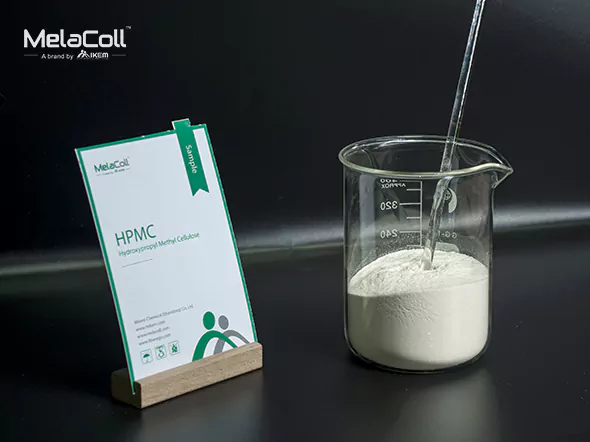
As consumers pay closer attention to health, sustainability and dietary preferences such as vegetarian or vegan lifestyles, pharmaceutical and dietary supplement manufacturers are evaluating alternatives to traditional gelatin capsules. One widely used option is Hydroxypropyl Methylcellulose (HPMC), a cellulose-derived material used in capsule shells and other pharmaceutical applications.
MIKEM manufactures and supplies pharmaceutical-grade HPMC. This article reviews the main characteristics of HPMC capsules, how they compare with gelatin capsules, and the considerations manufacturers should check when selecting a shell and raw material.
What Are HPMC Capsules?
HPMC stands for Hydroxypropyl Methylcellulose, also called hypromellose. It is a cellulose derivative made by chemically modifying cellulose. Depending on the manufacturer, the cellulose feedstock may come from sources such as wood pulp or cotton linters.
HPMC capsule shells are not made from animal-derived gelatin, which can make them suitable for vegetarian and vegan product positioning when the full capsule formulation and manufacturing process meet the relevant requirements. Halal and Kosher status should be confirmed from current product-specific certificates; it should not be assumed from the use of HPMC alone.
The Core Benefits and Considerations of HPMC Capsules
HPMC capsules offer useful properties for certain pharmaceutical and supplement applications. Their suitability still depends on the capsule design, fill material, packaging, storage conditions and finished-product requirements.
- Moisture behavior: HPMC hard capsules typically have a lower moisture content than hard gelatin capsules, although the actual value varies by product and storage conditions. This can be useful when evaluating moisture-sensitive fills, but the complete formulation and packaging must be tested for stability.
- Dissolution and disintegration: HPMC capsules can meet the performance needs of many products, but dissolution is not identical for every shell. Polymer grade, gelling agents, fill composition, storage and test medium can affect performance. Shell disintegration also does not by itself determine how quickly an active ingredient is absorbed by the body.
- Cross-linking considerations: Gelatin shells can develop cross-linking under certain storage or formulation conditions, which may affect dissolution. HPMC does not contain gelatin protein and is not subject to the same gelatin cross-linking mechanism. Finished-product compatibility and dissolution should still be evaluated.
- Manufacturing compatibility: Many modern filling systems can process HPMC shells, but compatibility is not universal. Confirm capsule size, tooling, machine settings and shell performance with the capsule and equipment suppliers before changing a production line.
HPMC Capsules vs. Traditional Gelatin Capsules
The comparison below describes general material differences. Actual moisture, dissolution and line performance depend on the capsule product and its conditions of use.
| Feature |
HPMC Capsules |
Gelatin Capsules |
| Shell material |
Cellulose-derived polymer |
Animal-derived collagen |
| Moisture behavior |
Typically lower moisture content; verify the specific product data |
Typically higher moisture content; verify the specific product data |
| Dietary positioning |
Can support vegetarian or vegan positioning if the full product qualifies; Halal/Kosher status requires applicable certification |
Depends on the collagen source and applicable certification |
| Dissolution |
Depends on shell composition, fill, storage and test conditions |
Depends on shell composition, fill, storage and test conditions; cross-linking may occur in certain conditions |
| Filling-line use |
Confirm machine, tooling and process compatibility for the selected shell |
Confirm the selected shell’s process requirements with the supplier |
Safety, Quality and Regulatory Considerations
HPMC is used in pharmaceutical and food-related applications, but regulatory status is specific to the material grade, intended use, product specification and destination market. A statement about one use should not be treated as a blanket approval for every capsule or finished product. Manufacturers should review the relevant regulatory documentation and applicable requirements for their market.
Likewise, claims such as “hypoallergenic,” “Halal,” “Kosher,” “vegan,” or “biodegradable” should only be used when they are supported by the specific product composition, current certificates or suitable evidence. For finished capsules, the fill ingredients and manufacturing process can affect the final claim.
Industry Trends: Plant-Based Capsule Options
Interest in non-animal capsule shells has grown as pharmaceutical and nutraceutical companies respond to customer dietary preferences and product-positioning needs. HPMC offers one option, but it is not automatically the best choice for every active ingredient or process.
Market forecasts for HPMC capsules vary by research firm, publication date and market definition. Any growth-rate figure should therefore be tied to a named, dated source rather than presented as a universal forecast. For manufacturers, practical selection should focus on the target market, formulation compatibility, shell performance, supply requirements and documented certifications.
The MIKEM Advantage: Pharmaceutical-Grade HPMC
Choosing a suitable raw material requires more than comparing one specification value. MIKEM manufactures and supplies pharmaceutical-grade HPMC and supports customers with product information and technical discussions related to grade selection and application requirements.
For a capsule project, manufacturers can discuss the target HPMC specifications, intended use, required documentation and evaluation plan with the MIKEM team. Quality documentation and any applicable pharmacopeial or regulatory claims should be reviewed for the specific grade and market before it is qualified for production.
Product requirements can differ by formulation and process. Share the intended application, target viscosity or other relevant specifications, and any performance constraints so the team can discuss appropriate product options. Final suitability should be confirmed through the customer’s own formulation and process testing.
Frequently Asked Questions
Are all HPMC capsules automatically Halal or Kosher?
No. HPMC is not animal-derived, but certification applies to the specific capsule product and manufacturing process. Confirm current certificates for the product and the finished formulation.
Do HPMC capsules always dissolve faster than gelatin capsules?
No. Dissolution depends on shell composition, fill materials, storage and test conditions. Compare the specific capsule products using the test method relevant to the finished product.
Can an existing capsule-filling machine process HPMC shells?
Some machines can process HPMC capsules, but requirements may vary by machine, shell size and design. Confirm compatibility and any tooling or setting changes with the equipment and capsule suppliers.
Discuss Your HPMC Requirements with MIKEM
HPMC capsules can provide a non-animal shell option and may offer useful moisture-handling characteristics, but performance depends on the complete formulation and manufacturing process. Review the specific product documentation, confirm certification needs and test the finished capsule before making a material change.
To discuss pharmaceutical-grade HPMC for your project, visit MIKEM’s pharmaceutical HPMC page or contact the MIKEM team with your application and technical requirements.
Technical note: Capsule performance statements should be verified against the relevant shell specification, finished-product tests and market requirements.