Producing tablets with consistent quality is not simply a matter of choosing the right active ingredients and applying the correct compression force. Before a powder blend reaches the tablet press, it must have suitable flow properties, particle distribution and binding characteristics. If these properties are poorly controlled, manufacturers may encounter uneven die filling, excessive fines, weak tablets and variations in tablet hardness.
This is one reason why granulation remains an important operation in pharmaceutical manufacturing. By converting fine powders into larger, more manageable particles, granulation helps improve material handling and creates more favorable conditions for tablet compression.
The binder used during this process has a direct influence on granule formation and mechanical strength. Dextrin is one starch-derived excipient that manufacturers can consider for this purpose. Its particle-binding properties and behavior in aqueous systems make it useful in selected tablet formulations, particularly those involving wet granulation.
However, not all dextrin grades behave in the same way. Molecular characteristics, solubility, viscosity and processing conditions all influence the final result. Understanding these factors helps pharmaceutical manufacturers select a suitable grade and achieve more consistent production performance.
Why Is Granulation Important in Tablet Manufacturing?
Many pharmaceutical powders are difficult to process directly. Fine particles may have poor flowability, generate dust during handling or separate from other ingredients because of differences in particle size and density.
These problems can affect the uniformity of powder entering the tablet press. Inconsistent die filling may lead to tablet weight variation, while poor particle bonding can contribute to inadequate mechanical strength.
Granulation addresses these issues by bringing smaller particles together to form larger granules. In wet granulation, a liquid binder is distributed through the powder mixture, allowing particles to adhere and grow into granules. The material is then dried, sized and blended before compression.
A well-controlled granulation process can offer several advantages:
- Improved powder flow: Larger granules can move more consistently through feeding and handling equipment.
- Reduced segregation: Granulation helps maintain a more uniform distribution of formulation components.
- Better material handling: Properly formed granules generate less dust and are easier to transfer between production stages.
- More predictable compression: Suitable granule properties support consistent die filling and tablet formation.
The objective is not to produce the hardest possible granules. Granules that are too fragile may break during processing, while excessively dense granules can present difficulties during compression. The binder must therefore provide sufficient cohesion without compromising the behavior of the finished tablet.
What Is Dextrin and How Does It Work as a Pharmaceutical Binder?
Dextrin is a group of starch-derived carbohydrates produced through the partial breakdown of starch. Depending on the manufacturing process, this conversion may involve controlled heat treatment, acid treatment or enzymatic hydrolysis.
The resulting material contains shorter carbohydrate chains than the original starch, although its molecular composition and distribution can vary considerably between products.
These differences are important because they influence the way dextrin behaves in pharmaceutical formulations. Some grades dissolve readily in water, while others have different dispersion and viscosity characteristics. Their binding performance also depends on concentration, formulation composition and processing conditions.
In tablet manufacturing, dextrin can function as a binder by promoting adhesion between powder particles. When used in an appropriate aqueous system, it helps distribute binding material throughout the powder bed. As the granules dry, the binder contributes to the formation of solid bridges that hold particles together.
Several characteristics deserve attention when selecting pharmaceutical-grade dextrin:
Molecular characteristics: Molecular weight distribution and carbohydrate structure influence solution behavior, viscosity and the interaction between dextrin and water.
Water solubility: Solubility affects how easily the binder can be prepared and distributed throughout the powder mixture.
Viscosity: The viscosity of the binder solution influences liquid distribution and the way granules develop during wet processing.
Product consistency: Variations in raw materials and manufacturing conditions may affect functional performance between batches.
For pharmaceutical manufacturers, the important consideration is how these characteristics work together in the intended formulation, rather than selecting a product based on a single specification.
How Dextrin Improves Tablet Granulation Performance
1. Supporting Particle Binding and Granule Formation
The primary function of a binder in wet granulation is to help fine powder particles adhere to one another.
As the granulating liquid enters the powder bed, liquid bridges develop between particles. During drying, the binder contributes to solid bridges that help maintain the structure of the resulting granules.
Dextrin can provide this binding function in suitable formulations. Its performance depends on how well the binder solution or dispersion is prepared and distributed throughout the powder mixture.
Uniform distribution is particularly important. If some areas receive too much binder while others receive too little, the resulting batch may contain a mixture of oversized, dense granules and weak particles.
With an appropriate dextrin grade and controlled liquid addition, manufacturers can work toward more uniform granule formation and better control over the subsequent processing stages.
2. Improving Granule Integrity and Controlling Fines
Granules must withstand several operations before they become finished tablets. Drying, milling, screening and material transfer can all create mechanical stress.
When granules lack sufficient strength, they may break apart and generate excessive fines. These fine particles can affect powder flow, particle distribution and the consistency of material entering the tablet press.
Dextrin helps promote particle cohesion and can contribute to granules with suitable mechanical integrity. However, stronger binding is not automatically better.
If the binder concentration is too high, granules may become excessively dense or resistant to deformation. This can affect how they behave under compression and may ultimately influence tablet disintegration.
Manufacturers should evaluate granule strength together with particle-size distribution and compression performance. The aim is to achieve granules that remain intact during handling but still form tablets with the required mechanical properties.
3. Supporting Consistent Tablet Compression
Granulation and compression are closely connected. Even a well-designed tablet formulation can experience production difficulties when granule properties vary significantly between batches.
Particle size, density, moisture content and flow behavior all influence how consistently material fills the dies. Variations in these characteristics can lead to differences in tablet weight and compression behavior.
By supporting more uniform particle binding and granule formation, dextrin may help improve the consistency of the material entering the tablet press.
Nevertheless, tablet quality is determined by the complete formulation. Active pharmaceutical ingredients, diluents, lubricants and disintegrants all influence the final result. Compression force, machine speed and other production settings also need to be considered.
Dextrin should therefore be evaluated as part of the overall excipient system rather than as an independent solution to every compression problem.
4. Providing Flexibility in Formulation Development
Different tablet formulations have different processing requirements. Some need a binder that can be prepared easily in water, while others require a particular viscosity profile or a different balance between granule strength and disintegration.
The availability of dextrin grades with different molecular characteristics gives formulators options when developing or adjusting a tablet formulation.
For example, a manufacturer experiencing difficulties with binder distribution may need to review the solubility and viscosity of the selected grade. Another formulation may require adjustments to binder concentration or liquid addition conditions to avoid excessive granule densification.
This flexibility makes dextrin worth evaluating during formulation development, especially when manufacturers want to improve granulation performance without making unnecessary changes to the entire formulation.
How to Select the Right Dextrin Grade for Tablet Granulation
Choosing pharmaceutical-grade dextrin requires more than comparing product names or looking at a single technical specification. The material must be suitable for the intended application and compatible with the manufacturing process.
The following characteristics are particularly relevant:
| Selection Factor |
Why It Matters |
| Molecular weight distribution |
Influences solution behavior and functional performance |
| Water solubility |
Affects binder preparation and distribution |
| Viscosity |
Influences the behavior of aqueous binder systems |
| Moisture content |
Relevant to material stability and processing control |
| Particle-size distribution |
Affects powder handling and blending |
| Powder flow |
Important for consistent material handling |
| Batch consistency |
Supports repeatable formulation performance |
Molecular characteristics deserve particular attention, but they should not be considered in isolation. Two dextrin products with similar molecular weight characteristics may still behave differently because of differences in branching, processing history and other product properties.
Water solubility and viscosity should also be evaluated under conditions relevant to the actual manufacturing process. Temperature, concentration and preparation methods can all influence binder behavior.
Before finalizing a grade, manufacturers should review its technical specifications, quality documentation and suitability for the intended pharmaceutical application. Laboratory trials are important for confirming whether the material delivers the required granule and tablet properties.
Pharmaceutical Grade Dextrin: Quality and Specification Requirements
For pharmaceutical manufacturers, functional performance is only one part of excipient selection. Product quality, documentation and consistency between batches are equally important.
A dextrin grade intended for pharmaceutical applications should be assessed against the applicable quality standards and the requirements of the target formulation.
Depending on the product specification and relevant market requirements, manufacturers may need to review:
- Identification and purity: Confirmation of material identity and compliance with applicable product specifications.
- Moisture content: Important for storage, handling and processing behavior.
- pH value: Relevant to formulation compatibility and binder solution characteristics.
- Ash content: A useful parameter for assessing inorganic residue.
- Microbiological quality: Particularly important for materials used in pharmaceutical manufacturing.
- Elemental impurities: To be assessed according to applicable regulatory and pharmacopoeial requirements.
- Batch-to-batch consistency: Helps reduce unexpected changes in formulation and manufacturing performance.
Not every parameter has the same specification across all dextrin grades or markets. Pharmaceutical manufacturers should therefore refer to the applicable pharmacopoeial requirements, approved product specifications and supporting quality documentation rather than assuming that one universal specification applies to every product.
Beyond standard quality requirements, functionality-related characteristics such as particle-size distribution, solubility and powder flow may also need to be evaluated during formulation development.
This combination of quality control and application testing helps manufacturers assess whether a dextrin product is suitable for long-term pharmaceutical production.
Dextrin vs. Pregelatinized Starch in Tablet Formulations
Dextrin and pregelatinized starch are both derived from starch, but their manufacturing processes and functional properties are different.
Pregelatinized starch is produced by gelatinizing starch and then drying it. This process modifies its hydration behavior and can give it useful binding, compressibility and, depending on the grade, disintegration properties.
Dextrin is produced through partial starch degradation. Its molecular characteristics and solution behavior make it useful as a binder in selected formulations, particularly where an aqueous binding system is being considered.
The main differences can be summarized as follows:
| Comparison |
Dextrin |
Pregelatinized Starch |
| Production process |
Partial degradation of starch |
Gelatinization followed by drying |
| Main functional role |
Binder in suitable formulations |
Binder, filler and sometimes disintegrant, depending on grade |
| Water interaction |
Varies with molecular characteristics and grade |
Modified hydration and water interaction |
| Formulation considerations |
Solubility, viscosity and binding behavior |
Hydration, compressibility and binding behavior |
| Selection priority |
Suitable binder performance |
Overall formulation and compression requirements |
Neither material is automatically superior. The choice depends on the active ingredients, processing method, required tablet properties and compatibility with other excipients.
For example, a formulation developer evaluating an aqueous binder may consider dextrin based on its solution and binding characteristics. A formulation requiring additional functionality during compression may also evaluate pregelatinized starch.
For a closer look at this alternative, read our article How Pregelatinized Starch Improves Tablet Binding and Manufacturing Consistency.
Practical Considerations When Using Dextrin in Wet Granulation
Selecting an appropriate dextrin grade is only the beginning. The way it is prepared, introduced and processed can have just as much influence on the final granules.
Binder preparation
When dextrin is used in an aqueous binder system, its dissolution or dispersion behavior should be checked before production. The preparation procedure should follow the selected grade’s technical documentation. Inadequate dispersion can result in uneven binder distribution and inconsistent granule formation.
Binder concentration
The amount of dextrin used influences the binding behavior of the formulation. Too little may result in fragile granules, while excessive binder can produce dense granules and affect tablet disintegration.
Rather than relying on a fixed concentration, manufacturers should establish an appropriate range through formulation trials. The results should be assessed using both granule properties and finished-tablet performance.
Liquid addition and mixing
The rate at which the binder liquid enters the powder bed can influence granule growth. Mixing intensity and granulation time also affect particle distribution and the formation of granules.
Manufacturers should monitor the granulation endpoint instead of depending entirely on a fixed processing time. Changes in formulation composition or equipment conditions may require adjustments.
Drying and particle sizing
After granulation, drying should bring the material to an appropriate moisture level without compromising its physical properties. The dried granules are then milled or screened to obtain a particle-size distribution suitable for the compression process.
Final tablet evaluation
The finished tablets provide the clearest indication of whether the selected binder and granulation conditions are appropriate. Important evaluation parameters include hardness or tensile strength, friability, weight variation, disintegration and dissolution.
These results should be considered together. Improving tablet hardness, for example, is not necessarily beneficial if it comes at the expense of acceptable disintegration or dissolution performance.
Why Choose MIKEM Pharmaceutical Grade Dextrin?
For pharmaceutical manufacturers, choosing an excipient supplier is about more than finding a product that meets a basic specification. The supplier must also provide dependable product quality, clear technical information and a supply arrangement that supports ongoing manufacturing.
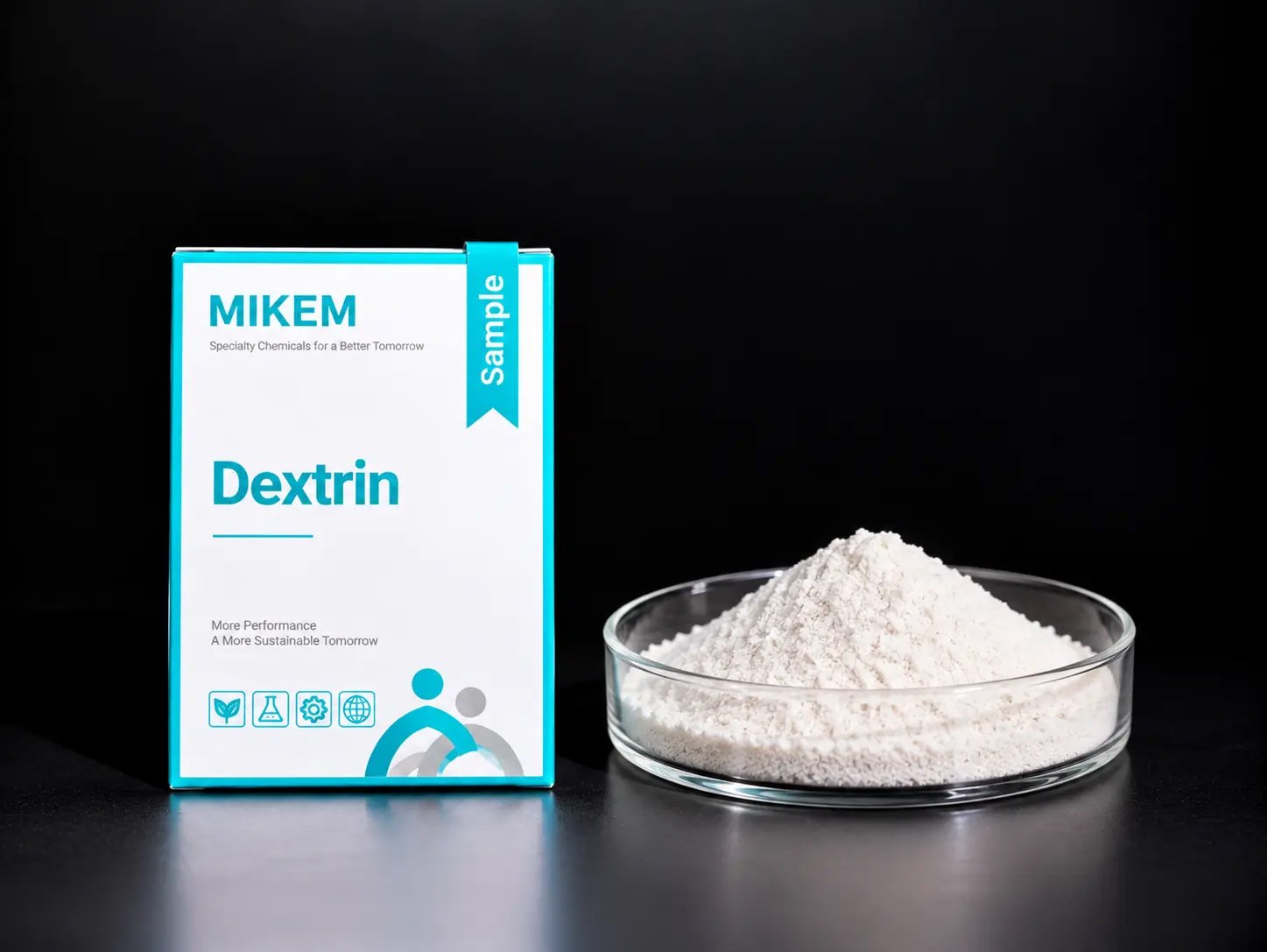
MIKEM supplies pharmaceutical-grade dextrin for applications including tablet binding, granulation and selected solid dosage formulations.
As a manufacturer-focused chemical company, MIKEM places emphasis on production resources, quality management and practical technical support. We understand that even small differences in excipient characteristics can affect formulation development and manufacturing performance.
Our support focuses on several areas:
- Manufacturing and quality management: Attention to production processes and product specifications helps support consistent product quality.
- Product specification and grade selection: We help customers evaluate relevant characteristics, including molecular properties, solubility and viscosity, according to their application requirements.
- Technical documentation: TDS, COA and other relevant product documents are available according to the selected grade and applicable requirements.
- Application-oriented support: Our team can discuss formulation requirements and help customers evaluate suitable product options.
- Flexible supply and packaging: Order planning and packaging arrangements can be discussed according to customer requirements.
- Long-term cooperation: We focus on maintaining clear communication and dependable supply coordination for customers with ongoing production needs.
For manufacturers developing new tablet formulations or reviewing their existing binder systems, MIKEM offers a practical point of contact for pharmaceutical-grade dextrin selection and supply.
Explore our Pharmaceutical Grade Dextrin product page to learn more about our product, or contact MIKEM to discuss specifications, samples and supply requirements.

Frequently Asked Questions
What is dextrin used for in tablet granulation?
Dextrin can serve as a pharmaceutical binder in suitable tablet formulations. During wet granulation, it helps promote particle adhesion and contributes to granule formation and physical integrity. Its suitability depends on the selected grade and the overall formulation.
Can dextrin improve tablet hardness?
Dextrin may contribute to tablet mechanical strength by supporting particle bonding during granulation. However, final hardness also depends on granule properties, other excipients and compression conditions. It should be evaluated alongside friability and disintegration.
Is dextrin suitable for wet granulation?
Yes. Suitable dextrin grades can be used in aqueous binder systems for wet granulation. Manufacturers should evaluate solubility, viscosity and binder concentration to establish an appropriate preparation and processing method.
What is the difference between low-molecular-weight and high-molecular-weight dextrin?
Differences in molecular weight distribution can influence dextrin’s solubility and solution behavior. Lower-molecular-weight fractions may generally dissolve more readily, but overall performance also depends on molecular structure, branching and manufacturing conditions. Product specifications and practical testing are needed for grade selection.
Does dextrin affect tablet disintegration?
It can. Binder concentration, granule density and the interaction between dextrin and other excipients may influence how quickly a tablet breaks apart. Excessive binding can sometimes delay disintegration, so finished tablets should be evaluated under the relevant test conditions.
How do manufacturers select a suitable pharmaceutical dextrin grade?
Manufacturers should consider molecular characteristics, solubility, viscosity, moisture content, particle-size distribution and compatibility with other formulation ingredients. Technical documentation and laboratory trials are important for confirming suitability.
Conclusion
Dextrin in tablet granulation offers pharmaceutical manufacturers a useful option for improving particle binding and supporting consistent granule formation. Its starch-derived structure and functional properties make it suitable for selected formulations where binder performance and powder handling need to be controlled.
However, successful application depends on more than choosing a binder with good binding properties. Molecular characteristics, water interaction, binder concentration, liquid distribution and processing conditions all influence the final result. Pharmaceutical quality requirements and batch consistency also need to be considered when selecting a long-term excipient supplier.
For manufacturers looking for pharmaceutical-grade dextrin and dependable supply support, MIKEM combines manufacturing resources, quality management and application-oriented service to support pharmaceutical production requirements.