Some plant-based burgers look firm in the package, then crack when they hit a hot pan. Others hold their shape but turn dry, dense, or rubbery after cooking. For product developers, the challenge is to get the patty to stay together without giving it an unpleasant bite.
HPMC in plant-based burgers is one formulation option worth evaluating. This cellulose derivative can contribute to water management, viscosity, and structure. Its effect depends on the HPMC grade, the plant protein, the mixing process, and the cooking conditions. It can help solve a specific formulation problem, but it is not a stand-alone fix for every texture issue.
Why Plant-Based Burgers Can Be Difficult to Formulate
A burger made with meat relies on a structure of muscle proteins and fat. A plant-based patty has to build its structure from different ingredients, such as pea or soy protein, textured vegetable protein (TVP), oil, water, binders, and seasonings. Those ingredients do not always hold together in the same way.
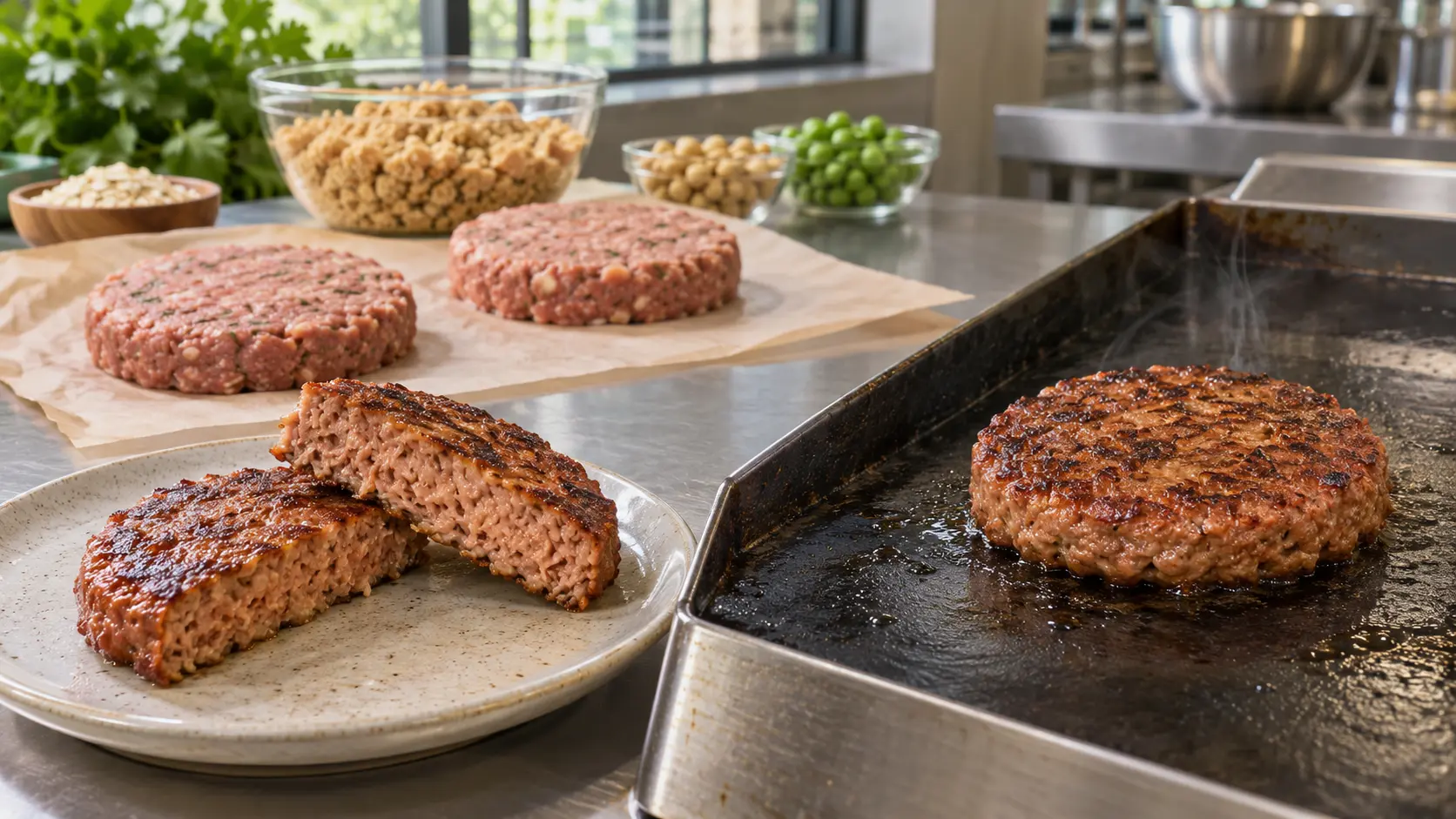
The problem often becomes clear during cooking. A patty may lose water, break at the edges, or feel too soft in the center. The reverse can happen too: a formula that holds its shape may feel tough or pasty. Changes to the protein source, hydration level, or mixing conditions can shift the result.
That is why product developers often evaluate hydrocolloids and other binders as part of the full formulation. The goal is not simply to make the raw mixture thicker. It is to achieve a patty that can be formed, handled, cooked, and eaten as intended.
What HPMC Can Do in a Plant-Based Burger
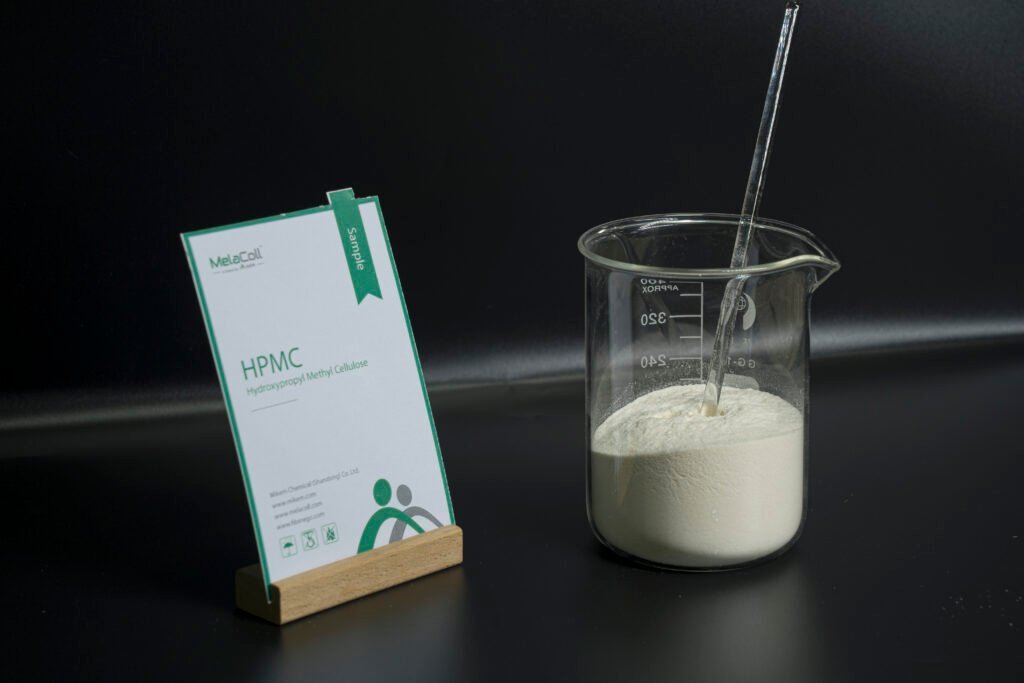
Hydroxypropyl methylcellulose (HPMC), also known as hypromellose, is a water-soluble cellulose ether used in food applications. Depending on its grade, it can help thicken, bind, disperse, and retain water in a formulation. Those functions make it relevant to plant-based burger development.
Help support cohesion
When hydrated and distributed through a mixture, HPMC can contribute to the structure that holds plant protein and other ingredients together. This may help a patty keep its shape during forming and handling. Whether that translates into better cooking performance depends on the rest of the formulation.
Influence moisture and texture
Water is essential to a plant-based burger’s texture, but it needs to be managed. Too much free water can make a mixture difficult to handle; too little can leave the cooked patty dry. HPMC’s water-related functionality can be evaluated as part of that balance. The aim is to support the target texture, not simply maximize water retention.
Respond to heat during cooking
HPMC has heat-responsive properties. As a patty cooks, HPMC can contribute to structure formation, which may support shape retention. The result depends on the HPMC grade and the complete recipe. Formulators should compare cooked samples rather than assuming that a thicker uncooked mixture will perform better.
Research on pea-based TVP burgers has tested HPMC alongside other hydrocolloids. The findings underline a practical point: the results depend on the ingredient combination and processing conditions. HPMC should be assessed in the intended recipe, not selected by ingredient name alone.
Formulation Factors That Affect HPMC Performance
Plant protein and hydration
Pea protein, soy protein, and textured vegetable proteins differ in how they absorb water and build structure. A formula developed for one protein base may not behave the same way with another. Before adjusting HPMC, check whether the protein is fully hydrated and whether the water level suits the chosen raw materials.
If the mixture is already too wet or too dry, changing the binder may mask the underlying issue. Start with a clear target for raw mixture handling and cooked texture, then assess what role HPMC needs to play.
HPMC grade and dispersion
HPMC products are available in different grades. Their properties can vary, so formulators should review the product specification and technical guidance before beginning trials. A grade chosen for one application may not provide the same viscosity or processing behavior in a burger mixture.
Dispersion matters as well. Poorly dispersed powder can form lumps, leaving parts of the mixture unevenly hydrated. Keep the addition order and mixing conditions consistent between trials so you can see whether a change in grade or formulation made a difference.
Mixing temperature and time
Mixing affects how ingredients hydrate and interact. Temperature, mixing time, and equipment can all influence the raw mixture and the cooked patty. In recent research on pea-based TVP burgers, mixing temperature was one of the conditions examined alongside hydrocolloid type. The study’s results reinforce why testing conditions should be controlled when comparing formulas.
For development work, record the mixing temperature, duration, and order of addition. If a change improves the result, those records will make it easier to reproduce.
Cooking conditions
A patty may behave differently on a flat-top grill, in a pan, or in an oven. Thickness, starting temperature, cooking time, and surface heat all affect the result. Test the formula under the preparation conditions customers are likely to use.
Look at more than shape retention. Check whether the patty cracks, how much moisture or fat is released, and whether the cooked texture matches the product brief. If the product is sold frozen, evaluate it after the relevant storage and preparation steps as well.
HPMC Compared with Other Binders
HPMC is one of several ingredients that can contribute to structure in a plant-based burger. Methylcellulose (MC) is another cellulose derivative used in food formulations. Although the names are similar, HPMC and MC are not identical, and their properties can differ by grade. They should not be treated as one-for-one replacements without testing.
Starches, gums, and proteins can also contribute to binding or texture. Each behaves differently in the recipe. A starch may affect body and bite; a gum may change viscosity and moisture management; a protein may contribute to the structure of the patty itself. Some formulas use more than one functional ingredient to meet their target.
The useful comparison is not “which ingredient is best?” It is “which ingredient, or combination, gives this formula the right handling and cooked texture?” A small set of controlled trials will answer that more reliably than a general rule.
How to Evaluate in a Burger Formula
A practical trial starts with a control batch using the current formulation. Prepare a second batch with HPMC, changing as little else as possible. Follow the selected grade’s documentation and avoid applying a use level from a different product or recipe without checking that it is appropriate.
For each sample, record:
- Whether the raw mixture is easy to mix, portion, and form
- Whether the patty holds together during handling
- How much moisture or fat is released during cooking
- Whether the cooked patty is too soft, firm, dry, or gummy
- Whether the result remains acceptable after the intended storage and reheating steps
If available, use both simple measurements and sensory evaluation. Cooking loss and texture measurements can help compare samples, while tasting reveals whether the result fits the intended product. Keep the mixing and cooking conditions the same for each batch; otherwise, it may be difficult to tell what caused the difference.
Common Formulation Mistakes
A few common assumptions can lead to disappointing results:
- Expecting HPMC to fix every texture problem. Protein hydration, oil content, water level, and processing also matter.
- Choosing by raw viscosity alone. A mixture that feels thick before cooking may not produce the best cooked patty.
- Changing several ingredients at once. It becomes difficult to identify what helped or hurt performance.
- Assuming all HPMC grades behave alike. Check the grade’s specification and evaluate it in the intended formulation.
- Skipping preparation-condition tests. A burger needs to perform under the cooking method stated on its packaging.
Selecting Food-Grade HPMC for Your Application
When selecting HPMC, start with the product specification and the requirements of the markets where the burger will be sold. Confirm that the grade is appropriate for the intended food application, then review its relevant functional properties, handling guidance, and documentation.
MIKEM’s food-additive HPMC page describes HPMC for food applications and notes that different grades are developed for different requirements. Manufacturers can use the product information as a starting point, then assess the grade in their own recipe and process.
For a plant-based burger, the final choice should fit the protein system, mixing conditions, cooking method, and desired bite. A short, well-controlled trial can reveal more than selecting an ingredient based on a general claim.
Frequently Asked Questions
Does HPMC help plant-based burgers hold together?
HPMC can contribute to binding and structure in some formulations. Its effect depends on the grade, the other ingredients, and the process, so the finished patty should be tested.
Is HPMC the same as methylcellulose?
No. Both are cellulose derivatives, but they have different chemical structures and may behave differently in a formula. Do not assume that one can replace the other at the same level.
Can HPMC improve the texture of a TVP burger?
It can be evaluated for that purpose. Results depend on the TVP, hydration, mixing conditions, and cooking process. Test the complete formulation before drawing conclusions.
How much HPMC should be used?
There is no single level that suits every burger. Follow the selected grade’s technical information and establish the appropriate amount through formulation trials.
A Practical Role in Plant-Based Burger Development
HPMC can help formulators address binding, moisture, and structure in plant-based burgers, but its contribution depends on how it works with the rest of the recipe. The protein base, water level, mixing conditions, and cooking method all shape the final result.
For manufacturers developing a TVP or plant-protein patty, the most useful next step is to test a suitable food-grade HPMC in the complete formula. Contact MIKEM to discuss HPMC grade information for your food application.