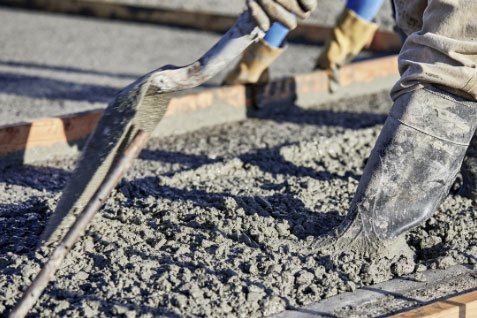
The demand for low-carbon concrete is growing as the construction industry looks for ways to reduce environmental impact while maintaining reliable building performance. One important approach is to reduce cement consumption by incorporating supplementary cementitious materials (SCMs), such as fly ash and ground granulated blast-furnace slag, into concrete mixtures.
However, these materials can change concrete workability, water demand, setting behavior, and early-age strength development. Maintaining consistent performance therefore requires carefully designed concrete admixture systems.
Polycarboxylate Superplasticizer (PCE) plays an important role in this process. As a high-performance water-reducing admixture, it helps disperse cement particles, improve concrete flowability, and reduce mixing water requirements. When properly formulated, PCE can also support concrete mixtures containing higher proportions of supplementary cementitious materials.
For concrete producers seeking more efficient and sustainable formulations, selecting the right polycarboxylate superplasticizer is an important consideration.
What Is Low-Carbon Concrete?
Low-carbon concrete refers to concrete designed to reduce greenhouse gas emissions associated with its production, particularly emissions related to cement manufacturing.
Ordinary Portland cement is a major contributor to concrete’s embodied carbon. Replacing part of the cement with suitable supplementary cementitious materials can help reduce the amount of clinker required in a concrete mixture.
Common materials include:
- Fly Ash: A supplementary cementitious material that can improve workability and contribute to later-age strength development.
- Ground Granulated Blast-Furnace Slag (GGBS): Used to partially replace cement and improve certain durability characteristics.
- Silica Fume: A highly reactive material that can improve particle packing and concrete strength.
- Other Supplementary Materials: Depending on regional availability and technical requirements, other suitable cementitious materials may also be incorporated.
Although these materials offer potential environmental and performance benefits, they can introduce formulation challenges. Differences in particle characteristics, chemical composition, and reactivity may affect water demand and admixture compatibility.
This is where advanced concrete admixtures become particularly valuable.

Why Does Low-Carbon Concrete Need Polycarboxylate Superplasticizer?
Reducing cement content does not automatically produce a workable concrete mixture. When SCMs replace part of the cement, the resulting mixture may exhibit different rheological behavior and fresh-concrete performance.
Concrete producers commonly face several challenges:
Maintaining Workability
Concrete must remain sufficiently fluid for mixing, transportation, pumping, and placement. Changes in binder composition can affect flowability and consistency.
Controlling Water Demand
Adding more mixing water to improve workability can increase the water-to-binder ratio, potentially affecting strength and durability. A suitable water-reducing admixture helps address this issue.
Ensuring Consistent Performance
Variations in SCM sources and material properties may influence admixture response. Concrete formulations therefore require appropriate compatibility testing and dosage adjustment.
Balancing Strength and Sustainability
Lower cement content may affect early-age strength development. Proper mix design must balance binder composition, water reduction, curing conditions, and performance requirements.
Polycarboxylate superplasticizer helps address these challenges by improving particle dispersion and reducing the amount of water needed to achieve a target workability.
How Does Polycarboxylate Superplasticizer Work?
Polycarboxylate superplasticizer is a high-range water-reducing admixture widely used in modern concrete production.
Its performance is mainly associated with its molecular structure and particle-dispersion mechanism.
Electrostatic Repulsion and Steric Hindrance
When PCE molecules adsorb onto cement and other suitable binder particles, their molecular structure helps prevent particles from aggregating.
Two important mechanisms contribute to this effect:
- Electrostatic Repulsion: Charged groups along the polymer structure help create repulsive forces between particles.
- Steric Hindrance: Polyether side chains extend into the surrounding liquid phase, creating a physical barrier that helps prevent particles from coming too close together.
Together, these mechanisms improve particle dispersion and release some of the water previously trapped within particle agglomerates.
Key Performance Benefits
With an appropriately selected PCE formulation, concrete producers may achieve:
- Reduced Water Demand: Lower mixing water requirements at a comparable target workability.
- Improved Flowability: Better fresh-concrete fluidity for placement and pumping.
- Better Mix Homogeneity: More uniform particle dispersion throughout the mixture.
- Flexible Mix Design: Greater flexibility when developing concrete with different binder compositions.
Actual results depend on the cement type, SCM characteristics, admixture chemistry, dosage, and mixing conditions.

Key Applications of PCE in Low-Carbon Concrete Production
Polycarboxylate superplasticizer is suitable for a wide range of concrete applications where workability, water reduction, and formulation efficiency are important.
1. Ready-Mix Concrete
Ready-mix concrete needs consistent workability during transportation and placement. PCE can help reduce water demand while maintaining the required flow characteristics.
It is particularly useful in formulations incorporating fly ash or slag, provided that material compatibility has been verified.
2. Precast Concrete Products
Precast production requires controlled concrete consistency and reliable manufacturing cycles. PCE helps improve fresh-concrete flowability, supporting efficient mold filling and production processes.
3. High-Performance Concrete
High-performance concrete often requires a low water-to-binder ratio combined with good workability. PCE helps achieve this balance by improving binder-particle dispersion.
4. Pumped Concrete
For pumped concrete, appropriate flowability and mixture cohesion are essential. A suitable PCE formulation can help improve pumping performance while maintaining the specified mix design.
5. Infrastructure and Large-Scale Construction
Bridges, tunnels, foundations, and other infrastructure projects may require concrete with specific strength, durability, and placement characteristics.
PCE can support the development of these formulations, including mixtures designed with supplementary cementitious materials.
How to Select the Right Polycarboxylate Superplasticizer
Not every PCE product performs equally well in every concrete formulation. Selecting the appropriate product requires considering the binder system, construction conditions, and performance targets.
Here are five important factors.
Water Reduction Performance
Evaluate the water-reduction capability under the intended concrete formulation rather than relying exclusively on a product’s laboratory specification.
Slump Retention
For ready-mix and pumped concrete, maintaining workability over time is important. Select a PCE formulation that matches the required transportation and placement period.
Cement and SCM Compatibility
Different cement sources, fly ash, slag, and other supplementary materials may respond differently to PCE. Conduct compatibility tests before large-scale application.
Setting Time and Strength Development
The admixture should be evaluated for its influence on setting behavior and early-age and later-age strength development.
Dosage and Mixing Conditions
The optimum dosage depends on the complete mixture. Testing should consider the addition sequence, mixing time, temperature, water content, and other admixtures.
A practical laboratory trial followed by production-scale verification is recommended before finalizing a concrete formulation.
Why Choose MIKEM for Polycarboxylate Superplasticizer?
Choosing a reliable polycarboxylate superplasticizer manufacturer is important for maintaining consistent concrete performance and stable production.
MIKEM focuses on chemical manufacturing, product quality, and application-oriented solutions for the construction industry.
Manufacturing-Focused Production
MIKEM emphasizes manufacturing capabilities and production control to support dependable product quality and consistent supply.
Quality Management
Controlled production processes and quality inspection help maintain product specifications across batches.
Product Selection
Different concrete applications require different admixture characteristics. MIKEM offers polycarboxylate superplasticizer solutions for concrete producers with varying formulation requirements.
Technical Communication
Understanding the customer’s binder materials, water-reduction targets, workability requirements, and production conditions helps identify a more suitable product.
For concrete admixture manufacturers, ready-mix producers, and construction material companies, working with an experienced manufacturer can support more efficient product selection and formulation development.
Explore MIKEM’s Polycarboxylate Superplasticizer Liquid to learn more about its applications and product characteristics.
Conclusion
Low-carbon concrete requires more than simply replacing cement with supplementary materials. It requires a well-balanced formulation that maintains workability, strength development, and long-term performance while reducing the environmental impact of concrete production.
Polycarboxylate superplasticizer supports this objective through effective particle dispersion, water reduction, and improved fresh-concrete properties. When properly matched with cement and SCM systems, it can help concrete producers develop more efficient and sustainable formulations.
As a chemical manufacturer serving the construction industry, MIKEM provides polycarboxylate superplasticizer solutions designed to meet different concrete formulation requirements.
Looking for a Reliable Polycarboxylate Superplasticizer Manufacturer?
Contact MIKEM to discuss your concrete admixture requirements and explore suitable solutions for your production needs.