Sodium alpha-olefin sulfonate in shampoo can help provide cleansing and abundant foam in rinse-off hair-care products. For formulators developing sulfate-free shampoo, AOS is one surfactant option to evaluate alongside other cleansing agents and conditioning ingredients.
Choosing AOS is only one part of the formulation process. The product’s cleansing strength, foam profile, viscosity, and rinse feel depend on the grade, concentration, co-surfactants, and the complete formula. This guide explains what AOS contributes to shampoo and what manufacturers should assess during development.
What Is Sulfonate?
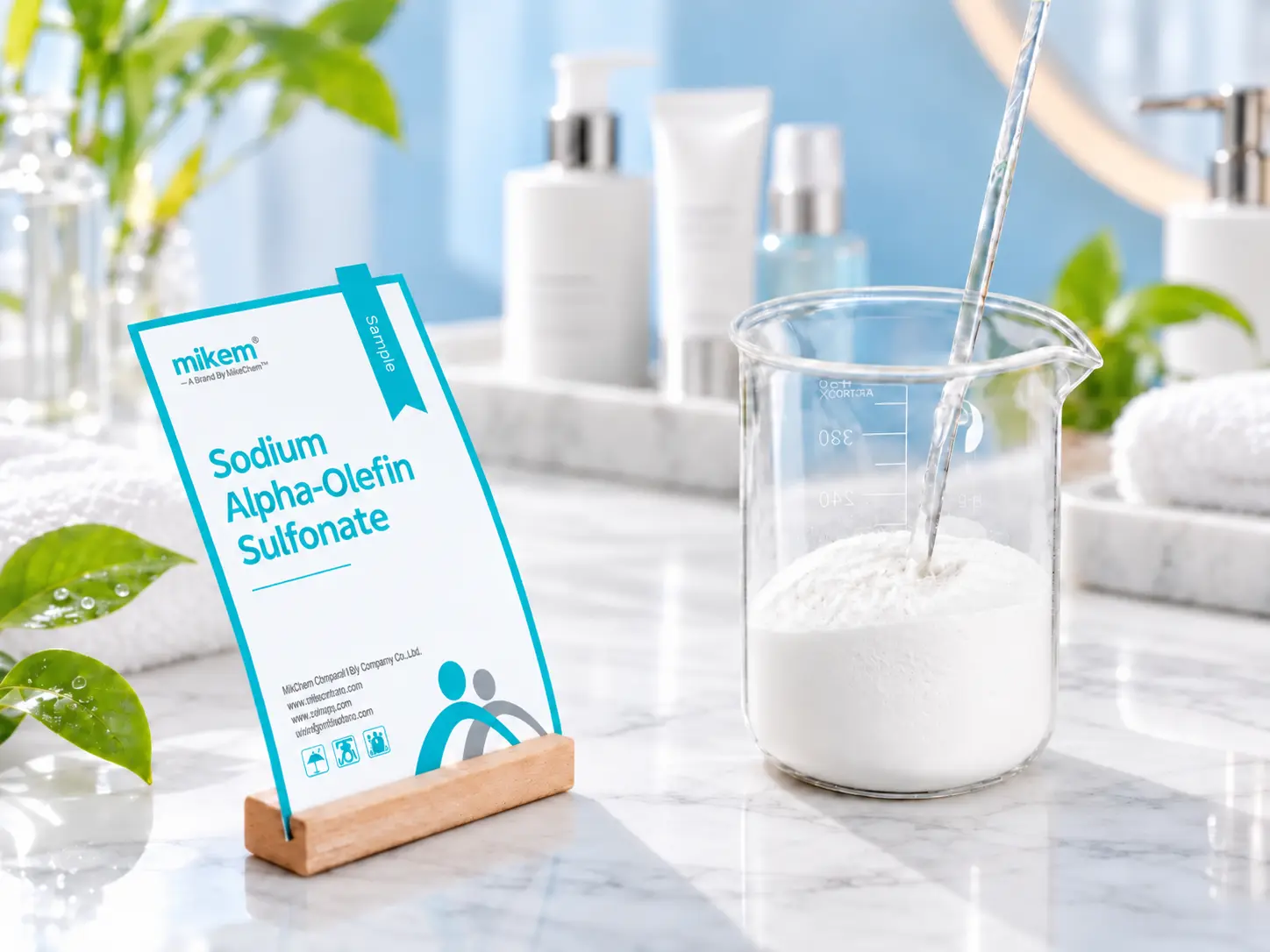
Sodium alpha-olefin sulfonate, commonly called AOS, is an anionic surfactant. It helps loosen and disperse oil and soil so they can be rinsed away with water. AOS is also valued in cleaning formulations for its foaming and wetting properties.
AOS is a sulfonate, not a sulfate surfactant such as sodium lauryl sulfate (SLS) or sodium laureth sulfate (SLES). This distinction makes AOS relevant to formulators exploring sulfate-free systems. However, the label “sulfate-free” describes which ingredients a formula excludes; it does not guarantee that every ingredient in the formula is mild.
Sodium alpha-olefin sulfonate AOS is used in personal-care products such as shampoos and body washes, as well as in household and industrial cleaning products. Its suitability depends on the product grade and how it performs in the intended formulation.
Why Consider AOS in Sulfate-Free Shampoo?
Sulfate-free shampoo development often involves balancing cleansing performance with foam, texture, and consumer expectations. AOS can be considered as part of that surfactant system because it can contribute cleansing and foam without using SLS or SLES.
For manufacturers, the decision is not simply whether to replace one ingredient with another. A change in the surfactant system can affect viscosity, foam structure, clarity, and the way the product feels during use and rinsing. A formula that cleans effectively but feels too harsh, too thin, or difficult to rinse may not meet the product brief.
AOS should therefore be evaluated as one component in a complete cleansing system. The goal is to match the surfactant blend and supporting ingredients to the product’s intended use, target cost, and desired sensory profile.
What AOS Can Contribute to Shampoo Formulations
Cleansing support
Sodium alpha-olefin sulfonate AOS can help remove sebum, dirt, and product residue from hair and scalp. Its contribution depends on the grade, amount used, and the other surfactants in the formula. Manufacturers should assess cleansing performance in the finished shampoo rather than judging it from the ingredient name alone.
Foam generation
AOS can support foam formation in rinse-off products. Foam is not a direct measure of cleansing performance, but it can influence how users perceive a shampoo during application. Formulators should assess both the amount and structure of the foam, including how it behaves in water of different hardness levels.
Formulation flexibility
AOS can be evaluated with other surfactants to adjust cleansing and foam characteristics. For example, formulators may test combinations with an amphoteric surfactant such as cocamidopropyl betaine (CAPB). The right blend depends on the specific grades and the performance targets; compatibility should be confirmed through testing.
Performance under different water conditions
Water quality can affect how a shampoo performs during use. AOS is known for useful hard-water performance, but results will depend on the complete formula and the water used for testing. Evaluating samples in more than one water condition can help manufacturers understand how consistently a shampoo cleanses and foams.
Formulation Factors to Evaluate
1. Cleansing strength and mildness
Sulfate-free does not automatically mean mild. AOS is an anionic surfactant, and the finished product’s mildness depends on the overall formula, including surfactant levels, co-surfactants, conditioning ingredients, and intended frequency of use.
Formulators should set clear product targets before selecting a surfactant blend. A daily shampoo, a clarifying shampoo, and a shampoo for a specialized market may call for different cleansing profiles. Evaluate the finished formula using appropriate testing for the intended market and product claims.
2. Foam profile
Foam should be assessed during application, not just in a beaker test. Consider how quickly foam develops, whether it remains stable during washing, and how easily it rinses away. Testing with representative water hardness and use conditions can give a more useful picture of performance.
Adding more surfactant simply to increase foam may change the formula’s cleansing strength, viscosity, cost, or user feel. Adjust the blend based on the full set of requirements.
3. Viscosity and texture
Sulfate-free systems may not respond to thickening methods in the same way as conventional SLES-based shampoos. Viscosity can depend on the surfactant blend, salt response, polymeric thickeners, and other ingredients. A change made to improve thickness can also affect clarity, stability, or the product’s feel.
Build viscosity gradually and evaluate the formula after each adjustment. Record the order of addition and mixing conditions so promising results can be repeated at a larger scale.
4. Stability and compatibility
The complete system should be tested for appearance, odor, viscosity, and physical stability under relevant storage conditions. Check whether the formula remains uniform and whether its properties change over time or with temperature.
Preservative selection and effectiveness must also be assessed for the finished product. Do not assume that a stable-looking formula is automatically suitable for commercial release; follow the testing and quality requirements for the product and target market.
A Practical Development Workflow
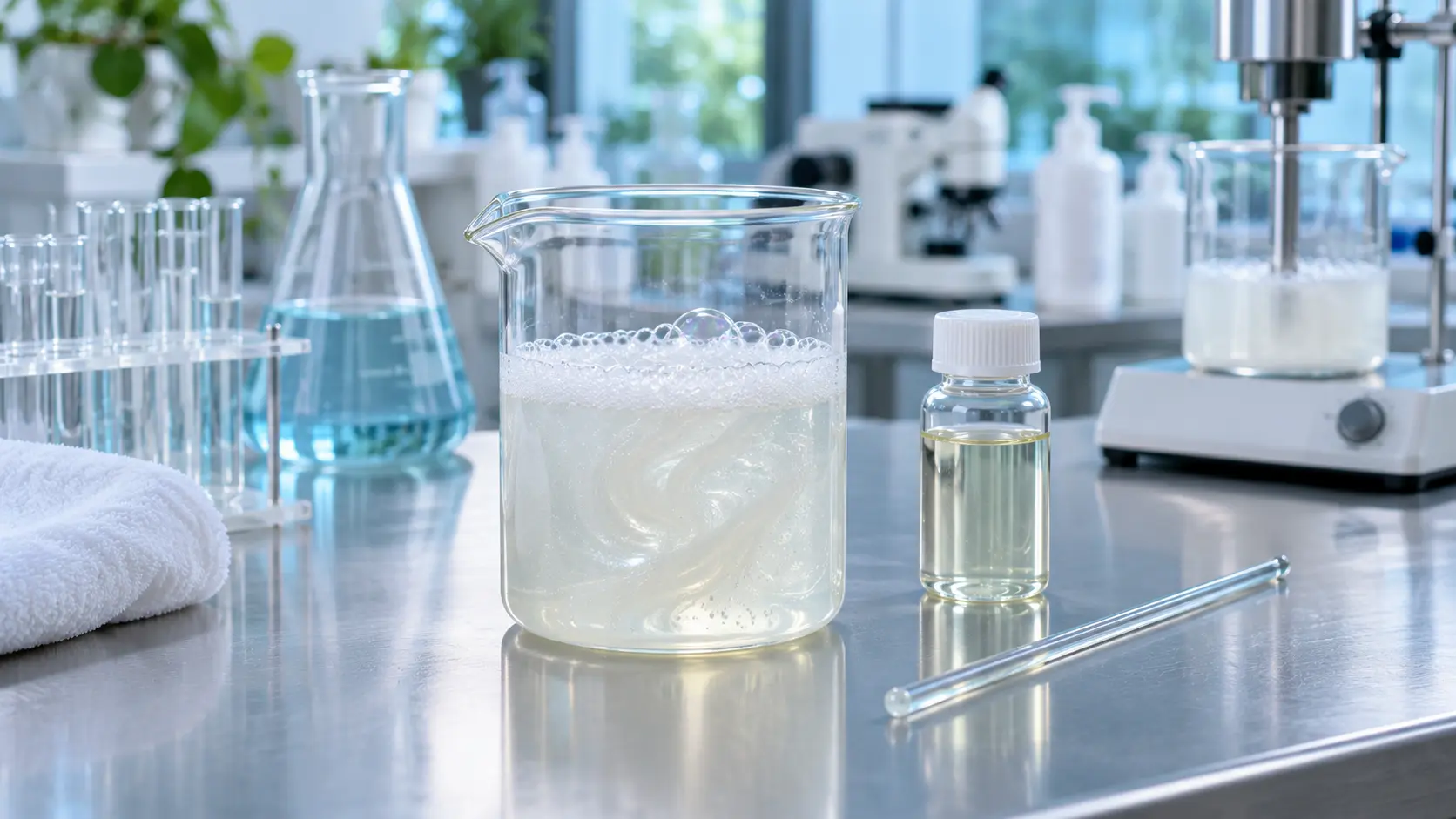
A structured process can make AOS shampoo development easier to evaluate and scale.
- Define the target product. Establish the intended user, cleansing level, foam profile, appearance, viscosity, and cost range.
- Review the AOS grade information. Confirm the product form, specification, handling instructions, and supplier-recommended use guidance. Do not apply a dosage from another grade without checking its specifications.
- Build a surfactant blend. Evaluate AOS alone or with suitable co-surfactants. Compare samples against the performance targets rather than selecting a blend based on foam alone.
- Adjust the supporting system. Develop viscosity and rinse feel using ingredients compatible with the surfactant blend. Make controlled changes so their effects can be identified.
- Test the finished formula. Assess cleansing, foam, viscosity, stability, and user-relevant properties under repeatable conditions. Recheck the formula after scale-up because processing can affect final performance.
The appropriate use level depends on the AOS grade and the complete formulation. Manufacturers should follow the product documentation and determine the final level through controlled formulation trials.
Common Mistakes in AOS Shampoo Development
- Treating “sulfate-free” as a mildness claim. The complete formula must support the intended mildness and performance profile.
- Selecting a surfactant by foam alone. Foam is only one part of shampoo performance; cleansing, rinse feel, stability, and viscosity matter too.
- Changing several ingredients at once. This makes it difficult to identify what improved or reduced performance.
- Assuming all AOS grades behave alike. Product form and specifications can vary, so check grade-specific documentation.
- Skipping scale-up checks. A formula that works in a small laboratory batch may behave differently under production mixing conditions.
Choosing an AOS Manufacturer
For shampoo manufacturers, a suitable AOS grade needs to match the formulation and manufacturing process. Before selection, review the product specification, quality documentation, packaging, storage guidance, and technical support available for application evaluation.
MIKEM’s Sodium Alpha-Olefin Sulfonate (AOS) product page lists shampoos and body washes among its applications. Manufacturers considering AOS can contact MIKEM to discuss product specifications, packaging, and formulation requirements.
Frequently Asked Questions
Is Sodium alpha-olefin sulfonate a sulfate?
No. Sodium alpha-olefin sulfonate is a sulfonate surfactant. It is chemically distinct from sulfate surfactants such as SLS and SLES, though it remains an anionic surfactant.
Can Sodium alpha-olefin sulfonate be used in sulfate-free shampoo?
Sodium alpha-olefin sulfonate can be evaluated in a sulfate-free shampoo system because it is not an SLS or SLES sulfate surfactant. Its performance and suitability depend on the complete formula and the intended product claims.
Does Sodium alpha-olefin sulfonate make shampoo mild?
Not by itself. Mildness depends on the surfactant blend, concentration, and supporting ingredients, as well as the finished product’s testing. Do not infer mildness from a “sulfate-free” label alone.
Can Sodium alpha-olefin sulfonate be combined with other surfactants?
Sodium alpha-olefin sulfonate can be formulated with other suitable surfactants, including amphoteric types. Compatibility and performance should be confirmed with the specific grades and formula through laboratory trials.
Conclusion
Sodium alpha-olefin sulfonate in shampoo can contribute cleansing and foam in rinse-off hair-care formulations. Its value depends on how it works with the other ingredients and whether the finished formula meets the manufacturer’s targets for performance, texture, stability, and user experience.
For reliable results, evaluate the AOS grade in the complete formula, follow its product documentation, and verify performance through controlled testing. Contact MIKEM to discuss AOS specifications and manufacturing support for your shampoo formulation.