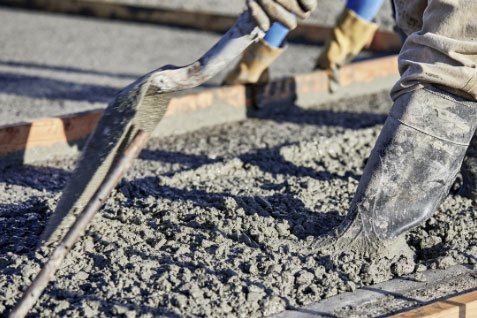
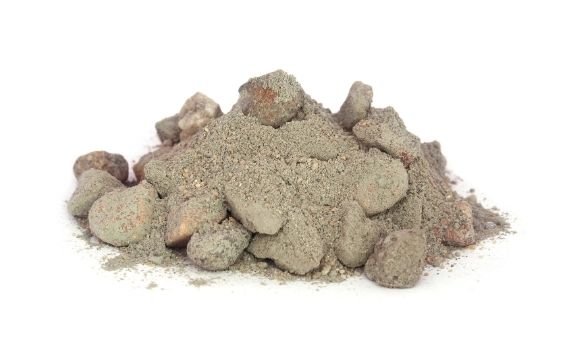
Dry-mix mortar producers balance raw-material costs with the performance required for a specific application. A formulation intended for masonry, tile adhesive, plaster, or an external insulation system must be designed for its own substrate, application method, exposure, and performance criteria. Additives can adjust workability, water retention, adhesion, and other properties, but no single formula or dosage suits every mortar.
This article outlines the main ingredients in dry-mix mortar, clarifies the scope of ASTM C270, and explains how cellulose ethers and redispersible polymer powder (RDP) may contribute to selected formulations.
The Evolution of Mortar: From Basic Binders to Modern Formulations
Mortar has long been made from a binder and fine aggregate. Modern dry-mix products use controlled raw materials and may include functional additives to provide more consistent handling and performance. The specific composition depends on whether the product is masonry mortar, tile adhesive, render, skim coat, or another application.
Mortar Composition: What Drives Performance?
Mortar generally combines one or more cementitious or other mineral binders with fine aggregate, water at the point of use, and optional additives. It is distinct from concrete, which typically includes coarse aggregate for structural elements such as slabs and columns.
- Binders: Portland cement and other cementitious materials may be used according to the product design. Hydrated lime is used in some masonry mortar formulations to influence workability and water retention. Gypsum is commonly added during cement manufacture to control setting; it should not be treated as a general-purpose mortar additive.
- Fine aggregates and fillers: Sand grading and filler characteristics influence workability, water demand, and hardened properties.
- Mineral additions: Pozzolanic or other mineral materials may be selected for specific performance or sustainability goals, subject to compatibility and testing.
- Chemical additives: Cellulose ethers, RDP, water reducers, air-entraining agents, and other additives can be used in application-specific combinations.
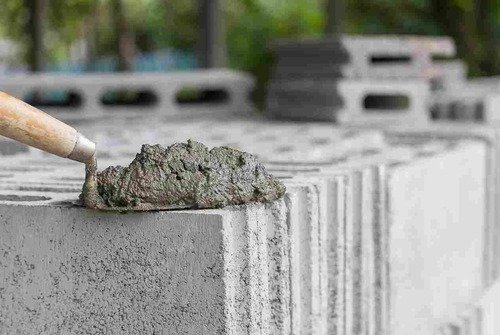
ASTM C270: Scope and Mortar Types
ASTM C270 is a specification for mortar used in unit masonry. It provides proportion and property specifications for four types: M, S, N, and O. The commonly cited 28-day compressive-strength minimums below are property-specification values for laboratory-prepared mortar mixed to a prescribed flow; they are not universal guarantees for every field mix.
| Type |
Minimum 28-day compressive strength (property specification) |
General description |
| M |
2,500 psi (17.2 MPa) |
Higher-strength masonry mortar for applications specified by the design. |
| S |
1,800 psi (12.4 MPa) |
Masonry mortar used where the project specification calls for Type S. |
| N |
750 psi (5.2 MPa) |
General-purpose mortar for many above-grade masonry applications. |
| O |
350 psi (2.4 MPa) |
Lower-strength mortar for appropriate, usually non-load-bearing applications. |
Type K is not one of the four mortar types in ASTM C270. Mortar selection must follow the structural design and applicable code. ASTM C270 values do not classify tile adhesives, renders, or every dry-mix mortar; those products use their relevant specifications and tests.
How Additives Can Address Formulation Needs
Additives should be selected and tested for the intended product, not added based on generic dosage rules. The substrate, binder, sand grading, mixing water, plant process, climate, and target test methods all affect the result.
Cellulose Ether (HPMC)
Hydroxypropyl methylcellulose (HPMC) is used in many cement-based dry-mix mortars to modify water retention and rheology. Depending on the grade and formulation, it can support workability and help maintain moisture for cement hydration. It may also affect slip resistance and open time in appropriate products. HPMC does not by itself prevent shrinkage cracking; substrate suction, water content, curing, layer thickness, and site conditions also matter.
Dosage should be established from the product’s technical information and laboratory trials. A fixed percentage should not be taken as suitable for every mortar or HPMC grade.
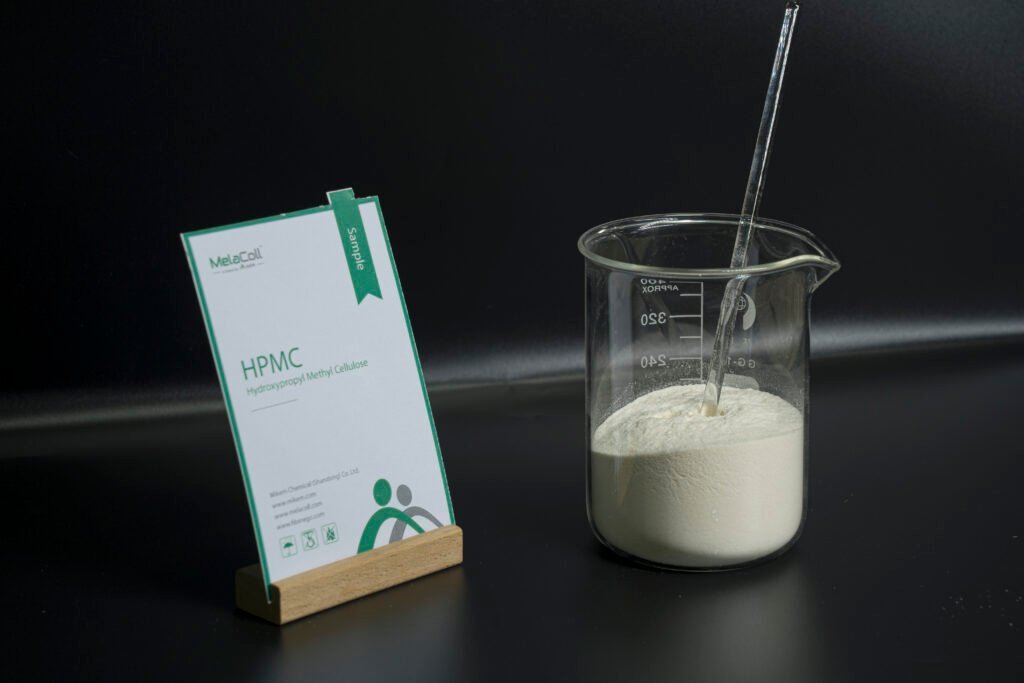
Learn about MIKEM construction-grade HPMC.
Redispersible Polymer Powder (RDP)
RDP disperses when the dry mortar is mixed with water. During drying, the polymer can form a film within the mineral matrix and may improve adhesion, flexibility, and deformation behavior in suitable formulations. The effect depends on polymer type, dosage, binder and filler system, substrate, curing, and the test method. RDP is used in many tile adhesives and other polymer-modified mortars, but the required grade and quantity are product-specific.
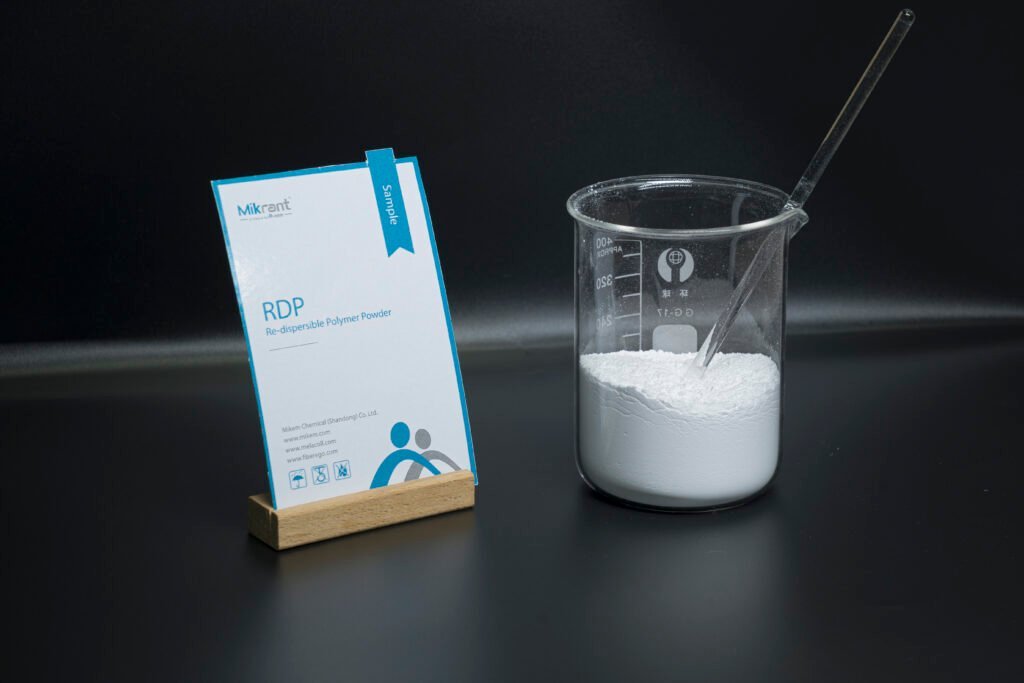
Learn about MIKEM redispersible polymer powder.
Production and Performance Considerations
Increasing additive dosage may improve one property while affecting cost, air content, setting behavior, strength, or another property. Evaluate the complete formulation rather than assuming a higher dosage will produce better overall performance. Production trials should use representative raw materials and the intended mixing and curing procedure.
For masonry mortar, ASTM C270 includes proportion and property specifications. Other mortar applications require the relevant product specification and test methods. Laboratory bond results are comparisons under defined conditions and should not be presented as guaranteed field performance. For example, ASTM C1072 evaluates masonry flexural bond strength under specified test conditions; it does not directly represent the bond strength of every completed wall.
Common Formulation Questions
How much RDP should I use in tile adhesive?
There is no single dosage suitable for all tile adhesives. The required amount depends on the target performance class, polymer grade, cement and filler composition, and applicable test requirements. Determine the dosage through trials and the product supplier’s current technical data.
Does PVA improve mortar strength?
“PVA” can refer to different materials or product forms, and its effect depends on the exact polymer and formulation. No general percentage increase in compressive or flexural strength can be assumed. Identify the material, review its technical information, and test the complete mortar.
Which additives are best for cold-weather work?
Cold-weather placement requires a project-specific plan for material temperature, substrate conditions, protection, and curing. Any accelerator or other admixture must be suitable for the binder and reinforcement conditions and permitted by the project requirements. Do not use generic antifreeze advice in place of an approved mix design and cold-weather procedures.
How should I formulate waterproof mortar?
Water resistance depends on the whole system, including binder, aggregate grading, polymer or hydrophobic additives, application thickness, substrate preparation, curing, and detailing. RDP, hydrophobic agents, or cellulose ethers may be considered in particular products, but there is no universal combination or dosage. Validate the formulation using the relevant performance tests.
Work with MIKEM on Mortar Additives
MIKEM is a manufacturer of construction chemicals, including cellulose ethers and redispersible polymer powders used in selected dry-mix mortar applications. Product selection should begin with the application requirements and be confirmed through formulation trials using your own materials and process.
Developing or adjusting a dry-mix mortar? Contact MIKEM to discuss your application and request current product data or check sample availability.