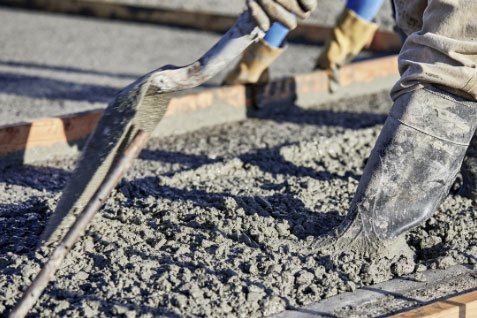
Cement-based render mortar is widely used for coating and leveling interior and exterior walls. Its performance depends not only on cement strength and aggregate grading but also on how effectively the fresh mortar retains water, maintains consistency, and responds to application forces.
In dry-mix render mortar formulations, Hydroxyethyl Methyl Cellulose (HEMC), also known as Methyl Hydroxyethyl Cellulose (MHEC), is an important functional additive. It acts as a water-retention agent and rheology modifier, helping mortar maintain a suitable consistency during mixing, transportation, and application.
However, selecting HEMC for render mortar involves more than choosing a product with a particular viscosity. Its molecular characteristics, dosage, dissolution behavior, and compatibility with other formulation components can all influence the final performance.
This article explains how HEMC works in cement-based render mortar, its effects on fresh mortar properties, and the key factors to consider when selecting an appropriate grade.
1. Why Is HEMC Used in Cement-Based Render Mortar?
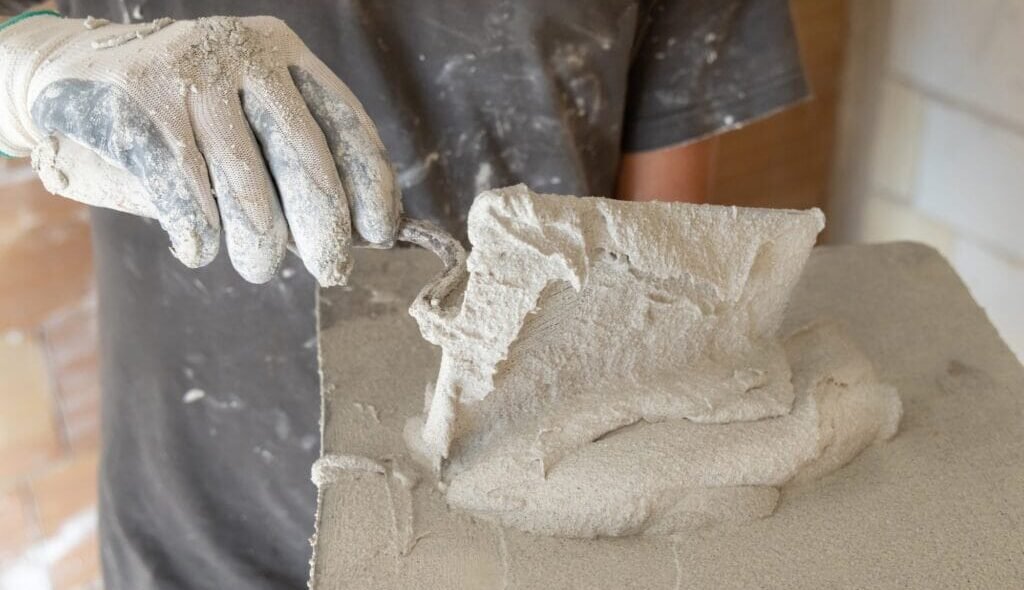
Cement-based render mortar is generally applied to masonry, concrete, and other wall substrates. During application, the mortar must remain sufficiently workable while maintaining good adhesion and consistency on vertical surfaces.
Several formulation challenges can affect its performance:
- Rapid water loss:Porous substrates can absorb mixing water quickly, potentially affecting cement hydration and application performance.
- Poor workability:Excessive stiffness makes mortar difficult to spread and level, increasing application effort.
- Insufficient consistency:Unstable mortar may exhibit segregation, bleeding, or inconsistent thickness during application.
- Poor vertical stability:Mortar with inadequate structural stability may slide or sag on vertical surfaces.
- Short working time:Rapid changes in consistency can make it difficult for workers to complete large rendering areas uniformly.
HEMC helps address these challenges by controlling water movement and modifying the rheological properties of fresh mortar.
As a non-ionic cellulose ether, HEMC dissolves in water and forms a viscous polymer solution. When incorporated into cement-based render mortar, it contributes to water retention, thickening, consistency control, and improved application behavior.
Its main functions include:
| Function |
Effect on Render Mortar |
| Water retention |
Reduces premature water loss to porous substrates |
| Thickening |
Increases the viscosity of the liquid phase |
| Rheology modification |
Helps maintain a balanced consistency during application |
| Workability improvement |
Supports smoother spreading and troweling |
| Anti-sag performance |
Helps maintain mortar stability on vertical surfaces |
The actual performance depends on the HEMC grade, dosage, cement system, aggregate characteristics, and other additives.
2. How Does HEMC Improve Water Retention?
Water retention is one of the most important functions of HEMC in cement-based render mortar.
Cement requires sufficient water for hydration. When fresh mortar is applied to a highly absorbent substrate, such as porous masonry, part of its mixing water may migrate into the substrate through capillary absorption.
If water is removed too quickly, the mortar may experience insufficient moisture availability during early hydration. This can negatively affect its bonding, surface quality, and overall performance.
HEMC helps control this water migration through several related mechanisms.
2.1 Increasing the Viscosity of the Liquid Phase
After dissolving in water, HEMC forms a polymer solution that increases the viscosity of the liquid phase within the mortar.
Higher liquid-phase viscosity reduces the mobility of water and slows its movement through the mortar’s pore structure.
This helps limit rapid water migration toward absorbent substrates and supports a more stable moisture distribution.
However, increasing viscosity alone does not explain the entire water-retention mechanism.
2.2 Water Sorption and Polymer Swelling
HEMC molecules can interact with and retain water through their hydrophilic polymer structure.
At relatively low concentrations, water sorption and polymer swelling contribute to the water-retention effect.
As the concentration increases, interactions between polymer chains become more significant. These interactions can promote the formation of associated polymer structures within the aqueous phase.
Research published in Cement and Concrete Research by Bülichen, Kainz, and Plank investigated the working mechanism of MHEC in cement-based systems.
The study identified two important mechanisms: water sorption and swelling at lower dosages, and the formation of larger hydrocolloidal structures that can obstruct water-migration pathways at higher dosages.
This helps explain why HEMC can improve water retention through more than simply increasing bulk viscosity.
2.3 Modifying Water Migration Through the Mortar Structure
HEMC also influences the distribution and movement of water within the mortar matrix.
By modifying the liquid phase and interacting with solid particles, it can reduce the rate at which water moves through interconnected pores.
The resulting effect is a more controlled moisture environment during the early stages after application.
It is important to note that water retention does not mean water becomes permanently locked inside the mortar. Instead, HEMC helps regulate water movement so that sufficient moisture remains available for cement hydration and application.
3. How Does HEMC Improve Workability and Rheological Properties?
Besides water retention, HEMC plays an important role in controlling the rheology of fresh render mortar.
Rheology describes how a material deforms and flows under applied forces. For cement-based render mortar, this determines how easily the material can be mixed, pumped, spread, and finished.
A suitable rendering formulation needs to balance two seemingly different requirements:
- It should flow and spread easily when workers apply mechanical force.
- It should maintain sufficient structural stability when placed on a vertical wall.
HEMC helps achieve this balance through its thickening and rheology-modifying effects.
3.1 Improving Consistency and Trowelability
During application, render mortar should spread smoothly without excessive resistance.
HEMC increases the viscosity of the liquid phase and modifies the internal structure of fresh mortar. This helps improve cohesion and maintain a more uniform consistency.
When properly selected, it can provide:
- Smoother trowel movement
- More uniform mortar distribution
- Better handling during application
- Reduced tendency toward segregation
The goal is not to maximize viscosity, but to achieve a consistency that matches the application method and required mortar thickness.
3.2 Supporting Anti-Sag Performance
Anti-sag performance is particularly important for vertical rendering applications.
After mortar is applied to a wall, gravity continuously acts on the fresh material. If its internal structure cannot resist this force, the mortar may move downward, resulting in uneven coating thickness.
HEMC helps improve vertical stability by increasing the viscosity and cohesion of the fresh mortar.
Its rheological contribution allows the material to resist movement under low-stress conditions while remaining workable when shear is applied during troweling.
The balance between viscosity, yield stress, and shear response is therefore important when designing render mortar formulations.
3.3 Balancing Flowability and Structural Stability
An effective render mortar should not be excessively thick or overly fluid.
If HEMC dosage is too low, the mortar may lack sufficient consistency and water retention.
If dosage is too high, excessive viscosity can make mixing and spreading more difficult. It may also increase the amount of entrained air or affect the setting behavior, depending on the complete formulation.
Therefore, the optimal HEMC grade should provide sufficient water retention without compromising application efficiency.
4. Key Factors Affecting HEMC Performance in Render Mortar
Not all HEMC products perform identically in cement-based formulations. Several material and formulation factors influence their effectiveness.
4.1 Viscosity Grade
Viscosity is one of the most commonly used parameters when selecting HEMC.
It is generally measured using a specified aqueous solution concentration, temperature, and testing method. Different manufacturers or test methods may produce different reported values, so viscosity figures should be compared under equivalent conditions.
In general:
- Lower-viscosity grades may be considered when easier mixing, flow, and application are important.
- Medium-viscosity grades can provide a balance between water retention and workability.
- Higher-viscosity grades may provide stronger thickening and consistency control, depending on their molecular characteristics.
However, a higher viscosity grade does not automatically produce better render mortar.
Two HEMC products with similar solution viscosities may behave differently because of differences in molecular weight, substitution characteristics, particle properties, and dissolution behavior.
4.2 HEMC Dosage
HEMC dosage directly influences the rheology and water-retention performance of render mortar.
Increasing the dosage generally improves water retention and thickening within a suitable formulation range. However, excessive addition may result in:
- Excessive mortar viscosity
- Poorer spreading and trowelability
- Increased air entrainment
- Changes in cement hydration and setting behavior
- Higher formulation costs without proportional performance improvements
There is no universal dosage suitable for every cement-based render mortar.
The appropriate dosage should be determined through laboratory trials based on the cement content, aggregate grading, water demand, substrate absorption, and target application properties.
4.3 Cement and Aggregate Characteristics
The cement type and aggregate properties can significantly influence HEMC performance.
Different cement compositions and fineness levels may interact differently with cellulose ethers, affecting hydration behavior and fresh mortar consistency.
Aggregate grading also plays an important role. Fine particles influence the water demand and packing structure of the mortar, while aggregate distribution affects cohesion and application feel.
Consequently, an HEMC grade that performs well in one render mortar formulation may not deliver identical results in another.
4.4 Environmental and Substrate Conditions
Temperature, humidity, wind exposure, and substrate absorption all influence water loss during rendering.
For example, high temperatures and strong airflow can accelerate surface drying. Highly absorbent masonry substrates may also draw water out of the fresh mortar more rapidly.
In these conditions, water retention becomes particularly important.
HEMC grade selection should therefore consider the actual construction environment rather than relying exclusively on laboratory viscosity measurements.
5. How to Select the Right HEMC for Cement-Based Render Mortar
Selecting an appropriate HEMC grade requires evaluating the entire formulation and its intended application.
The following considerations can help manufacturers establish a more reliable selection process.
| Selection Factor |
What to Evaluate |
| Viscosity |
Required consistency and thickening effect |
| Water retention |
Resistance to premature water loss |
| Workability |
Mixing, spreading, and troweling performance |
| Anti-sag performance |
Stability on vertical surfaces |
| Dissolution behavior |
Dispersion and hydration during mixing |
| Compatibility |
Interaction with cement, RDP, starch ether, and other additives |
| Setting behavior |
Effects on initial and final setting characteristics |
Recommended Laboratory Evaluation
Rather than selecting HEMC based only on its technical data sheet, manufacturers should conduct comparative testing in their actual mortar formulations.
A practical evaluation process can include:
Step 1: Establish a reference formulation
Prepare a standard render mortar formulation without changing the cement, aggregate, or other additive proportions during the initial comparison.
Step 2: Compare different HEMC grades
Test selected HEMC grades under the same mixing conditions and water-to-dry-mix ratio.
Step 3: Evaluate water retention
Measure water-retention performance using an appropriate standardized test method, such as EN 1015-8, where applicable.
Step 4: Evaluate fresh mortar properties
Compare consistency, spreading behavior, trowelability, cohesion, and resistance to sagging.
Step 5: Monitor setting and hardened performance
Check whether the selected HEMC grade produces undesirable changes in setting time, adhesion, or hardened mortar properties.
This approach helps identify an HEMC grade that provides a suitable balance between water retention, workability, and overall formulation performance.
6. HEMC and Other Additives in Render Mortar Formulations
HEMC is rarely the only functional additive in modern dry-mix render mortar.
Other ingredients may be incorporated to improve adhesion, flexibility, consistency, or application performance.
| Additive |
Main Function in Render Mortar |
| HEMC |
Water retention, thickening, and rheology control |
| Redispersible Polymer Powder (RDP) |
Improved adhesion and flexibility |
| Hydroxypropyl Starch Ether (HPS) |
Improved consistency and anti-sag performance |
| Defoamer |
Controls unwanted air and foam |
| Calcium Formate |
Supports setting and early strength development |
The interaction between these ingredients should be considered during formulation development.
For example, HEMC and RDP perform different but complementary functions. Hydroxyethyl methyl cellulose primarily modifies fresh mortar properties, while RDP contributes to the bonding and flexibility of the hardened material.
Similarly, HPS can complement HEMC in controlling consistency and vertical stability. However, the combined dosage must be optimized to avoid excessive thickening or poor application behavior.
A balanced additive system is generally more effective than increasing the dosage of a single ingredient to solve every formulation problem.
7. Common Problems When Using HEMC in Render Mortar
Even when a suitable HEMC product is selected, formulation or processing issues can still affect performance.
| Common Problem |
Possible Causes |
Recommended Approach |
| Poor water retention |
Insufficient dosage, unsuitable grade, or highly absorbent substrate |
Reevaluate HEMC grade and dosage |
| Excessive viscosity |
High dosage or unsuitable viscosity grade |
Test a lower-viscosity grade or reduce dosage |
| Difficult troweling |
Excessive thickening or unbalanced water demand |
Optimize the water-to-dry-mix ratio and additive system |
| Poor vertical stability |
Insufficient cohesion or unsuitable rheology |
Evaluate HEMC and HPS compatibility |
| Delayed setting |
Excessive cellulose ether addition or binder interaction |
Review dosage and test setting behavior |
| Inconsistent mortar performance |
Poor dispersion, mixing variation, or raw material differences |
Standardize mixing and raw material quality |
One important consideration is the dispersion of hydroxyethyl methyl cellulose during dry-mix production.
Uneven distribution or inadequate dispersion can lead to inconsistent hydration and local variations in mortar consistency.
Therefore, manufacturers should pay attention to powder blending, mixing sequence, and the overall quality of dry-mix production.
8. Why Choose MIKEM HEMC for Cement-Based Render Mortar?
Selecting the right cellulose ether supplier is an important part of maintaining consistent dry-mix mortar quality.
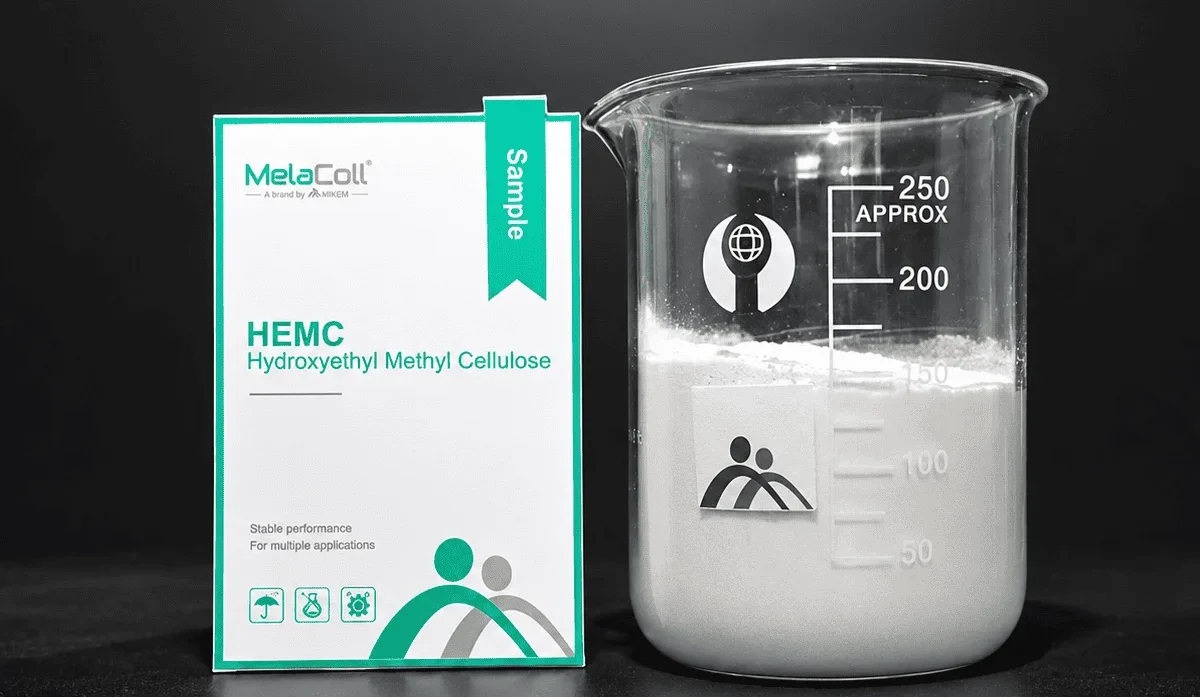
MIKEM supplies Melacoll™ Hydroxyethyl Methyl Cellulose (HEMC) for cement-based and gypsum-based construction materials.
With different viscosity and performance grades available, MIKEM supports manufacturers in evaluating HEMC according to their specific formulation requirements.
Key product information includes:
- Product:Hydroxyethyl Methyl Cellulose (HEMC/MHEC)
- CAS Number:9032-42-2
- Appearance:White or off-white powder
- Viscosity Range:1,000–75,000 mPa·s
- pH Value:6–8
- Standard Packaging:25 kg/bag
Beyond product specifications, MIKEM can assist customers with grade selection, sample testing, and formulation evaluation.
Whether you are developing a new cement-based render mortar or looking for an alternative HEMC supplier, selecting the appropriate grade should begin with your actual application requirements.
Looking for a suitable HEMC grade for your render mortar formulation?
Explore MIKEM HEMC Products or contact our technical team to discuss your viscosity requirements, water-retention targets, and application conditions.
Frequently Asked Questions
1. What is the main function of HEMC in cement-based render mortar?
HEMC primarily acts as a water-retention agent and rheology modifier. It helps reduce premature water loss, improve mortar consistency, and support smoother application and better vertical stability.
2. Does higher HEMC viscosity always mean better water retention?
No. Although viscosity can influence water retention, the relationship is not determined by viscosity alone. Molecular weight, substitution characteristics, dosage, dissolution behavior, and the complete mortar formulation also affect performance.
3. Can HEMC improve the anti-sag performance of render mortar?
Yes. hydroxyethyl methyl cellulose increases the viscosity and cohesion of fresh mortar, helping it maintain structural stability on vertical surfaces. However, the final anti-sag performance also depends on aggregate grading, binder content, HPS, and other formulation components.
4. What is the recommended HEMC dosage for cement-based render mortar?
There is no universal dosage. The appropriate amount depends on the cement system, aggregate characteristics, required water retention, target consistency, and application conditions. Laboratory testing is recommended to determine the optimum dosage.
5. Can HEMC delay cement setting?
Yes. Depending on its molecular characteristics, dosage, and compatibility with the cement system, hydroxyethyl methyl cellulose can influence early cement hydration and setting behavior. Manufacturers should evaluate setting time when developing or adjusting render mortar formulations.
6. What is the difference between HEMC and HPMC in render mortar?
Both HEMC and HPMC are non-ionic cellulose ethers used for water retention and rheology modification. Their substitution chemistry and physicochemical properties differ, which can influence hydration behavior, water retention, thermal characteristics, and workability. The better choice depends on the formulation and required application performance.