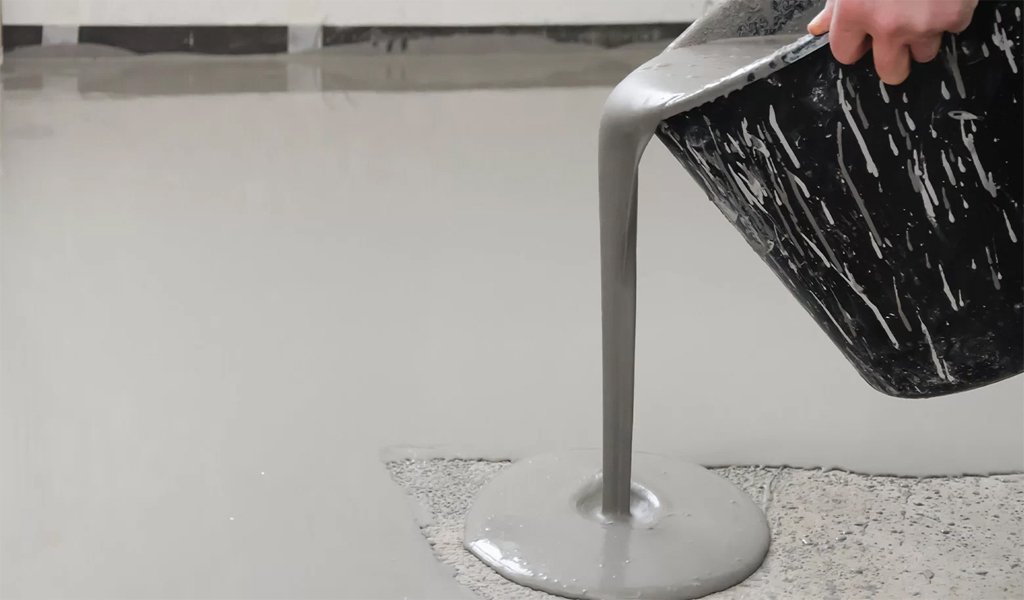
Self-leveling mortar is widely used in modern flooring systems because it provides a smooth, even surface with minimal manual finishing. However, air bubbles, pinholes, and surface defects can affect the final appearance and quality of the floor. For manufacturers of dry-mix mortar, controlling entrained air is an important part of achieving consistent product performance.
A powder defoamer for self-leveling mortar is a functional additive designed to reduce unwanted foam and air-related defects in cement-based formulations. By improving air release and controlling foam formation, the right defoamer can help create a denser, smoother, and more uniform surface.
For self-leveling mortar manufacturers, selecting a suitable powder defoamer is not simply about eliminating bubbles. It also involves maintaining flowability, setting behavior, and compatibility with other formulation ingredients.
What Causes Air Bubbles in Self-Leveling Mortar?
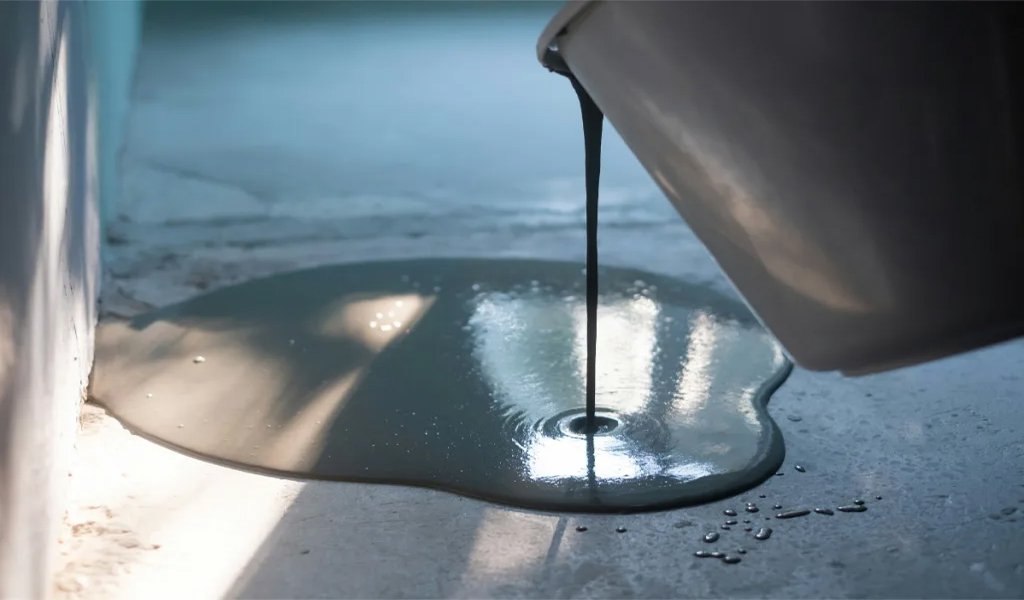
Air bubbles in self-leveling mortar can originate from several stages of production and application. Understanding these causes is the first step toward improving surface quality.
Mechanical Mixing
During mixing, air can become trapped in the mortar. High-speed mixing, unsuitable mixing equipment, or excessive mixing time may introduce additional air into the system.
Surfactants and Other Additives
Some formulation ingredients can contribute to foam formation or stabilize air bubbles. Certain water-retention agents, dispersing agents, and other functional additives may influence the air content of the finished mortar.
Poor Formulation Compatibility
Self-leveling mortar usually contains several ingredients, including cement, fillers, redispersible polymer powder (RDP), cellulose ethers, and superplasticizers. If these components are not properly balanced, unwanted air retention may occur.
Application Conditions
Improper mixing procedures, unsuitable water addition, and application conditions can also contribute to surface bubbles and pinholes.
These problems may result in an uneven surface, additional finishing work, and inconsistent flooring quality. Therefore, controlling air content through appropriate formulation design is essential.
How Does Powder Defoamer Work in Cement-Based Self-Leveling Mortar?
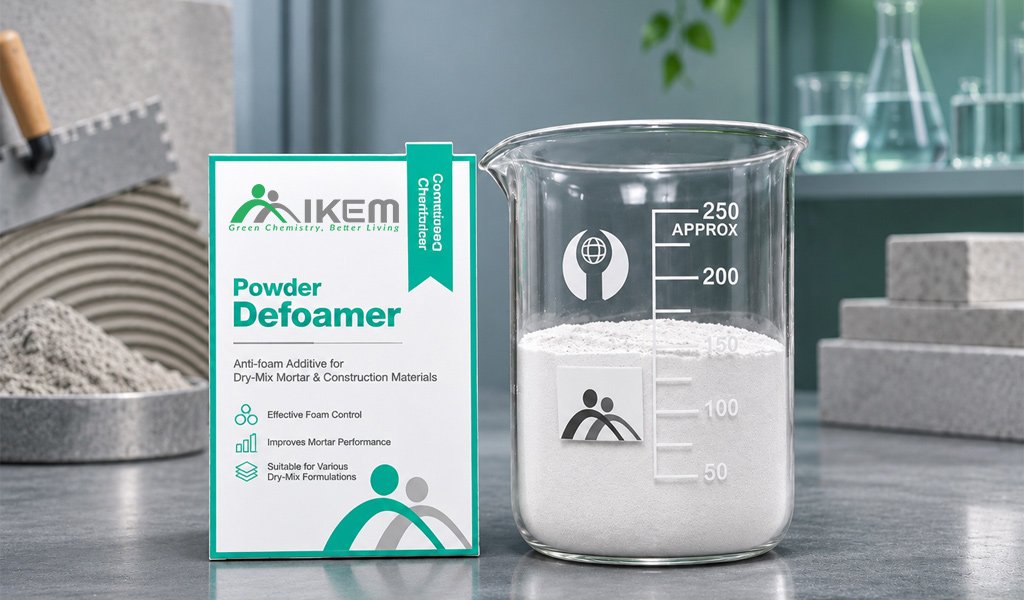
Powder defoamer is an additive used to control unwanted foam and reduce air-related defects in dry-mix mortar systems.
When mixed with water, a suitable defoamer becomes active in the mortar system. Depending on its chemical composition, it can destabilize foam films and help trapped air bubbles combine and escape from the fresh mortar.
Its main functions include:
Breaking Existing Foam
Powder defoamer helps destabilize existing foam structures, allowing bubbles to collapse and reducing excessive foam in the mixture.
Reducing Foam Formation
It helps control the formation and stabilization of unwanted foam during mixing and application.
Supporting Air Release
By reducing foam stability, the defoamer can facilitate the release of entrained air from fresh mortar, helping reduce visible surface defects.
Improving Surface Appearance
With better air control, self-leveling mortar has a greater chance of forming a smooth and uniform surface after application.
It is important to understand that powder defoamer does not eliminate every source of entrained air. Its effectiveness depends on the formulation, dosage, mixing conditions, and compatibility with other additives.
Five Benefits of Powder Defoamer for Self-Leveling Mortar
Choosing the right powder defoamer can support several aspects of self-leveling mortar performance.
Reduced Air Bubbles and Pinholes
Air bubbles that remain in fresh mortar may create small holes or pinholes after the material hardens.
A suitable powder defoamer helps control foam and promotes air release, reducing the likelihood of visible surface imperfections.
This is particularly important for decorative flooring, commercial buildings, and industrial floor preparation, where surface uniformity matters.
Smoother Surface Finish
Surface quality is one of the most important requirements for self-leveling compounds.
Excessive foam and entrained air can interfere with the formation of a uniform mortar surface. By controlling unwanted bubbles, powder defoamer helps support a smoother finish and may reduce the need for additional surface correction.
Improved Mortar Density
Excessive entrained air can increase the void content of hardened mortar.
Proper air control helps reduce unwanted air voids and supports a more compact hardened structure. The actual improvement in density depends on the overall formulation and curing conditions.
More Consistent Application Performance
Consistent air control helps manufacturers maintain more predictable fresh-mortar behavior.
When used at an appropriate dosage, powder defoamer can support stable application performance across production batches, provided that raw materials and processing conditions are also controlled.
Better Overall Formulation Quality
Self-leveling mortar requires a balance between flowability, setting time, water retention, and surface quality.
A properly selected defoamer helps address air-related problems without unnecessarily compromising other formulation properties.
For manufacturers, this makes powder defoamer an important component in developing reliable self-leveling mortar formulations.
How to Select the Right Powder Defoamer for Self-Leveling Mortar
Not all powder defoamers perform equally in cement-based systems. Different products may have different chemical compositions, compatibility characteristics, and defoaming efficiencies.
When selecting a powder defoamer for self-leveling mortar, manufacturers should consider the following factors.
Compatibility with Cement-Based Systems
The defoamer must be suitable for the alkaline environment of cement-based materials.
Its performance should be evaluated in the actual formulation rather than based solely on general product descriptions.
Defoaming Efficiency
A suitable product should effectively control unwanted foam and air bubbles during mixing and application.
However, excessively strong defoaming action is not always desirable. The goal is to achieve balanced air control while maintaining the required properties of the mortar.
Effect on Flowability
Flowability is a fundamental requirement of self-leveling mortar.
The selected defoamer should not significantly interfere with the spreading behavior or leveling performance of the fresh mixture.
Dispersion and Mixing Performance
For dry-mix mortar production, powder defoamer should distribute evenly throughout the formulation.
Good dispersion helps reduce the risk of inconsistent performance between different portions of the mixture.
Dosage Flexibility
The appropriate dosage depends on the specific product grade and the overall formulation.
Manufacturers should follow the product technical data sheet and conduct laboratory trials to determine the optimal addition level. Both insufficient and excessive dosage may lead to unsatisfactory results.
Compatibility with Other Self-Leveling Mortar Additives
Powder defoamer rarely works alone. Its performance is closely related to other ingredients in the formulation.
Understanding these interactions is important for developing a balanced self-leveling mortar system.
| Additive | Main Function | Formulation Consideration |
| HPMC | Water retention and workability control | Balance water retention and fresh-mortar behavior |
| RDP | Adhesion and flexibility improvement | Evaluate compatibility and surface quality |
| PCE Superplasticizer | Water reduction and flowability improvement | Balance fluidity and air control |
| Gypsum Retarder | Setting time adjustment in suitable systems | Maintain the required working and setting time |
| Powder Defoamer | Foam control and air release | Optimize dosage without affecting other properties |
For example, HPMC helps improve water retention and workability, while PCE superplasticizer contributes to flowability and water reduction. RDP can improve adhesion and flexibility in suitable formulations.
However, some combinations may influence air content and foam stability. Therefore, manufacturers should evaluate the entire formulation rather than adjusting the defoamer independently.
A practical formulation development process should include testing fresh-mortar flow, air content, setting time, surface appearance, and hardened properties.
Common Problems and Solutions in Self-Leveling Mortar Production
Even with a suitable defoamer, manufacturers may encounter air-related problems during production. The following table provides a practical troubleshooting reference.
| Common Problem | Possible Cause | Recommended Approach |
| Excessive surface bubbles | High entrained air or foam stability | Evaluate defoamer type and dosage |
| Pinholes after hardening | Air bubbles remaining near the surface | Improve air release and mixing procedures |
| Poor leveling performance | Imbalanced formulation or unsuitable water content | Review PCE dosage and overall formulation |
| Inconsistent surface finish | Uneven additive dispersion | Improve dry blending and mixing consistency |
| Excessive foam during mixing | Interaction between formulation ingredients | Evaluate additive compatibility |
These problems should be investigated systematically. Changing the defoamer dosage alone may not solve issues caused by unsuitable mixing equipment, excessive water addition, or poor compatibility between ingredients.
Why Choose MIKEM as Your Powder Defoamer Manufacturer?
Selecting a reliable powder defoamer manufacturer is an important consideration for dry-mix mortar producers. Beyond product specifications, manufacturers need consistent quality, controlled production, and technical support.
MIKEM focuses on the manufacturing of construction chemicals and functional additives for different building material applications.
Controlled Manufacturing
MIKEM emphasizes manufacturing control and production consistency to support stable product quality across batches.
Quality Management
Quality control is an important part of the manufacturing process. Consistent product characteristics help customers maintain more predictable formulation performance.
Application-Oriented Product Selection
Different self-leveling mortar formulations require different additive combinations. MIKEM works with customers to identify suitable product specifications based on their application requirements.
Technical Support
From product selection to formulation evaluation, technical communication helps customers address compatibility, dosage, and performance requirements.
As a construction chemical manufacturer, MIKEM aims to support dry-mix mortar producers with functional additives designed for practical manufacturing and application needs.
Conclusion
Air bubbles and pinholes are common challenges in cement-based self-leveling mortar production. Although mixing conditions and formulation design play important roles, selecting the right powder defoamer can help control unwanted foam, promote air release, and improve surface quality.
For manufacturers, the key is to balance defoaming performance with flowability, setting behavior, and compatibility with other additives.
MIKEM provides construction chemical manufacturing solutions for different dry-mix mortar applications. If you are developing or optimizing a self-leveling mortar formulation, contact MIKEM to discuss suitable powder defoamer specifications and application requirements.
Contact MIKEM to explore suitable construction chemical solutions for your formulations.