Sodium gluconate is an organic salt used in cement and concrete formulations, most often to delay setting and extend the workable time of a mix. For ready-mix producers, precast manufacturers, and construction chemical formulators, the right sodium gluconate addition can help manage concrete that needs more time for transport, placement, or finishing.
The dosage must be selected carefully. Sodium gluconate can have a strong effect even at low concentrations, and its performance depends on cement chemistry, temperature, binder composition, water reducers, and the target setting window. There is no single dose that works for every concrete mix.
This guide explains how sodium gluconate functions in concrete, when formulators may consider it, how to calculate a trial dosage, and what to test before production.
What Is Sodium Gluconate?
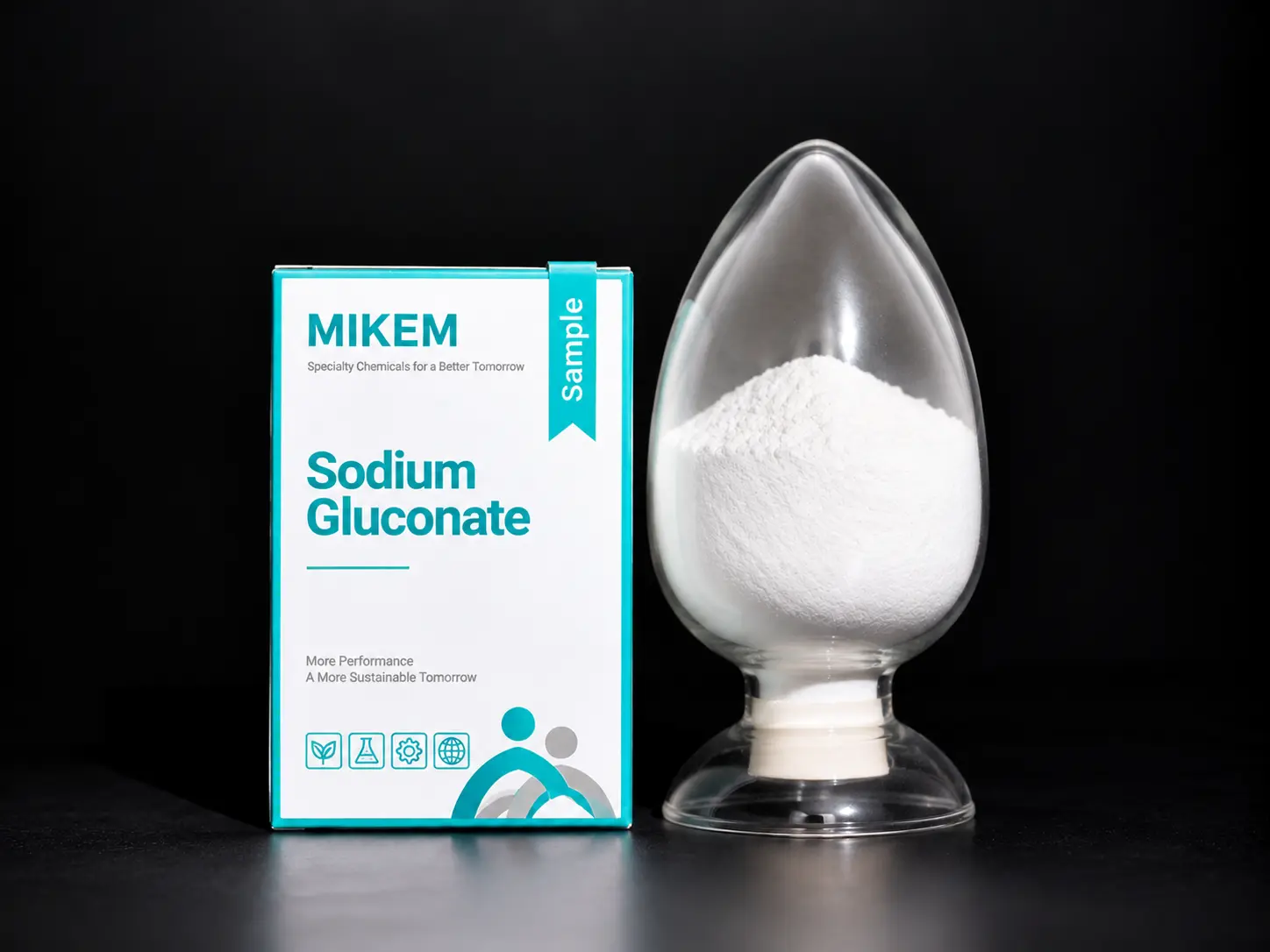
Sodium gluconate is the sodium salt of gluconic acid, with the chemical formula C₆H₁₁NaO₇ and CAS No. 527-07-1. It is typically supplied as a free-flowing white powder and dissolves in water.
In cement-based systems, sodium gluconate is commonly used as a set retarder. Research has examined its influence on cement hydration, setting time, workability, and strength development. The size and duration of the effect vary with cement type, dosage, temperature, and other admixtures.
How Sodium Gluconate Works in Concrete
When added to a cement-based mix, sodium gluconate interacts with cement particles and the early hydration products. This can slow early hydration reactions and delay setting. The added time may help crews place, consolidate, and finish concrete when the planned operation takes longer than usual.
Sodium gluconate may also affect flow and slump retention in some admixture systems. Its use alongside a water reducer or polycarboxylate-based admixture should be evaluated as a complete system: the retarder, superplasticizer, cement, and supplementary cementitious materials can influence one another.
The result is not simply “more time.” An unsuitable dose can delay setting excessively, postpone finishing and formwork removal, and slow early strength development. The goal is to achieve the required handling window while keeping the concrete’s setting and strength profile within specification.
When Is Sodium Gluconate Used?
Ready-Mix Concrete with Longer Transport Times
When concrete must travel farther or wait longer before placement, a retarder may help manage the setting window. Sodium gluconate can be evaluated where transportation, site access, or scheduling makes rapid setting a concern. The actual benefit depends on concrete temperature and mix design.
Hot-Weather Concrete Placement
Higher concrete temperatures can accelerate cement hydration and reduce workable time. A retarding admixture may help formulators manage the setting behavior during hot-weather placement. Sodium gluconate should be trialed at expected temperatures because the response is sensitive to materials and dosage.
Large or Continuous Pours
Large foundations, slabs, and other continuous pours may require more time for delivery, placement, and finishing coordination. A controlled retarding effect can help align concrete performance with the placement sequence. Retarder selection should be part of the project mix design and placement plan.
Precast and Specialty Formulations
Precast and specialty concrete products may require a specific setting profile for molding, consolidation, or finishing. Sodium gluconate can be tested where a formulation needs adjustment to early hydration behavior. Precast release schedules and early strength requirements make trial testing especially important.

Sodium Gluconate Dosage in Concrete
Dosage recommendations differ across product data sheets and studies, so confirm the basis and conditions behind each figure. One study on conventional Portland cement reported an optimum dosage of 0.03% by cement mass when assessed by mortar strength. Commercial guidance for some products gives a broader starting range, such as 0.01–0.10% by cementitious material mass. These values are references for testing, not universal specifications.
A practical way to calculate a trial quantity is to state the dosage as dry sodium gluconate mass divided by cement or binder mass. For example, at 0.03% by mass:
- 100 kg of cement requires 30 g of sodium gluconate.
- 1,000 kg of cement requires 0.30 kg.
- 400 kg of cement per cubic meter requires 0.12 kg per cubic meter.
At 0.10%, a 400 kg/m³ cement content corresponds to 0.40 kg of dry sodium gluconate per cubic meter. Confirm whether the project or supplier expresses dosage against cement, total binder, or another basis. If using a liquid solution or a premixed admixture, calculate the active sodium gluconate content and include solution water in the mix water.
Factors That Affect Dosage and Performance
- Cement source and chemistry: Different cement compositions can respond differently to retarders.
- Concrete temperature: Temperature influences hydration rate and the duration of retardation.
- Supplementary cementitious materials: Fly ash, slag, silica fume, and other binders can change the setting response.
- Water reducers and other admixtures: Compatibility and addition sequence can affect slump, setting, and strength.
- Target setting window: Transport time, placement method, finishing schedule, and formwork needs determine the required delay.
- Mix water and aggregate condition: Water content and aggregate moisture affect workability and actual performance.
Because these variables interact, changing cement, admixture brand, or material source can require a new trial. Do not scale a dosage directly from another mix without verification.
How to Run a Sodium Gluconate Trial
- Establish a control mix without sodium gluconate.
- Choose several low trial dosages around the product’s technical guidance, keeping the dosage basis consistent.
- Hold other ingredients constant so the effect of sodium gluconate can be compared fairly.
- Measure fresh properties such as slump or flow, setting time, air content, and temperature at relevant intervals.
- Test hardened performance including early and later-age strength as required by the specification.
- Repeat at expected job temperatures and with the actual cement and admixture combination.
- Document the final mix and re-test when key materials or production conditions change.
Accurate weighing is essential because effective dosages may be small. Ensure uniform dispersion and follow the supplier’s recommended addition and mixing procedure.
Common Mistakes to Avoid
- Treating a research dosage as a guaranteed production dosage.
- Confusing the percentage of dry sodium gluconate with the percentage of a liquid retarder solution.
- Applying a cement-based dosage to total binder or total concrete mass without conversion.
- Increasing dosage to gain time without checking setting and early strength.
- Ignoring compatibility with the water reducer or other admixtures.
- Skipping trial batches after a change in cement, temperature, or mix composition.
Why Choose MIKEM for Sodium Gluconate?
MIKEM is a chemical manufacturer with production control and quality-management processes focused on reliable product performance. For concrete admixture manufacturers and construction material producers, consistent raw material specifications and dependable batch quality support formulation control.
MIKEM works with customers on product specifications, quality documentation, packaging, and technical requirements for their applications. When evaluating sodium gluconate in concrete, share the cement or binder system, target setting window, expected temperature, and dosage basis. This helps frame a relevant product and testing discussion. Final dosage should be confirmed through the product data sheet and trials with the actual mix.
Frequently Asked Questions
What does sodium gluconate do in concrete?
It is mainly used to delay setting by slowing early cement hydration. Depending on the formulation, it may also influence flow or slump retention.
What is a typical sodium gluconate dosage in concrete?
There is no universal dosage. Published research has reported 0.03% by cement mass as an optimum in a specific Portland cement study, while some commercial guidance suggests broader trial ranges. Confirm the basis and test with the actual materials.
Can sodium gluconate be used with a superplasticizer?
It may be used in combined admixture systems, but compatibility and performance depend on the products and cement. Test the complete system for setting time, slump retention, and strength.
Does sodium gluconate reduce concrete strength?
The effect depends on dosage and curing conditions. A suitable dose may meet the project’s later-age strength requirements, but excessive retardation can delay early strength development. Verify performance through testing.
Is sodium gluconate suitable for hot-weather concrete?
It can be evaluated when warm temperatures shorten the workable period. The mix should be trialed at expected concrete temperatures, and standard hot-weather practices remain important.
Select Sodium Gluconate for Your Concrete Application
The right sodium gluconate dosage depends on cement chemistry, temperature, admixture compatibility, and the required setting window. Start with reliable technical guidance, use a consistent dosage basis, and verify results through controlled trials.
Looking for a reliable sodium gluconate manufacturer? Contact MIKEM to discuss product specifications, quality documentation, packaging, and your concrete or construction admixture application. Visit the MIKEM Sodium Gluconate product page to learn more.