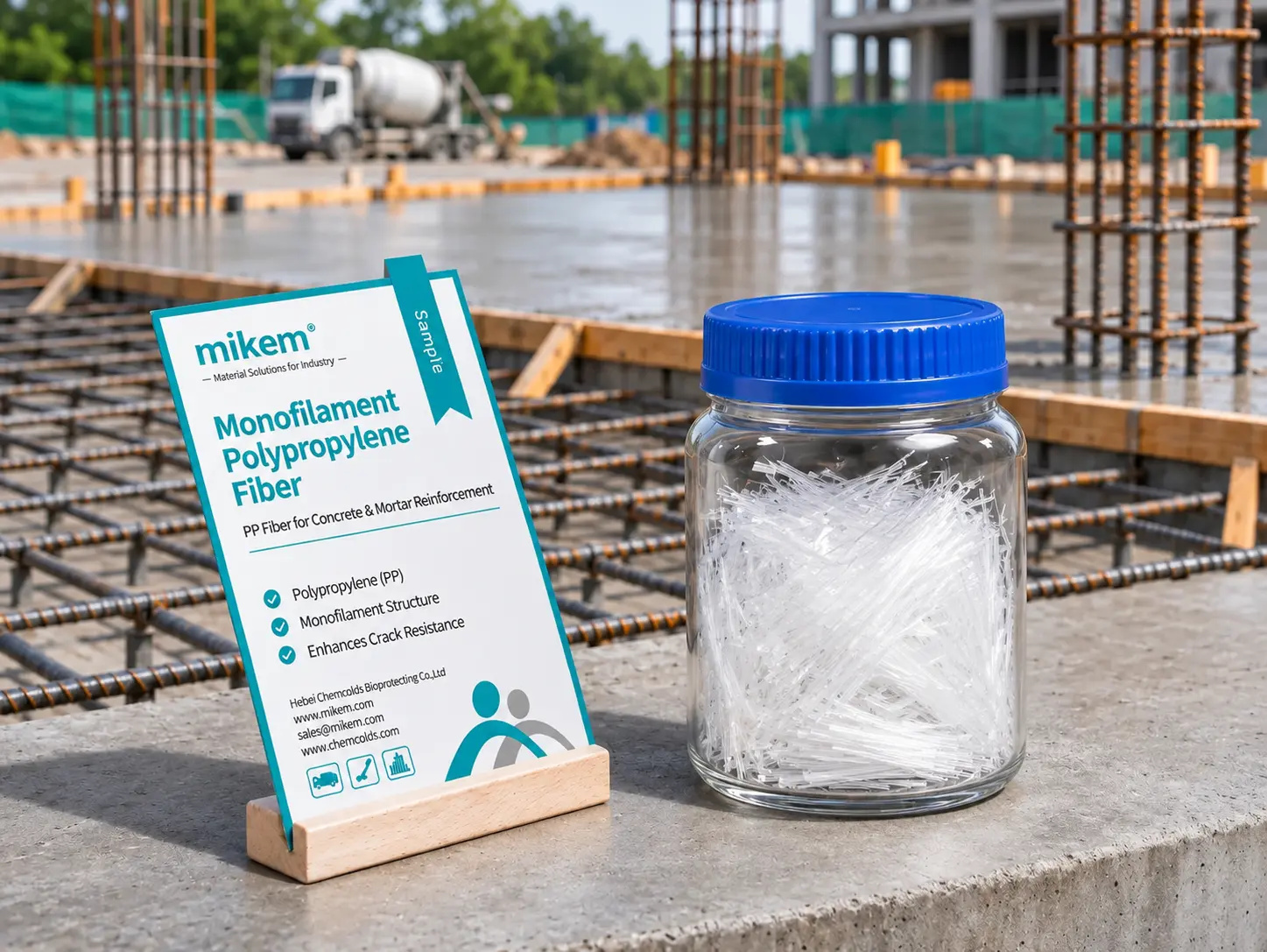
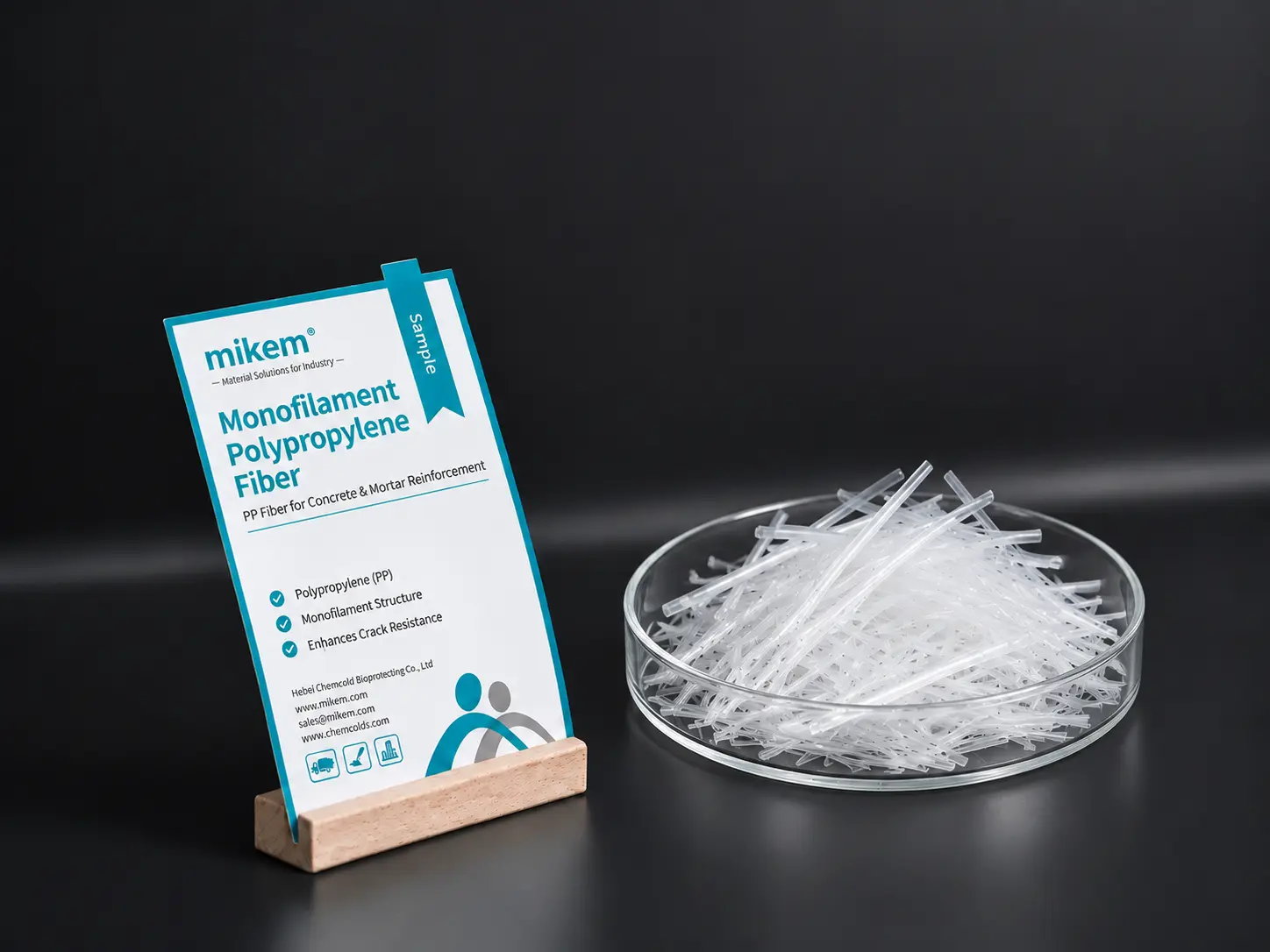
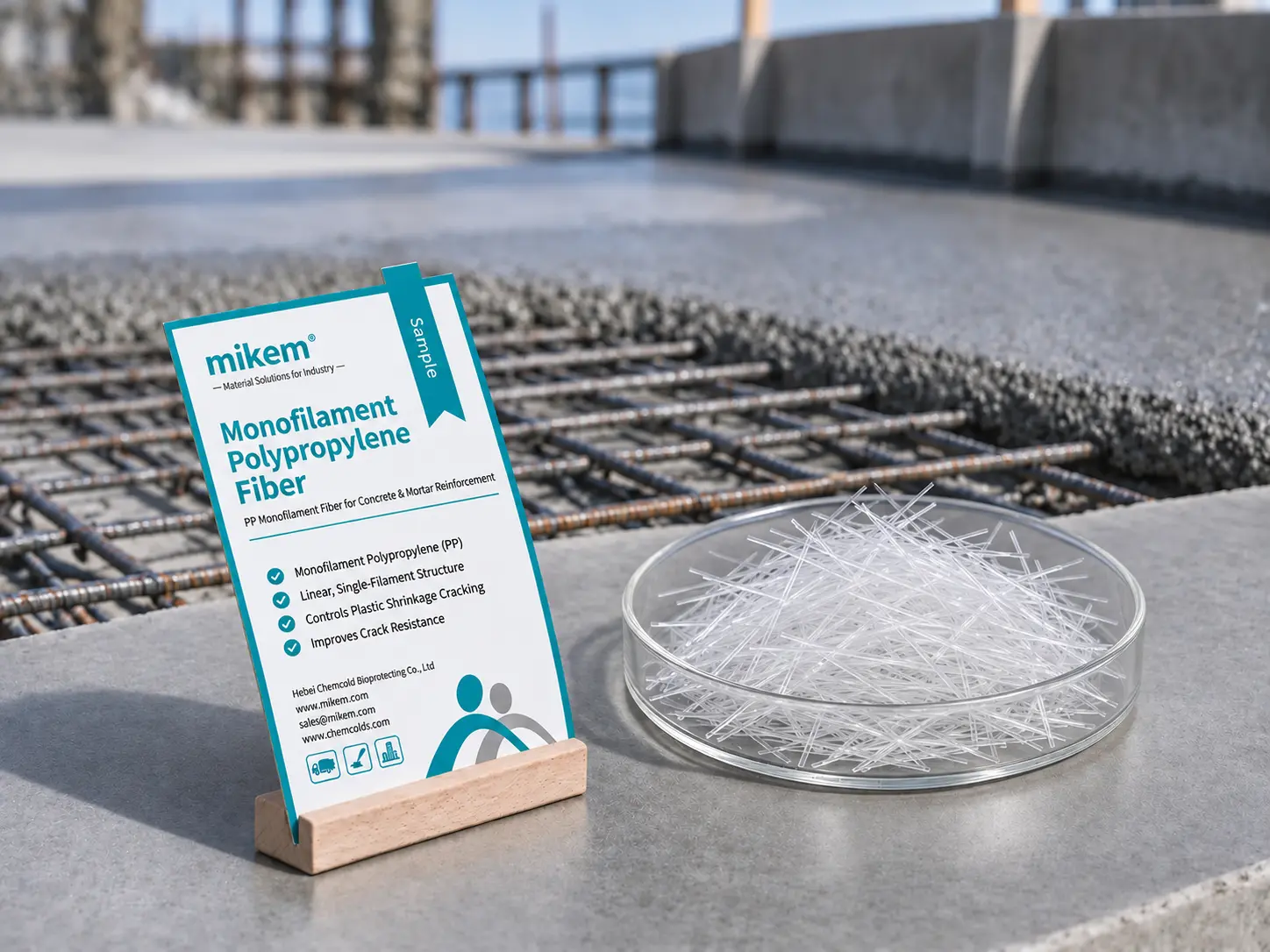
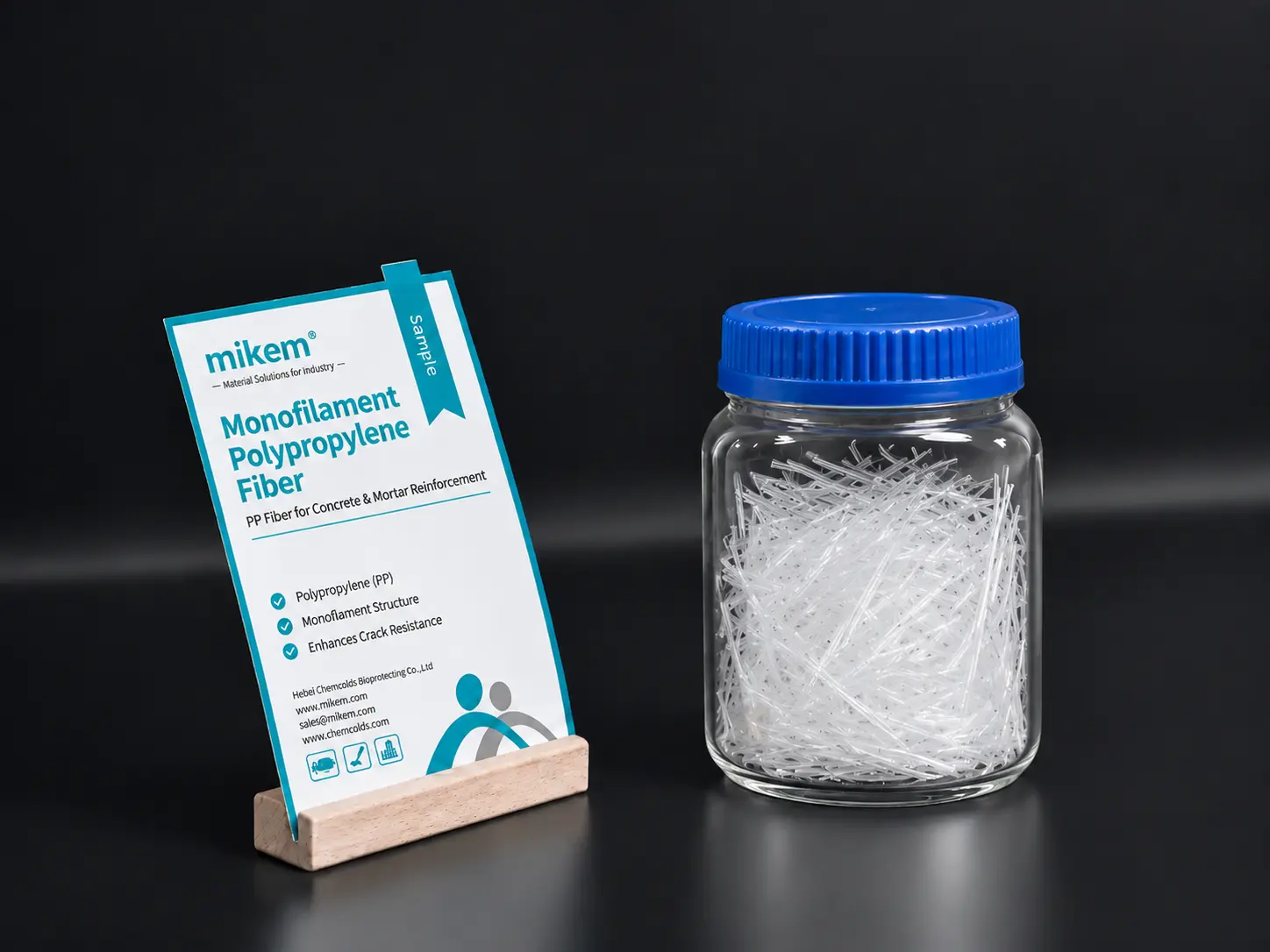
High-Performance Monofilament Polypropylene Fiber

Monofilament Polypropylene Fiber Manufacturer

MIKEM supplies monofilament polypropylene microfibers for concrete, mortars, screeds, plasters, and selected construction applications.

Our fine PP fibers are designed to support plastic shrinkage crack control, fresh-mix cohesion, and fiber dispersion when used with appropriate mixing procedures.

We help customers evaluate fiber specifications, application requirements, sample options, and commercial supply arrangements.
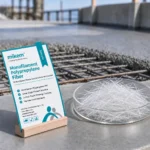
Effective Shrinkage Crack Control

Excellent Fiber Dispersion

Non-Corrosive Reinforcement

PRODUCT OVERVIEW

Construction-Grade Monofilament PP Microfiber


Monofilament Polypropylene Fiber is a lightweight synthetic micro-reinforcement material made from fine, individual polypropylene filaments. When incorporated into concrete and mortar, these fibers distribute throughout the cementitious mixture, helping control early-age cracking and improve the overall performance of construction materials.

With excellent resistance to moisture and alkaline environments, monofilament PP fiber provides a practical reinforcement solution for different concrete and mortar systems.

MIKEM manufactures monofilament polypropylene fiber with controlled specifications, flexible fiber lengths, and customized packaging to meet the needs of construction material manufacturers, contractors, and distributors.

TECHNICAL SPECIFICATIONS

Monofilament Polypropylene Fiber Technical Specifications

Fiber Type Monofilament Polypropylene Microfiber
Material 100% Virgin Polypropylene
Color White
Length 3 mm, 6 mm, 9 mm, 12 mm, 18 mm, 20 mm
Diameter 30-32 μm
Tensile Strength ≥ 500 MPa
Elastic Modulus ≥ 4500 MPa
Elongation 20–25%
Specific Gravity 0.91/cm3
Alkali, Salt, and Acid Resistance High
Melting Point 160 °C
Water Absorption None
Electrical Conductivity Low
Typical Dosage 0.6-0.9 kg/m3
HOW IT WORKS

How Monofilament PP Fiber Improves Concrete Performance


Monofilament polypropylene fibers work as distributed micro-reinforcement within concrete and mortar, helping limit early-age crack development and improve fresh mix stability.

01. Uniform Dispersion

Fine polypropylene filaments spread throughout the cementitious mixture, creating multidirectional fiber distribution.

02. Crack Restriction

Distributed fibers help restrain the formation and development of small cracks caused by plastic shrinkage and settlement.

03. Improved Cohesion

The fiber network helps maintain fresh mix cohesion, reducing the tendency toward bleeding and segregation.

04. Better Material Performance

Properly formulated fiber-reinforced mixtures can benefit from improved impact resistance, abrasion performance, and durability.

mikem-Monofilament-Polypropylene-Fiber
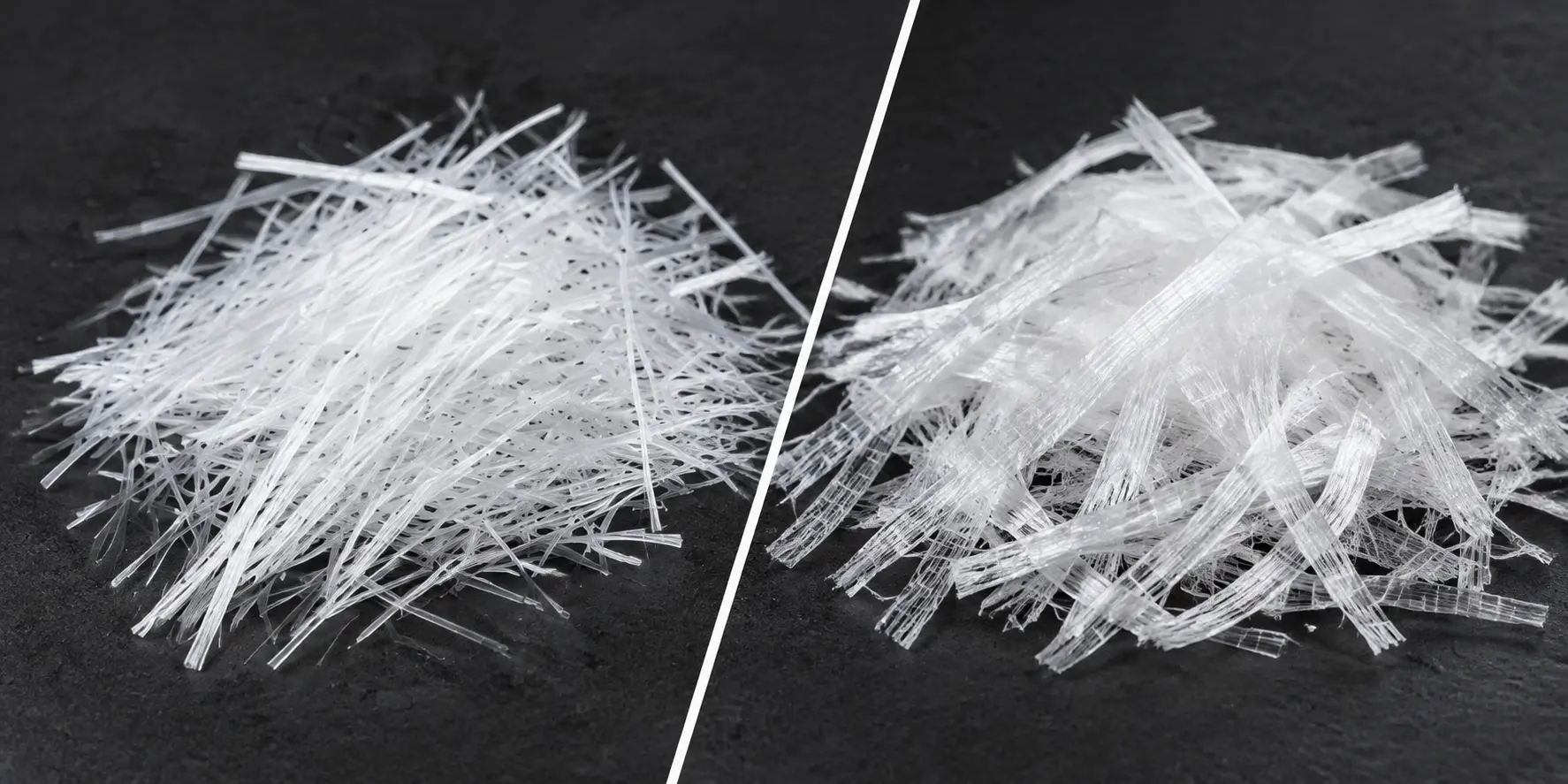
mikem Monofilament vs Fibrillated PP Fiber
PRODUCT COMPARISON

Monofilament vs. Fibrillated PP Fiber


Different polypropylene fiber structures serve different reinforcement requirements. Understanding their characteristics helps manufacturers select the right solution for their formulations.

Characteristic Monofilament PP Fiber Fibrillated PP Fiber Mesh
Fiber structure Individual fine filaments Network-like fibrillated strands
Appearance Thin, straight fibers Split, mesh-like structure
Main function Micro-reinforcement Distributed fiber reinforcement
Typical focus Early-age crack control Crack control and mix reinforcement
Applications Concrete, mortar, plaster Concrete, mortar and construction materials
PERFORMANCE THAT MATTERS

Why Choose Monofilament Polypropylene Fiber?


Monofilament PP fiber offers multiple benefits for cement-based materials, from early-age crack control to improved fresh mix performance.

01. Reduced Shrinkage Cracking

Helps minimize plastic shrinkage and settlement cracks, supporting better concrete surface quality during early curing.

02. Improved Mix Cohesion

Promotes fresh mix stability and helps reduce bleeding and segregation during concrete placement.

03. Enhanced Impact Resistance

Helps improve the toughness and impact resistance of suitable concrete and mortar formulations.

04. Excellent Corrosion Resistance

Unlike metallic reinforcement materials, polypropylene fibers do not rust and offer good resistance to alkaline environments.

05. Better Abrasion Performance

Contributes to improved abrasion resistance in suitable fiber-reinforced concrete applications.

06. Easy Mixing and Dispersion

Fine monofilament fibers can be distributed throughout concrete and mortar with an appropriate mixing process, supporting consistent reinforcement.

APPLICATIONS

Monofilament PP Fiber Across Construction Applications


Monofilament polypropylene fiber is suitable for a wide range of concrete and cement-based applications where shrinkage crack control, mix cohesion, and material durability are important.

mikem-Polypropylene-Fiber-for-Concrete-Floors-and-Industrial-Slabs

01. Concrete Floors and Industrial Slabs

Used in warehouse floors, factory flooring, commercial buildings, and industrial concrete slabs to help control early-age shrinkage cracking.

mikem-Polypropylene-Fiber-for-Roads-and-Pavements

02. Roads and Pavements

Suitable for concrete roads, sidewalks, driveways, and pavement systems, helping improve crack control during the early curing stage.

mikem-Polypropylene-Fiber-Mesh-for-for-precast-concrete-product

03. Precast Concrete Products

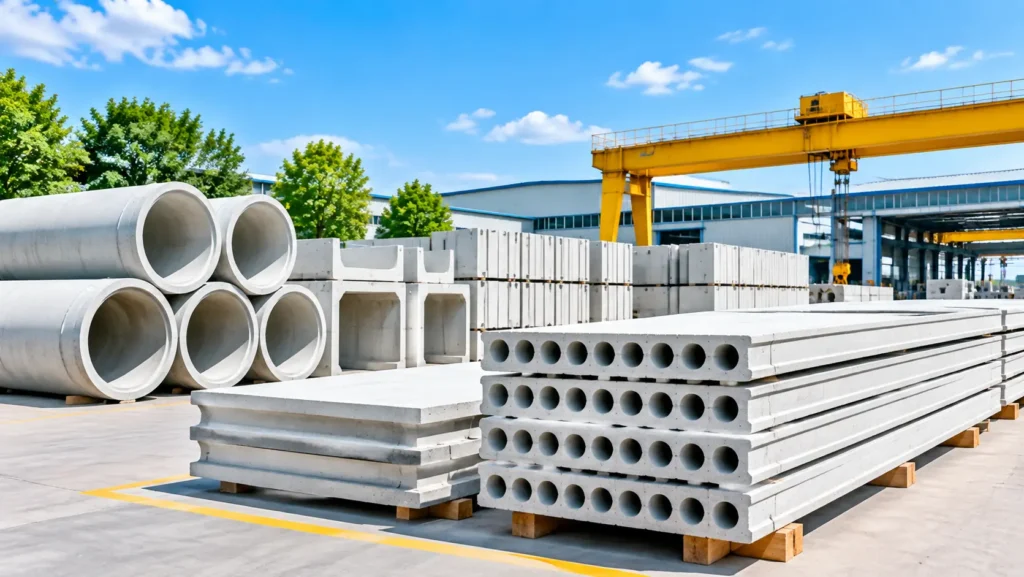
Incorporated into precast panels, concrete pipes, pavers, and other factory-produced concrete components to support crack control and handling performance.

mikem-Polypropylene-Fiber-for-Mortars-Screeds-and-Plasters

04. Mortars, Screeds and Plasters

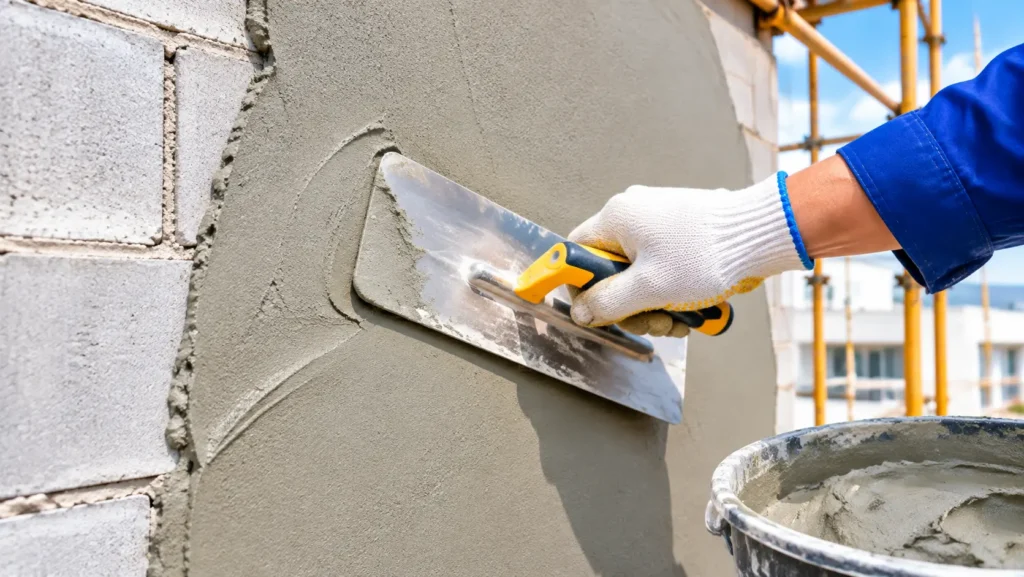
Helps improve cohesion and minimize surface cracking in cement-based renders, floor screeds, wall plasters, and repair mortars.

mikem-Polypropylene-Fiber-for-Shotcrete-and-Tunnel-Structures

05. Shotcrete and Tunnel Structures

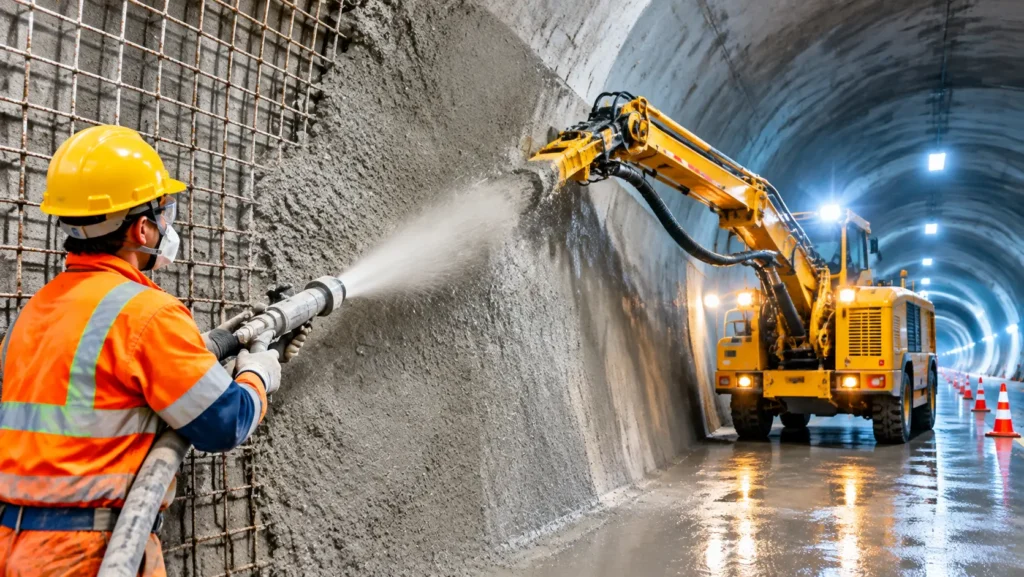
Used in sprayed concrete and underground construction systems to help improve mix cohesion and reduce rebound in suitable formulations.

mikem-Polypropylene-Fiber-for-Parking-Areas-and-Bridge-Decks

06. Parking Areas and Bridge Decks

Provides supplementary micro-reinforcement in selected concrete pavement and deck applications where early-age crack control is required.

Manufacturing & Quality

Built Around Manufacturing, Quality and Technical Expertise


MIKEM focuses on manufacturing capabilities rather than simply product distribution. Our approach combines production management, quality control, technical expertise, and flexible supply to support customers across the construction industry.

PRODUCT PACKAGING

Customized Packaging, Reliable Supply


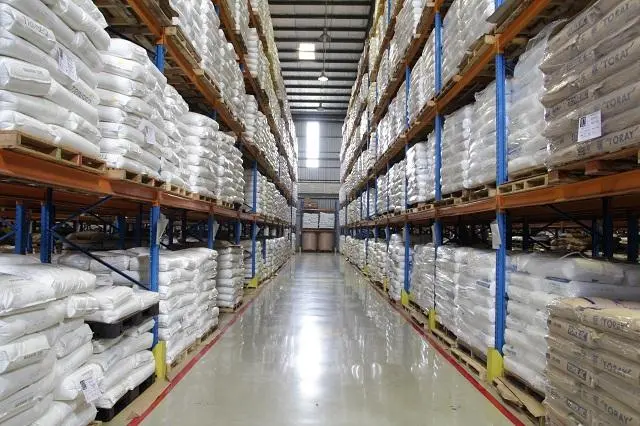
MIKEM Monofilament Polypropylene Fiber is available in customized packaging to meet different order volumes, transportation conditions, and customer requirements.

For proper product storage:

Keep the product in its original sealed packaging.

Store in a clean, dry, and well-ventilated area.

Protect from moisture and direct sunlight.

Keep away from excessive heat.

Follow the latest technical data sheet for storage recommendations.

mikem-Monofilament-Polypropylene-Fiber-product

Frequently Asked Questions


Monofilament polypropylene fiber is a synthetic micro-reinforcement material made from fine, individual polypropylene filaments. It is commonly incorporated into concrete and mortar to help control shrinkage cracking and improve fresh mix cohesion.

It is widely used in concrete floor slabs, industrial flooring, roads, pavements, precast concrete, shotcrete, cement-based mortars, screeds, and plasters.

When distributed throughout concrete, the fibers help restrain the development of small cracks caused by plastic shrinkage and settlement, particularly during the early stages of curing.

MIKEM offers fiber lengths ranging from 3 mm to 20 mm, with customizable options according to specific application and formulation requirements.

No. Conventional monofilament polypropylene microfibers are primarily used for supplementary reinforcement and early-age crack control. They should not be considered a direct replacement for structural steel reinforcement unless a specific engineered system has been tested and approved for that purpose.

Yes. It can generally be incorporated into concrete formulations containing commonly used admixtures, such as plasticizers and water reducers. Trial mixing is recommended to confirm compatibility and workability.

The dosage depends on fiber specifications, concrete mix design, and application requirements. Customers should refer to the product technical data sheet and conduct appropriate mix trials to determine the suitable dosage.

Choose a manufacturer that provides consistent raw materials, controlled fiber diameter and length, reliable tensile strength, current technical data sheets, and batch quality documentation. The manufacturer should also offer samples, formulation guidance, customized fiber lengths, suitable packaging, and dependable supply. MIKEM supports product evaluation and customized monofilament polypropylene fiber solutions for different concrete and mortar applications.

GET IN TOUCH

Build a More Reliable Chemical Supply Chain

Tell us what you’re looking for. Our team will get back to you as soon as possible.

By submitting this form, you agree to our Privacy Policy