Reducing clinker content is one of the most practical ways to lower the carbon footprint of cement, and limestone calcined clay cement (LC3) has become an important part of this discussion. By combining Portland clinker with calcined clay, limestone and gypsum, LC3 can achieve useful mechanical performance while requiring considerably less clinker than conventional Portland cement.
For concrete producers, however, changing the binder is rarely as simple as changing the mix proportions. A concrete mixture that works well with ordinary Portland cement (OPC) may behave quite differently once calcined clay is introduced. Higher water demand, poor initial flow and rapid slump loss can all become issues, particularly when the concrete needs to be transported over a considerable distance or remain workable before placement.
Polycarboxylate superplasticizer (PCE) plays an important role in addressing these problems. It helps disperse cementitious particles, reduces the amount of water needed to achieve a target consistency and supports the workability required during concrete production. The difficulty is that a PCE product performing well in OPC does not necessarily deliver the same results in LC3.
For manufacturers working with low-carbon concrete, the real task is to find a superplasticizer that suits the entire binder system, rather than simply choosing a product with a high advertised water-reduction rate.
What Makes LC3 Concrete Different from Ordinary Portland Cement?
LC3 is generally made from four main components: Portland clinker, calcined clay, limestone and gypsum. One commonly used reference formulation, known as LC3-50, contains approximately 50% clinker, 30% calcined clay, 15% limestone and 5% gypsum. The actual proportions can vary depending on the raw materials and the performance requirements of the cement.
Each component has a different role in the binder. Calcined clay supplies reactive silica and alumina, which participate in hydration reactions and contribute to the development of cementitious phases. Limestone provides calcium carbonate and takes part in reactions with alumina, helping form carboaluminate phases. Clinker remains the main source of hydraulic compounds, while gypsum helps regulate the sulfate balance and setting behavior. This combination makes it possible to reduce clinker consumption without necessarily sacrificing the strength and performance expected from cement-based materials.
The challenge becomes more apparent during mixing. Calcined clay can have a relatively high specific surface area and a complex particle structure. Depending on its mineral composition, fineness and calcination conditions, it may increase the amount of water and chemical admixture needed to obtain the desired consistency.
Consequently, an OPC mix design cannot simply be transferred to an LC3 system without checking its performance. The binder may have a similar strength target, but its interaction with the superplasticizer can be quite different.
Why LC3 Concrete Requires a Different PCE Strategy
1. Higher Surface Area and Admixture Demand
The relatively high specific surface area of calcined clay is one of the main reasons LC3 mixtures can require more superplasticizer than conventional cement systems. A larger available surface area creates more opportunities for interaction between the binder particles and PCE molecules.
PCE works by adsorbing onto particle surfaces and helping prevent them from gathering into larger agglomerates. When calcined clay is added to the mixture, the number and characteristics of available adsorption sites change. Depending on the clay and the polymer structure, a greater amount of admixture may be needed to achieve comparable dispersion.
Research on cement-calcined clay blends has reported changes in PCE requirements as the replacement level of calcined clay increases. This is worth considering when developing a new LC3 mix design, especially when an existing OPC formulation is being used as the starting point.
2. Clay Mineralogy and PCE Compatibility
The term calcined clay covers a range of materials, and their behavior in concrete is not identical. Kaolinite-derived metakaolin, illite-containing materials and other calcined clays can have different mineral compositions, surface properties and reactivity.
These differences affect how the clay interacts with water and chemical admixtures. A PCE that provides satisfactory dispersion in one LC3 formulation may produce less satisfactory results in another, even when the two binders have similar clinker replacement ratios.
This is why the replacement percentage alone is not enough to determine admixture compatibility. The actual clay characteristics need to be considered alongside the other binder components.
PCE selection should therefore be based on the materials used in the intended formulation, not simply on the fact that the cement is classified as LC3.
3. Early Hydration and Rapid Slump Loss
Another difficulty often encountered with LC3 concrete is the difference between initial workability and workability after mixing. Some mixtures reach an acceptable slump at the batching plant but become noticeably stiffer during transportation or while waiting for placement.
Part of the explanation lies in early hydration. As the binder reacts with water, new hydration products form and change the available particle surfaces. These newly formed surfaces can also interact with PCE molecules. If the amount of available admixture is no longer sufficient to maintain effective dispersion, the mixture begins to lose fluidity.
A 2024 study published in the Journal of the American Ceramic Society, titled Flow Loss in Superplasticized Limestone Calcined Clay Cement, examined this behavior in LC3 systems. The researchers identified the continuous formation of new surfaces during early reactions as an important factor behind fluidity loss.
The findings help explain a problem familiar to concrete producers: achieving a good initial slump does not necessarily mean the concrete will retain that slump during transportation.
How Polycarboxylate Superplasticizer Improves LC3 Concrete
Polycarboxylate ether superplasticizers have a comb-shaped molecular structure, typically consisting of a polymer backbone with carboxylate groups and polyethylene glycol side chains. The arrangement of these components allows PCE to disperse cementitious particles through a combination of electrostatic repulsion and steric hindrance.
After the polymer adsorbs onto particle surfaces, the negatively charged groups help particles repel one another, while the side chains create a physical barrier that makes it more difficult for them to come together again. This reduces particle agglomeration and allows the mixing water to contribute more effectively to the flow of the concrete.
In an LC3 system, where clinker, calcined clay and limestone have different surface characteristics, this dispersion mechanism is particularly relevant. A compatible PCE can help producers achieve their target consistency without having to increase the water content simply to compensate for poor flow.
The practical benefits include:
- Controlled Water Reduction: Less mixing water may be needed to reach the required consistency, helping producers maintain the intended water-to-binder ratio.
- Improved Initial Workability: Better particle dispersion supports more uniform flow during mixing, placement and compaction.
- Better Slump Retention: Depending on the polymer structure and binder compatibility, the right PCE can help slow the loss of workability during transportation and waiting periods.
- Improved Pumpability: Appropriate dispersion and mixture cohesion help concrete move through pumping equipment while limiting the risk of segregation.
- More Consistent Production: When the admixture is properly matched to the binder and production conditions are controlled, fresh-concrete properties become easier to manage from batch to batch.
There is an important distinction between water-reduction performance and slump-retention performance. A PCE may produce excellent initial flow but still struggle to maintain that flow over time. For LC3 concrete, both properties need to be considered when choosing an admixture.
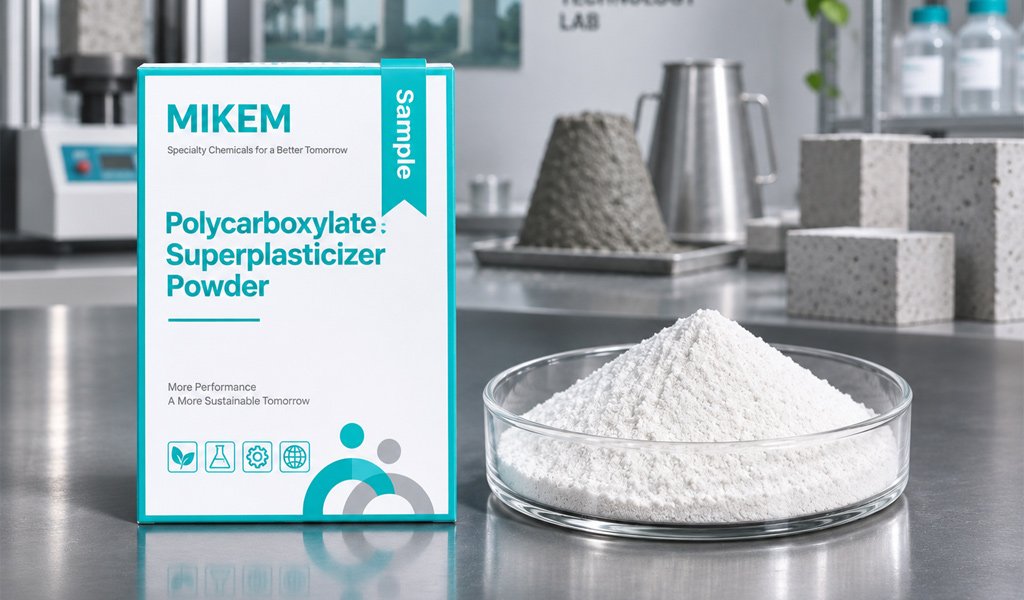
How to Select the Right PCE for LC3 Concrete
Choosing a polycarboxylate superplasticizer for LC3 involves more than comparing technical data sheets. The same product can behave differently depending on the binder composition, dosage, mixing procedure and production environment. A sensible selection process starts with the raw materials and moves gradually toward full concrete trials.
Evaluate the Binder Composition
Before comparing PCE products, it is worth understanding the LC3 binder itself. Calcined clay mineralogy, specific surface area and fineness can all affect admixture demand. Limestone characteristics, clinker composition and sulfate balance also influence the behavior of the mixture.
Two LC3 formulations with similar clinker replacement levels may therefore require different PCE dosages or polymer characteristics. Testing with the actual raw materials is much more useful than relying entirely on general formulation guidelines.
Compare PCE Performance
PCE products differ in molecular structure, adsorption behavior, water-reduction efficiency and their ability to maintain workability over time.
Some formulations are developed mainly to achieve high initial water reduction, while others place greater emphasis on fluidity retention. Neither characteristic should be considered in isolation when working with LC3. A product that performs well immediately after mixing may not be the best choice if the concrete needs to remain workable for an extended period.
The comparison should focus on how each PCE performs in the complete binder system, rather than relying on its advertised performance in conventional cement.
Optimize PCE Dosage
The amount of superplasticizer added to the mixture has a direct influence on dispersion and workability, but simply increasing the dosage is not always the answer. Too little PCE can leave the particles poorly dispersed, while excessive amounts may affect setting behavior, air content and other fresh or hardened concrete properties.
A better approach is to test several dosage levels while keeping the water-to-binder ratio and other mix parameters consistent. Comparing the results makes it easier to identify a dosage that provides the required initial flow without creating problems later in the process.
Investigate the Addition Sequence
The order in which admixtures are introduced can also make a difference, particularly in systems containing high levels of calcined clay.
A 2024 study published in Case Studies in Construction Materials examined different PCE addition sequences in high-volume calcined-clay cement pastes. Under the conditions tested, delayed PCE addition improved fluidity retention over a 60-minute period.
This finding is useful when investigating persistent workability loss, although it should not be treated as a universal solution. The research was conducted on cementitious pastes using particular materials and admixture conditions. Whether delayed addition will work in commercial concrete depends on the binder, mixing equipment, other admixtures and production procedures.
Conduct Concrete Trial Batches
Laboratory paste and mortar tests are useful for screening different PCE products, but they cannot reproduce every condition found in concrete production. Aggregates, moisture variations, mixing energy and environmental temperature all influence the final result.
Before introducing a new PCE into commercial production, trial batches should be prepared using the intended raw materials, aggregates, mixing equipment and dosage procedures. This is the best way to determine whether the laboratory results translate into reliable concrete performance.
How to Evaluate PCE Performance in LC3 Concrete
A structured testing process makes it easier to compare different PCE products and understand where performance differences come from. Rather than judging an admixture by its initial slump alone, concrete producers should look at several properties throughout the mixing and testing process.
| Test item |
What it evaluates |
| Initial slump or flow |
Initial workability after mixing |
| Slump retention |
Workability changes over time |
| Water reduction |
Water required to achieve target consistency |
| Setting time |
Influence on initial and final setting |
| Air content |
Changes in entrained or entrapped air |
| Compressive strength |
Hardened concrete performance |
For example, slump or flow measurements can be taken immediately after mixing and repeated at 30, 60 and 90 minutes. These intervals can be adjusted to match the actual transportation and placement schedule.
During the comparison, the water-to-binder ratio, mixing procedure and material conditions should remain consistent. Otherwise, it becomes difficult to determine whether a change in performance comes from the PCE itself or from differences in the test conditions.
The final decision should account for the complete performance profile. An admixture that produces excellent initial flow but causes excessive setting delay or poor slump retention may not be suitable for the intended concrete application.
Applications of PCE in LC3 Concrete
With the binder composition and admixture properly matched, LC3 concrete can be considered for several construction applications. The requirements will vary depending on how the concrete is produced, transported and placed.
Ready-Mix Concrete
Ready-mix concrete needs to retain sufficient workability between the batching plant and the construction site. This can be particularly important when transportation times are long or site conditions are unpredictable. A compatible PCE helps control water demand and maintain the consistency needed for placement.
Precast Concrete Products
In precast production, consistent batching, mold filling and compaction are important for maintaining product quality. Changes in fresh-concrete behavior can affect production efficiency and the uniformity of finished components. Proper PCE selection helps keep these properties under control.
Pumped Concrete
Concrete used in pumping operations needs enough flow to move through pipelines without losing cohesion. PCE selection should take into account pipeline conditions, aggregate grading and the potential for segregation, rather than focusing on slump alone.
High-Performance Concrete
LC3 can also be explored in high-performance concrete formulations where strength, durability and reduced clinker consumption are important design objectives. Whether a particular LC3 mixture can meet the required performance class needs to be established through mix design, testing and appropriate curing conditions.
Across all these applications, local raw material availability, project specifications and construction conditions will influence the final formulation.

Why Choose MIKEM as Your Polycarboxylate Superplasticizer Manufacturer?
For concrete producers and admixture manufacturers, finding a PCE that performs well in the laboratory is only part of the job. The product also needs to remain consistent when it is supplied in larger quantities and used in regular production. This is where the manufacturer’s production capabilities and quality management become important.
MIKEM is a chemical manufacturer with production capabilities and quality management systems supporting its construction chemical portfolio. Our focus is on manufacturing control, product consistency and the practical requirements of customers developing concrete formulations.
Controlled Manufacturing and Consistent Quality
A PCE product needs to deliver consistent characteristics from one production batch to the next. Even relatively small variations can affect water demand, workability and setting behavior, creating difficulties for customers who rely on stable concrete formulations. Controlled production processes and quality checks are therefore an important part of reliable admixture manufacturing.
Solutions for Different Concrete Formulations
OPC, LC3 and other supplementary cementitious material systems do not always respond to superplasticizers in the same way. MIKEM provides PCE products for modern concrete applications, with product selection guided by the characteristics of the binder and the performance requirements of the intended formulation.
Application-Oriented Technical Support
Selecting a PCE involves looking beyond its water-reduction rate. Customers also need to consider slump retention, setting behavior and compatibility with supplementary cementitious materials. MIKEM supports customers in discussing product specifications and evaluating suitable options for their applications.
Reliable Manufacturing for Long-Term Cooperation
A product that works well in a laboratory trial must also be available with consistent quality when production requirements increase. Manufacturing capacity, process control and quality management all matter when customers move from formulation development to regular commercial production.
MIKEM recognizes that one PCE formulation cannot be expected to perform identically in every cementitious system. Our approach is to understand the customer’s material and application requirements, then discuss suitable products and evaluation methods.
If you are developing LC3 concrete or experiencing compatibility issues between PCE and calcined clay-based binders, MIKEM welcomes the opportunity to discuss your requirements.
Frequently Asked Questions
1. What Does Polycarboxylate Superplasticizer Do in LC3 Concrete?
PCE helps disperse cementitious particles, reduce mixing water demand and improve fresh-concrete workability. Its performance depends on how well the polymer interacts with the clinker, calcined clay, limestone and gypsum in the LC3 binder.
2. Why Does LC3 Concrete Often Require More PCE?
Calcined clay can have a relatively high specific surface area and different adsorption characteristics from ordinary cement. These properties may increase PCE demand, although the actual requirement depends on clay mineralogy, fineness and the composition of the complete binder.
3. Can Conventional PCE Be Used in LC3 Concrete?
Yes. Conventional PCE products can be tested in LC3 systems, but their performance should not be assumed to match that in ordinary Portland cement. Compatibility and dosage trials are needed to determine whether a product provides the required workability and retention.
4. How Can PCE Improve Slump Retention in LC3 Concrete?
A properly selected PCE can help maintain particle dispersion and slow the loss of workability. However, slump retention also depends on early hydration, calcined clay characteristics, admixture dosage and mixing procedures. No single PCE formulation guarantees the same retention performance in every LC3 mixture.
5. How Do You Determine the Right PCE Dosage for LC3 Concrete?
Start with the actual binder composition and compare several PCE dosage levels under controlled conditions. Initial slump, slump retention, water reduction, setting time and compressive strength should all be considered before deciding on the dosage for commercial production.
Find the Right PCE Solution for Your LC3 Concrete
LC3 offers cement and concrete manufacturers a practical route toward reducing clinker consumption, but the change also brings new formulation challenges. Water demand, admixture compatibility and slump retention all need to be considered when moving away from conventional Portland cement.
For concrete producers, choosing the right polycarboxylate superplasticizer is an important part of making LC3 mixtures workable and consistent under actual production conditions. The right product is not necessarily the one with the highest water-reduction rate, but the one that performs reliably with the materials and processes being used.
MIKEM manufactures PCE solutions for modern concrete applications, supported by production control and quality-focused manufacturing. If you are developing an LC3 formulation, dealing with rapid slump loss or looking for a dependable PCE manufacturing partner, our team is ready to discuss your requirements.
Looking for a Reliable Polycarboxylate Superplasticizer Manufacturer? Contact MIKEM to discuss your concrete admixture requirements.