Melamine sulphonate superplasticizer in precast concrete plays an important role in improving concrete workability, reducing water demand, and supporting consistent production quality. As the construction industry increasingly adopts industrialized building methods, precast concrete manufacturers face growing pressure to produce high-quality components with greater efficiency, reliable strength development, and consistent dimensional accuracy.
Unlike conventional cast-in-place concrete, precast concrete is manufactured under controlled factory conditions. Production efficiency depends on several factors, including concrete flowability, mold filling, compaction, surface quality, and demolding schedules. Selecting the right chemical admixture is therefore essential.
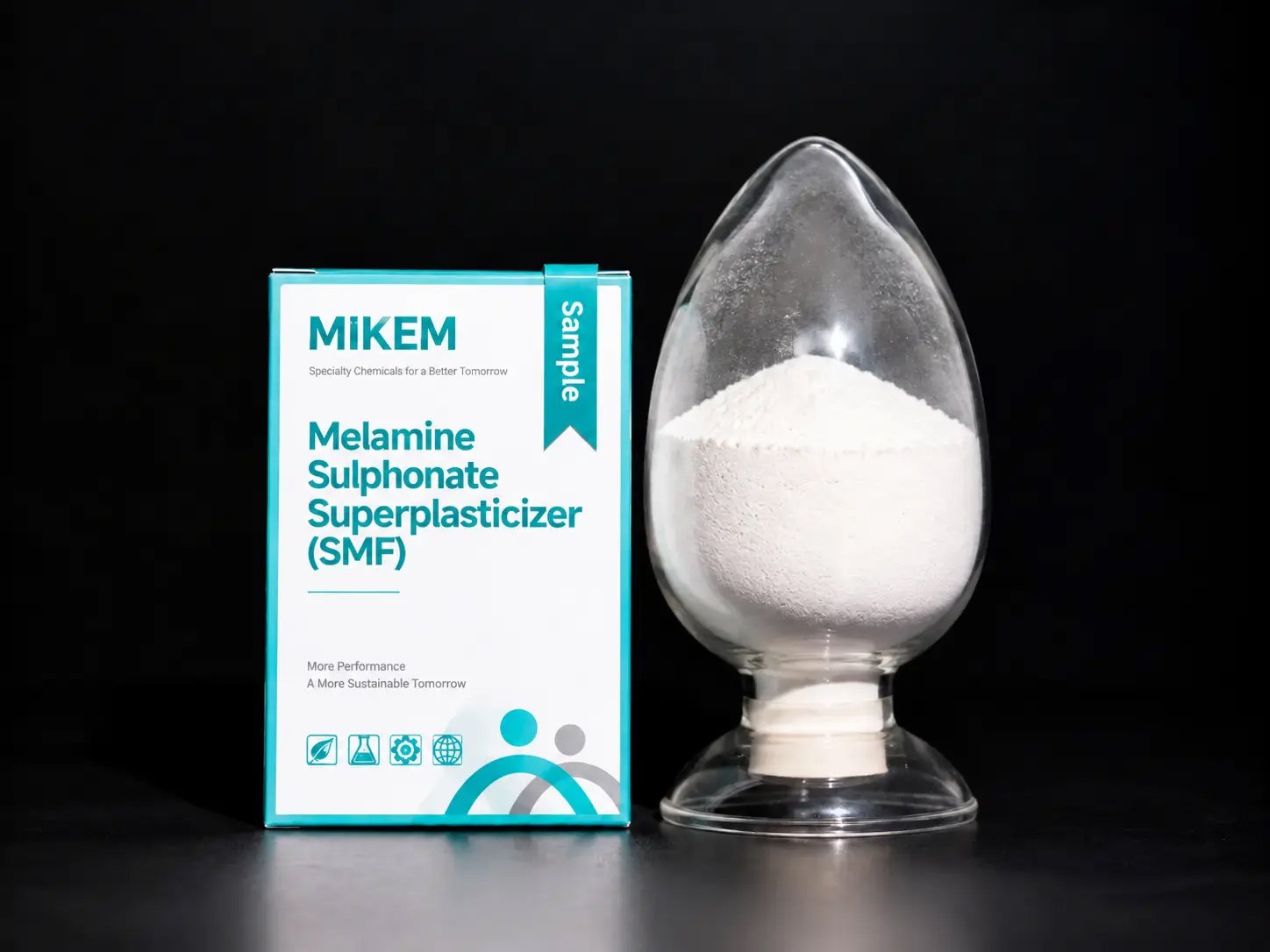
Melamine Sulphonate Superplasticizer (SMF) is a high-range water-reducing admixture that helps disperse cement particles, improve fluidity, and reduce mixing water requirements. When properly incorporated into a precast concrete formulation, SMF can help manufacturers achieve a balance between fresh concrete workability and hardened concrete performance.
For precast producers seeking reliable admixture solutions, understanding how SMF works and how to select the appropriate formulation is an important step toward more efficient manufacturing.
1. What Is Melamine Sulphonate Superplasticizer?
Melamine Sulphonate Superplasticizer, also known as Sulphonated Melamine Formaldehyde (SMF), is a water-soluble polymer-based chemical admixture widely used in cement-based construction materials. Its primary function is to disperse cement particles and reduce the water required to achieve a target level of workability. When cement comes into contact with water, fine cement particles tend to form agglomerates. These particle clusters can trap water and reduce the effective fluidity of the mixture. SMF works mainly through electrostatic dispersion. Its adsorption onto cement particles helps reduce particle agglomeration, allowing the cementitious mixture to flow more easily.
The main characteristics of SMF include:
- Water Reduction: Helps reduce mixing water while maintaining the required concrete workability.
- Particle Dispersion: Improves cement particle distribution and mixture fluidity.
- Low Air Entraining: Helps maintain a more uniform concrete structure when properly formulated.
- Strength Development: Supports higher hardened strength by enabling lower water-to-cement ratios.
- Formulation Compatibility: Can be incorporated into selected cement-based and gypsum-based construction systems.
These characteristics make SMF a useful option for precast concrete manufacturers looking to optimize production performance.
Why Is SMF Important in Precast Concrete Production?
Precast concrete production requires a controlled manufacturing process. Concrete must flow into molds, surround reinforcement, and achieve sufficient compaction without excessive segregation or bleeding. SMF can support several important production requirements.
1. Improved Flowability for Mold Filling
Precast concrete components often contain complex geometries, embedded reinforcement, and relatively narrow spaces. Insufficient concrete flowability can make it difficult to fill molds completely, particularly around reinforcement and corners. Melamine sulphonate superplasticizer improves the dispersion of cement particles, helping concrete achieve the required flow with less mixing water.
This can support:
- More efficient mold filling
- Better distribution around reinforcement
- Improved placement in complex molds
- More uniform concrete consistency
2. Reduced Water Demand for Better Strength
The water-to-cement ratio is a major factor influencing concrete strength and pore structure. Excessive mixing water can increase capillary porosity after hardening, potentially reducing compressive strength and durability. By improving particle dispersion, SMF allows manufacturers to reduce water demand while maintaining the required workability.
When supported by an appropriate mix design and curing process, this can contribute to:
- Higher compressive strength
- A denser hardened structure
- Reduced water-related porosity
- More consistent mechanical performance
3. Better Surface Quality
Surface defects can create additional finishing work and reduce the appearance of precast products. A properly designed SMF-containing mixture can improve fresh concrete flow and placement, helping produce more uniform surfaces. This is particularly relevant to architectural precast panels, decorative concrete elements, and products with visible finished surfaces. However, surface quality also depends on mold conditions, vibration, aggregate grading, air content, and curing.
4. Support for Production Efficiency
Precast manufacturers need to balance workability, setting behavior, and strength development to maintain efficient production schedules. SMF can help optimize water reduction and fresh concrete performance. In suitable formulations, these improvements can support more predictable manufacturing operations. It is important to note that SMF alone does not guarantee faster demolding. Demolding time must be determined through actual early-strength testing, considering cement type, temperature, curing conditions, and the complete admixture system.

Main Applications of SMF in Precast Concrete Products
Melamine sulphonate superplasticizer can be considered for different precast concrete products where fluidity, water reduction, and consistent production quality are important.
Precast Concrete Wall Panels
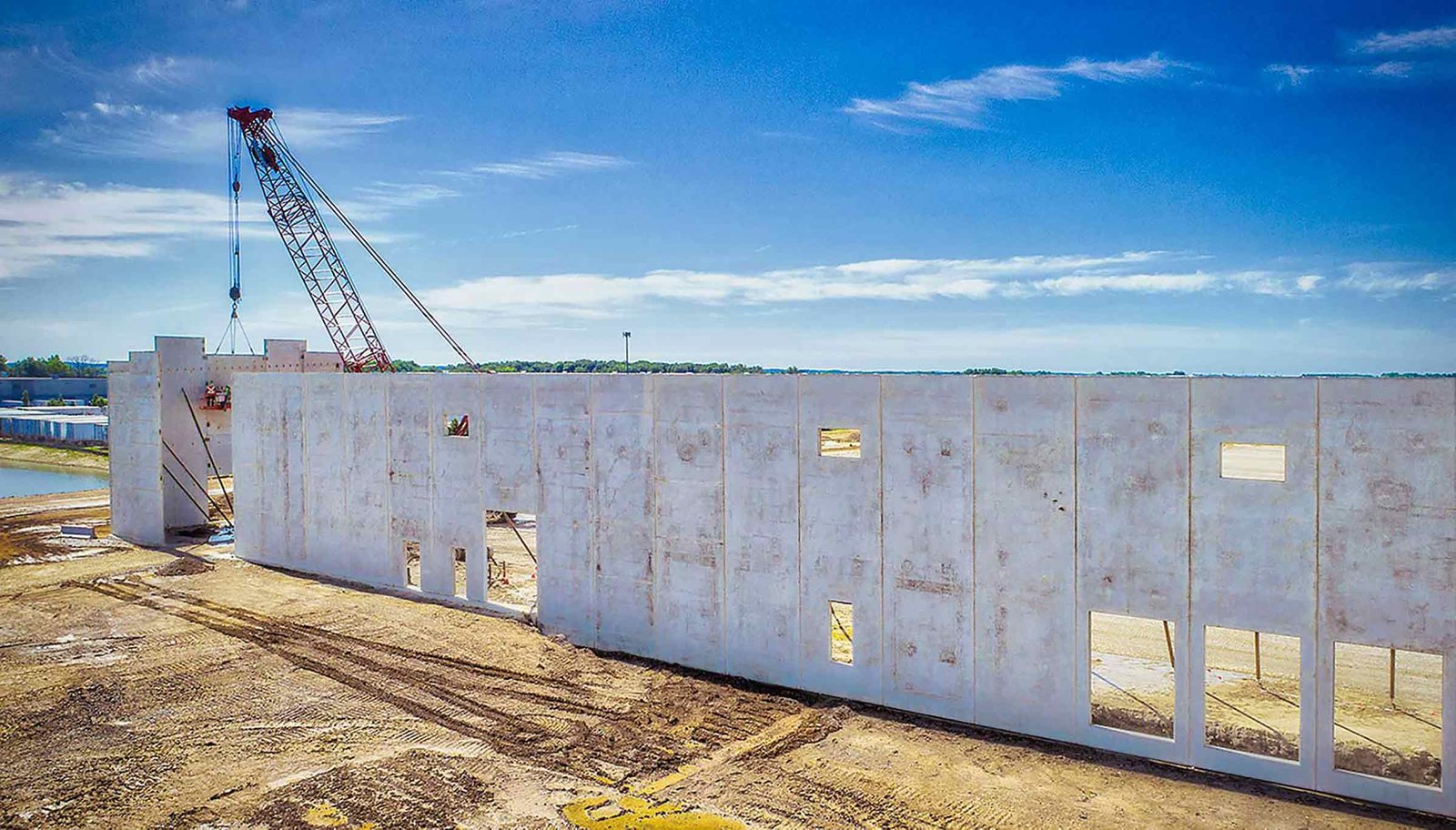
Precast wall panels are widely used in industrial buildings, commercial structures, residential construction, and modular building systems. Their production requires consistent concrete placement and reliable surface quality. SMF can help improve concrete flowability and reduce water demand, supporting more uniform panel production and better filling around reinforcement.
Precast Concrete Beams and Columns
Beams and columns are structural components that require reliable mechanical performance and dimensional consistency. Their reinforcement arrangements can make concrete placement challenging. SMF helps improve the workability of properly designed concrete mixtures, supporting placement around reinforcement and reducing the need for excessive mixing water.
Precast Hollow-Core Slabs
Hollow-core slabs are commonly used in floor and roof construction. Their production requires controlled concrete consistency and efficient placement within specialized equipment. A suitable superplasticizer system can help manufacturers achieve the required fresh concrete properties while maintaining a relatively low water-to-cement ratio. SMF may be evaluated in compatible production systems according to the required consistency and equipment conditions.
Precast Concrete Pipes and Drainage Products
Concrete pipes, drainage channels, and other infrastructure components require uniform material distribution and reliable hardened properties. SMF can help improve mixture fluidity and particle dispersion, supporting more consistent production when matched with suitable aggregate grading and compaction methods.
Architectural Precast Concrete
Architectural precast products require particular attention to surface appearance, dimensional accuracy, and production consistency. SMF can help improve workability and mold filling, contributing to a more uniform concrete surface when used with an appropriate formulation and manufacturing process.
SMF vs. Other Superplasticizers in Precast Concrete
Different superplasticizer technologies offer different performance characteristics. Choosing between them requires consideration of production conditions and formulation requirements.
| Comparison |
SMF |
PCE |
Naphthalene-Based |
| Main Function |
Particle dispersion and water reduction |
High water reduction and workability control |
Particle dispersion and water reduction |
| Dispersion Mechanism |
Electrostatic repulsion |
Electrostatic and steric effects |
Electrostatic repulsion |
| Water Reduction |
Effective |
Generally higher potential |
Effective |
| Workability Retention |
Formulation-dependent |
Grade-dependent |
Formulation-dependent |
| Typical Form |
Powder |
Liquid or powder |
Powder |
| Application |
Cement and gypsum systems |
Concrete and dry-mix systems |
Concrete and mortar |
SMF remains a useful option for manufacturers who require a powder-form superplasticizer with effective dispersing and water-reducing properties.
PCE may be preferable when higher water reduction or more advanced workability retention is required. Naphthalene-based superplasticizers also remain relevant in selected concrete production systems.
The final choice should be based on comparative testing rather than assuming that one admixture is suitable for every precast application.
Why Choose MIKEM Melamine Sulphonate Superplasticizer?
For construction chemical manufacturers, product consistency and dependable manufacturing are just as important as the chemical’s performance.
MIKEM provides Melamine Sulphonate Superplasticizer (SMF) for cement-based and gypsum-based construction formulations, supporting customers in developing products that require reliable dispersion, water reduction, and fluidity.
Key advantages of working with MIKEM include:
Controlled Manufacturing
MIKEM focuses on controlled manufacturing processes to support consistent product characteristics and dependable commercial production.
Strict Quality Control
Product evaluation and quality management help maintain reliable specifications and batch consistency.
Technical Formulation Support
Our team assists customers in evaluating product specifications, application requirements, and formulation compatibility.
Flexible Commercial Supply
MIKEM supports industrial purchasing requirements, packaging arrangements, and international deliveries.
Whether you manufacture precast concrete components, construction admixtures, or dry-mix building materials, MIKEM can help you identify suitable SMF solutions for your production requirements.
Conclusion
Melamine sulphonate superplasticizer in precast concrete offers manufacturers a practical way to improve cement particle dispersion, reduce water demand, and optimize fresh concrete workability.
From wall panels and structural beams to hollow-core slabs and architectural precast components, SMF can contribute to more consistent production when properly selected and incorporated into the concrete formulation.
As precast manufacturing continues to emphasize automation, production efficiency, and quality consistency, choosing the right chemical admixture becomes increasingly important.
Looking for a Reliable Melamine Sulphonate Superplasticizer Manufacturer?
MIKEM provides SMF solutions backed by manufacturing capabilities, quality management, and application-focused technical support.
Contact MIKEM to discuss your formulation requirements, request product specifications, and evaluate suitable SMF grades for your precast concrete applications.