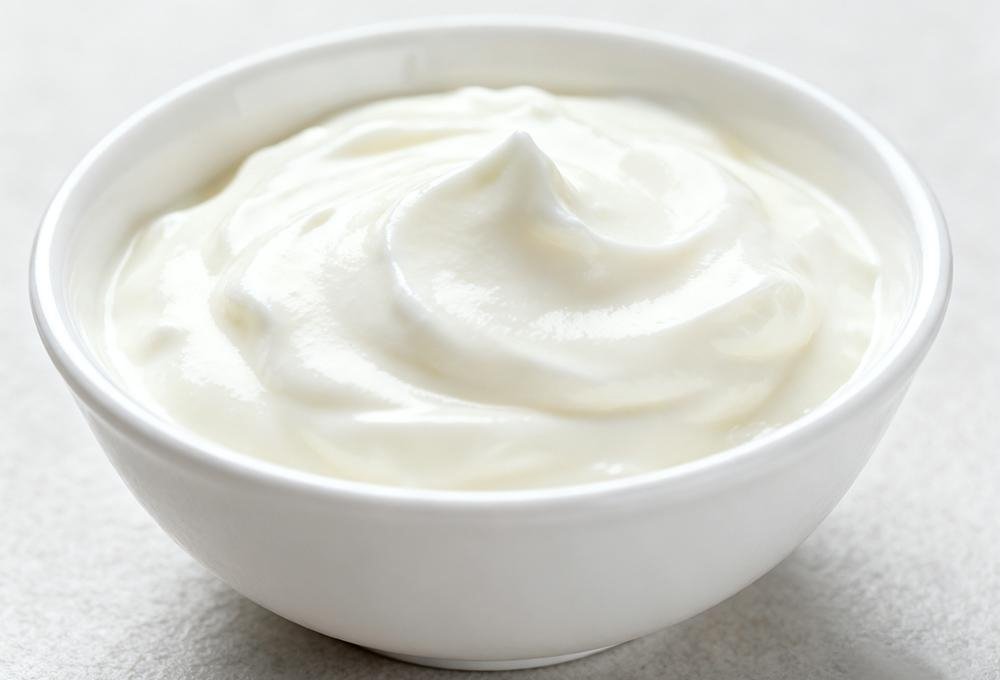
High-protein yogurt has become an important part of the dairy market. Consumers want products that offer more protein without compromising the taste and texture they expect from conventional yogurt. This has encouraged dairy manufacturers to develop everything from thick Greek-style yogurt to smooth, drinkable protein-rich dairy products.
However, increasing the protein content is not as straightforward as adding more milk protein concentrate or whey protein. A higher protein concentration changes the structure of the yogurt and affects how it behaves during fermentation, processing and storage. Some products become excessively firm, while others develop a grainy mouthfeel or release liquid after several days in refrigeration.
These problems are particularly noticeable in formulations that use concentrated protein ingredients. Manufacturers need to achieve a balance between nutritional value, processing performance and the texture consumers actually enjoy.
This is where stabilizer selection becomes important. Гидроксипропилметилцеллюлоза (HPMC) is a cellulose ether with thickening, water-retention and thermal gelation properties. Although it is not a conventional replacement for the protein network in yogurt, food-grade HPMC may be worth evaluating in selected dairy formulations where viscosity adjustment and control of water movement are important.
Its performance in high-protein yogurt depends on the specific HPMC grade, protein composition, processing conditions and regulatory requirements. Understanding these factors is essential before incorporating it into a commercial formulation.
What Is Food-Grade HPMC?
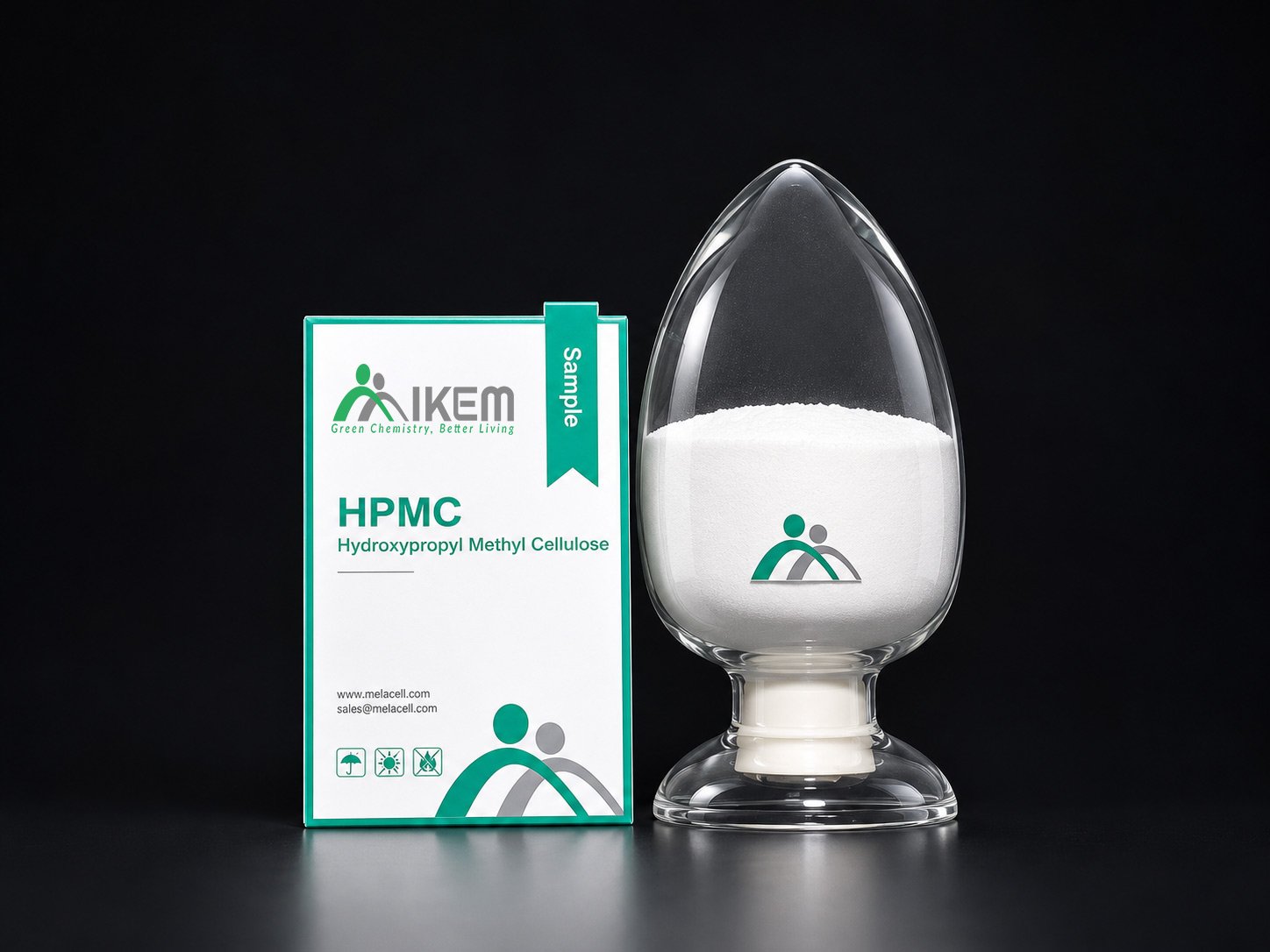
Hydroxypropyl Methylcellulose, commonly known as HPMC or hypromellose, is a water-soluble cellulose ether produced by chemically modifying natural cellulose. It is widely used in food formulations as a thickener, stabilizer, emulsifier and texture modifier, depending on the application and applicable regulations.
Food-grade HPMC is generally supplied as a white or off-white powder. When properly dispersed and hydrated, it forms a viscous solution. One of its distinctive characteristics is thermal gelation: its aqueous solution can form a gel when heated and return toward a liquid state as it cools. The temperature at which this occurs varies according to the grade and formulation environment.
For food manufacturers, this combination of viscosity control and temperature-dependent behavior makes HPMC an interesting functional ingredient. It is used in selected bakery products, sauces, prepared foods and other formulated food systems.
In dairy applications, however, its behavior needs to be considered alongside milk proteins, minerals, acidity and processing temperatures. A viscosity grade that performs well in a simple water-based system may behave differently in a concentrated milk-protein formulation.
This is why selecting Food Grade HPMC should involve more than comparing viscosity figures. Substitution characteristics, hydration behavior and compatibility with the complete formulation also deserve attention.
How High Protein Content Affects Yogurt Texture
Yogurt develops its characteristic structure through the acidification of milk. During fermentation, lactic acid bacteria produce lactic acid, lowering the pH and changing the interactions between milk proteins. Casein particles gradually form a network that gives yogurt its body and characteristic consistency.
When manufacturers increase the protein concentration, the structure of this network changes. Additional protein can contribute to a firmer gel, but the result depends on the type of protein ingredient, its hydration and the processing conditions.
Several problems may appear during production or refrigerated storage.
Whey Separation
Whey separation, also known as syneresis, occurs when liquid separates from the yogurt gel and collects on the surface or around the container. It can result from changes in the protein network, gel contraction, mechanical handling and storage conditions.
A high-protein formulation is not automatically resistant to syneresis. Even products with substantial protein content may release liquid if their gel structure and water distribution are not properly controlled.
Excessive Thickness
More protein can make yogurt firmer, but a thicker product is not always a better product. Some formulations become pasty or difficult to spoon, particularly when protein concentration, heat treatment and fermentation conditions are not balanced.
This creates a challenge for manufacturers producing different yogurt styles. A thick Greek-style yogurt has different texture requirements from a drinkable high-protein yogurt, so the same stabilizer system may not suit both.
Grainy or Uneven Texture
A grainy sensation may develop when protein particles are insufficiently hydrated or when aggregation occurs during processing. Differences in protein sources, heating conditions and homogenization can all influence the final texture.
Adding a thickener does not automatically remove these defects. If the protein ingredients are poorly dispersed, the finished product may still feel uneven even when its overall viscosity is relatively high.
For this reason, stabilizer selection should be part of a broader formulation strategy rather than a substitute for controlling the protein system and production process.
How HPMC Can Support High-Protein Yogurt Formulations
HPMC does not create the primary casein gel responsible for yogurt structure. Its potential role is different: it modifies the surrounding aqueous phase and influences the viscosity and physical behavior of the finished system.
For manufacturers developing high-protein yogurt, there are several properties worth investigating.
1. Supporting Water Management
Water management is one of the main challenges in high-protein yogurt production. A formulation may have a relatively high protein concentration but still release liquid during storage if its structure cannot retain water effectively.
HPMC has water-binding and thickening properties that can influence the movement of water through a food system. By increasing the viscosity of the continuous phase, it may help slow liquid movement and contribute to a more uniform texture.
This is particularly relevant when manufacturers are evaluating ways to reduce visible liquid separation. However, viscosity improvement should not be confused with eliminating syneresis. Whey separation is influenced by the protein network, fermentation, heat treatment and mechanical treatment, so the complete formulation must be tested.
2. Adjusting Viscosity and Consistency
Viscosity has a direct influence on how consumers experience yogurt. A product that is too thin may lack body, while one that is excessively thick can feel heavy and difficult to consume.
HPMC provides formulators with another way to adjust viscosity without relying entirely on increasing protein solids. Depending on the selected grade and concentration, it can influence the consistency of the surrounding liquid phase.
For high-protein yogurt, the objective should be to achieve the texture appropriate for the intended product. A spoonable Greek-style yogurt, a smooth protein dessert and a drinkable yogurt have different viscosity requirements.
Choosing a higher-viscosity HPMC grade does not automatically produce a better result. Excessive thickening may create an undesirable gummy or pasty sensation, so grade selection and dosage need to be evaluated together.
3. Contributing to a Smoother Mouthfeel
Consumers notice texture immediately. A high-protein yogurt may have an attractive nutritional profile, but a grainy or excessively dense mouthfeel can make it less appealing.
By modifying viscosity and the behavior of the continuous phase, HPMC may help improve the perception of body and smoothness in compatible formulations.
This is worth evaluating in products containing milk protein concentrate, whey protein concentrate or milk protein isolate. These ingredients differ in composition and hydration behavior, which means that their interactions with HPMC may also differ.
It is important to remember that smoothness is not determined by a thickener alone. Protein particle size, hydration, homogenization and fermentation all contribute to the final sensory result.
4. Influencing Physical Stability During Storage
A yogurt that looks satisfactory immediately after production may not maintain the same appearance and texture throughout its shelf life. Changes in gel structure and water distribution can affect viscosity, firmness and visible whey separation.
HPMC may contribute to physical stability in compatible systems by modifying the viscosity of the continuous phase. Whether this translates into better storage performance must be established through product testing.
Manufacturers should compare samples over the intended refrigerated shelf life, paying attention to liquid separation, texture changes and sensory quality. A promising result in a freshly prepared laboratory sample is not enough to demonstrate commercial stability.
HPMC vs. Conventional Stabilizers in High-Protein Yogurt
HPMC is not the only ingredient available for controlling yogurt texture. Dairy manufacturers commonly evaluate different hydrocolloids and functional ingredients, depending on the product style and the desired result.
The choice is not simply a matter of finding the strongest thickener. Different ingredients work through different mechanisms, and their performance depends on the composition of the dairy system.
| Ingredient |
Main Functional Characteristics |
Соображения по рецептуре |
| HPMC |
Thickening, water management and thermal gelation |
Requires evaluation of viscosity grade, hydration and temperature profile |
| Пектин |
Texture modification and interaction with dairy proteins under suitable conditions |
Performance depends on pH, protein composition and pectin type |
| Modified starch |
Thickening and body development |
May influence texture, viscosity and processing behavior |
| Желатин |
Gel formation and texture development |
Provides a different gel structure and has specific temperature-related behavior |
Each option has its own strengths and limitations.
Pectin is commonly considered in acidified dairy systems because of its interaction with proteins under suitable conditions. Modified starch can contribute to body and consistency, while gelatin is used where its characteristic gel structure is desired.
HPMC offers a different combination of thickening and thermal gelation behavior. It may be worth evaluating when manufacturers want to explore a cellulose ether-based functional system or adjust the viscosity of a concentrated protein formulation.
However, HPMC should not be presented as a universal replacement for pectin, starch or gelatin. Their functions are not identical, and there is no single ingredient that performs best in every yogurt formulation.
The practical approach is to compare suitable ingredients under the same production conditions, using measurable texture and stability results rather than relying on general product descriptions.
How to Evaluate HPMC in High-Protein Yogurt Production
Selecting an appropriate HPMC grade is only the first step. The way the ingredient is dispersed, hydrated and processed can have a considerable influence on the final result.
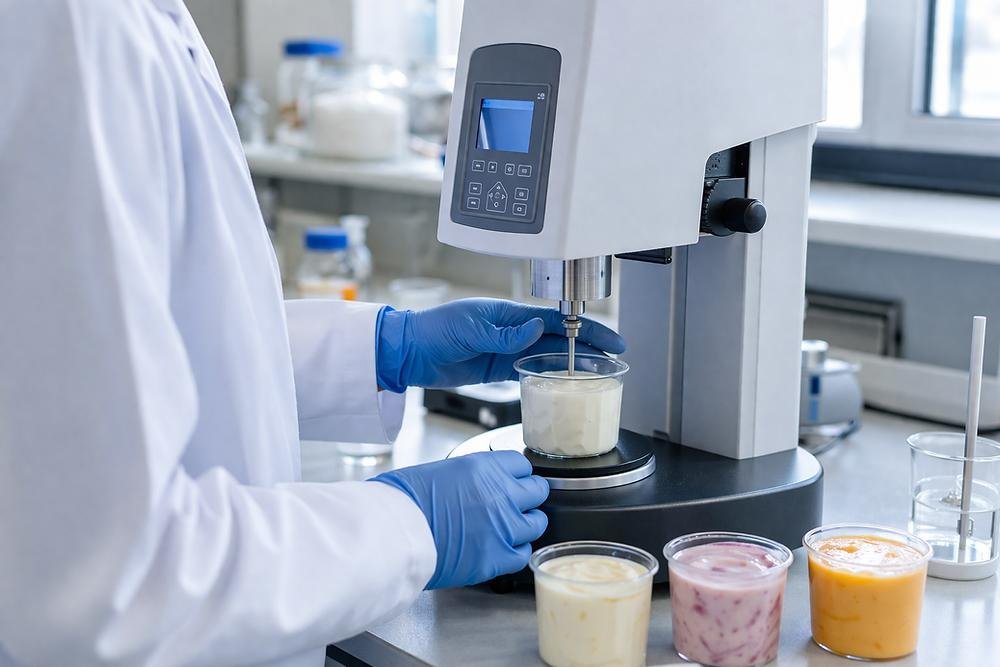
For manufacturers considering HPMC in yogurt formulation, laboratory evaluation should reflect the actual production process as closely as possible.
Ingredient Preparation and Dispersion
HPMC powder needs to be dispersed properly to avoid the formation of lumps. When powder particles come into contact with water too quickly, their outer surfaces may hydrate before the inner material has dispersed, producing agglomerates.
Manufacturers should follow the supplier’s recommended dispersion procedures. Depending on the grade and equipment, suitable methods may involve controlled powder addition, appropriate mixing intensity or a pre-dispersion step.
Hydration and Protein Blending
The hydration behavior of HPMC should be evaluated in the presence of the actual protein ingredients rather than in water alone.
Milk protein concentrate, whey protein concentrate and milk protein isolate have different functional characteristics. Their interactions with water and other ingredients may affect the final viscosity and texture.
It is therefore useful to compare different addition sequences and mixing conditions during laboratory trials.
Heat Treatment and Temperature Control
Heat treatment plays an important role in yogurt production because it affects milk protein functionality and the structure of the final gel.
HPMC also exhibits thermal gelation behavior. Its response to temperature depends on the grade and the surrounding formulation, so manufacturers should examine the heating and cooling profile rather than assume that its performance in a room-temperature solution will remain unchanged during processing.
Fermentation and pH
During fermentation, the pH of the milk mixture decreases as lactic acid is produced. This changes the interactions between milk proteins and influences the development of the yogurt gel.
HPMC should be evaluated in the actual acidic dairy environment. Manufacturers should monitor whether the selected grade affects viscosity, gel development or the sensory characteristics of the finished product.
Refrigerated Storage
Storage testing is essential before a formulation moves into commercial production. Samples should be evaluated at different points during the intended shelf life under realistic refrigeration conditions.
Several measurements are particularly useful:
- Apparent Viscosity: Determines whether the product maintains its target consistency.
- Syneresis Rate: Measures the amount of liquid released during storage.
- Water-Holding Capacity: Helps assess how effectively the yogurt structure retains water.
- Texture and Firmness: Evaluates changes in the product’s physical structure.
- Sensory Characteristics: Checks smoothness, creaminess, graininess and overall mouthfeel.
These results provide a more reliable basis for selecting an HPMC grade than viscosity measurements alone.
Choosing the Right HPMC Grade for Yogurt Formulation
Not every HPMC product is suitable for every food application. Different grades have different viscosity characteristics, substitution profiles and hydration behavior.
When evaluating HPMC for high-protein yogurt, manufacturers should consider several factors.
Viscosity Grade: The required viscosity depends on the product style and the desired mouthfeel. A spoonable yogurt and a drinkable formulation will not necessarily require the same grade.
Substitution Characteristics: Methoxy and hydroxypropoxy substitution influence the functional behavior of HPMC, including its hydration and thermal gelation properties.
Dispersion and Hydration: The selected grade should be compatible with the available mixing equipment and manufacturing process.
Product Specifications: Moisture content, purity and other relevant quality parameters should be reviewed against the manufacturer’s requirements.
Regulatory Suitability: The food-grade designation alone does not establish permission for every food category or market.
A practical approach is to identify the target texture first, then compare suitable grades through controlled formulation trials. This reduces the risk of selecting an ingredient based on a single specification that does not reflect its actual performance in the finished product.
Food Safety and Regulatory Considerations
Food additive regulations differ between countries and product categories. Manufacturers should not assume that an HPMC grade permitted in one food application is automatically authorized for every type of yogurt.
In the United States, 21 CFR §172.874 provides for the use of hydroxypropyl methylcellulose as an emulsifier, film former, protective colloid, stabilizer, suspending agent or thickener under the conditions specified in the regulation. It also addresses standardized foods that do not provide for such use.
In the European Union, HPMC is identified as E464. Its permitted applications must be checked against the applicable provisions of Regulation (EC) No 1333/2008, including the specific food category and conditions of use. Ordinary unflavoured yogurt, for example, falls within a different food category from flavoured fermented dairy products.
Before commercial use, manufacturers should verify:
- Whether HPMC is permitted in the specific finished food category.
- Applicable use conditions and maximum levels, where relevant.
- Ingredient declaration and labeling requirements.
- The suitability and documentation of the specific food-grade material.
Regulatory compliance should be confirmed for each target market before finalizing a commercial formulation.
Why Choose MIKEM for Food-Grade HPMC?
For food manufacturers, choosing an ingredient supplier is not simply about finding a product with the right name. Raw material specifications, batch consistency, production control and reliable communication all influence the efficiency of formulation development and commercial manufacturing.
MIKEM is a manufacturing-focused chemical company, not simply a supply-chain supplier. Its approach emphasizes production capabilities, quality management and customer support across its specialty chemical business, including food additives.
When sourcing Food Grade HPMC, manufacturers need to look beyond the general description of the product. Viscosity grade, substitution characteristics, moisture content and purity specifications all deserve attention because they can influence the performance of the finished formulation.
MIKEM focuses on four areas that matter to industrial customers:
Manufacturing and Production Control
A direct manufacturing approach provides a stronger foundation for product specification management and production communication. MIKEM emphasizes manufacturing capabilities and production management rather than relying solely on third-party sourcing.
Стабильные спецификации продукта
For food manufacturers running repeated production batches, consistency is essential. Variations in raw material characteristics can create unnecessary adjustments during formulation and processing. Quality management and controlled product specifications help customers maintain more predictable raw material requirements.
Technical Product Support
Choosing an HPMC grade requires consideration of the intended application, target viscosity and processing conditions. MIKEM can support product specification discussions and provide relevant technical information to help customers identify suitable grades for further evaluation.
Flexible Supply and Packaging
Different manufacturers have different purchasing volumes, production schedules and packaging requirements. Flexible supply and packaging arrangements help customers manage their raw material procurement according to their operational needs.
For companies developing yogurt, bakery products, sauces and other food formulations, a dependable HPMC supplier can make a meaningful difference to long-term production planning.
Часто задаваемые вопросы
1. What does HPMC do in high-protein yogurt?
HPMC can function as a thickener and texture modifier in suitable formulations. It may help adjust viscosity and influence water movement in the finished product. Its actual performance depends on the protein system, selected grade and processing conditions.
2. Can HPMC reduce whey separation in yogurt?
HPMC may influence liquid movement by increasing the viscosity of the continuous phase. However, whey separation is also affected by protein composition, fermentation, heat treatment and gel structure. Its effectiveness must be confirmed through formulation and storage trials.
3. Is HPMC better than pectin or modified starch in yogurt?
Not necessarily. HPMC, pectin and modified starch have different functional properties. The most suitable ingredient depends on the yogurt style, protein system, processing conditions and target texture. Manufacturers should compare them through controlled testing.
4. Which HPMC viscosity grade is suitable for high-protein yogurt?
There is no single grade suitable for every formulation. Selection depends on the target viscosity, protein source, processing conditions and desired mouthfeel. Comparing suitable grades in the actual dairy system is the most reliable approach.
5. Can HPMC be used with milk protein concentrate?
HPMC can be evaluated in formulations containing milk protein concentrate, but compatibility and performance need to be confirmed through laboratory trials. Protein hydration, mixing conditions and the final pH can influence the result.
6. Does HPMC affect yogurt fermentation?
Its influence should be evaluated in the complete formulation. The protein system, ingredient addition sequence, pH development and processing conditions may all affect the final result. Manufacturers should monitor fermentation and gel development during trials.
7. Is food-grade HPMC suitable for all fermented dairy products?
No general assumption should be made. Technical suitability and regulatory permission depend on the specific product category and target market. Manufacturers should check applicable food additive regulations before using HPMC in commercial products.
Заключение
Developing high-protein yogurt involves more than increasing the amount of protein in the milk base. Manufacturers also need to manage water distribution, gel structure, viscosity and mouthfeel throughout processing and refrigerated storage.
HPMC offers a combination of thickening, water-management and thermal gelation properties that may be useful in selected dairy formulations. Its value lies in what it can contribute to a carefully designed ingredient system, not in replacing the functions of protein or other stabilizers.
For manufacturers considering HPMC in high-protein yogurt, the next step is to evaluate suitable grades in the actual formulation, compare the results against the desired product characteristics and confirm regulatory suitability in the target market.
With its manufacturing-focused approach, product quality management and flexible supply capabilities, MIKEM aims to support food manufacturers in sourcing Food Grade HPMC for their formulation requirements.