Hochproteiniger Joghurt ist zu einem wichtigen Bestandteil des Milchmarktes geworden. Verbraucher wünschen sich Produkte, die mehr Protein bieten, ohne den Geschmack und die Textur zu beeinträchtigen, die sie von konventionellem Joghurt erwarten. Dies hat Milchhersteller dazu ermutigt, alles von dickem Joghurt nach griechischer Art bis hin zu glatten, trinkbaren proteinreichen Milchprodukten zu entwickeln.
Die Erhöhung des Proteingehalts ist jedoch nicht so einfach wie die Zugabe von mehr Milchproteinkonzentrat oder Molkenprotein. Eine höhere Proteinkonzentration verändert die Struktur des Joghurts und beeinflusst sein Verhalten während der Fermentation, Verarbeitung und Lagerung. Einige Produkte werden übermäßig fest, während andere eine körnige Mundfeel entwickeln oder nach mehreren Tagen im Kühlschrank Flüssigkeit absondern.
Diese Probleme sind besonders auffällig in Formulierungen, die konzentrierte Proteinzutaten verwenden. Hersteller müssen ein Gleichgewicht zwischen Nährwert, Verarbeitungsleistung und der Textur finden, die Verbraucher tatsächlich schätzen.
Hier wird die Auswahl von Stabilisatoren wichtig. Hydroxypropylmethylcellulose (HPMC) ist ein Celluloseether mit verdickenden, wasserbindenden und thermogelierenden Eigenschaften. Obwohl es kein konventioneller Ersatz für das Proteinnetzwerk in Joghurt ist, kann lebensmitteltaugliches HPMC in ausgewählten Milchformulierungen, bei denen Viskositätsanpassung und Kontrolle der Wasserbewegung wichtig sind, eine Bewertung wert sein.
Seine Leistung in hochproteinigem Joghurt hängt von der spezifischen HPMC-Sorte, der Proteinzusammensetzung, den Verarbeitungsbedingungen und den regulatorischen Anforderungen ab. Das Verständnis dieser Faktoren ist wesentlich, bevor es in eine kommerzielle Formulierung integriert wird.
Was ist lebensmitteltaugliches HPMC?
Hydroxypropylmethylcellulose, allgemein bekannt als HPMC oder Hypromellose, ist ein wasserlöslicher Celluloseether, der durch chemische Modifizierung von natürlicher Cellulose hergestellt wird. Es wird in Lebensmittelformulierungen häufig als Verdickungsmittel, Stabilisator, Emulgator und Texturmodifikator verwendet, je nach Anwendung und geltenden Vorschriften.
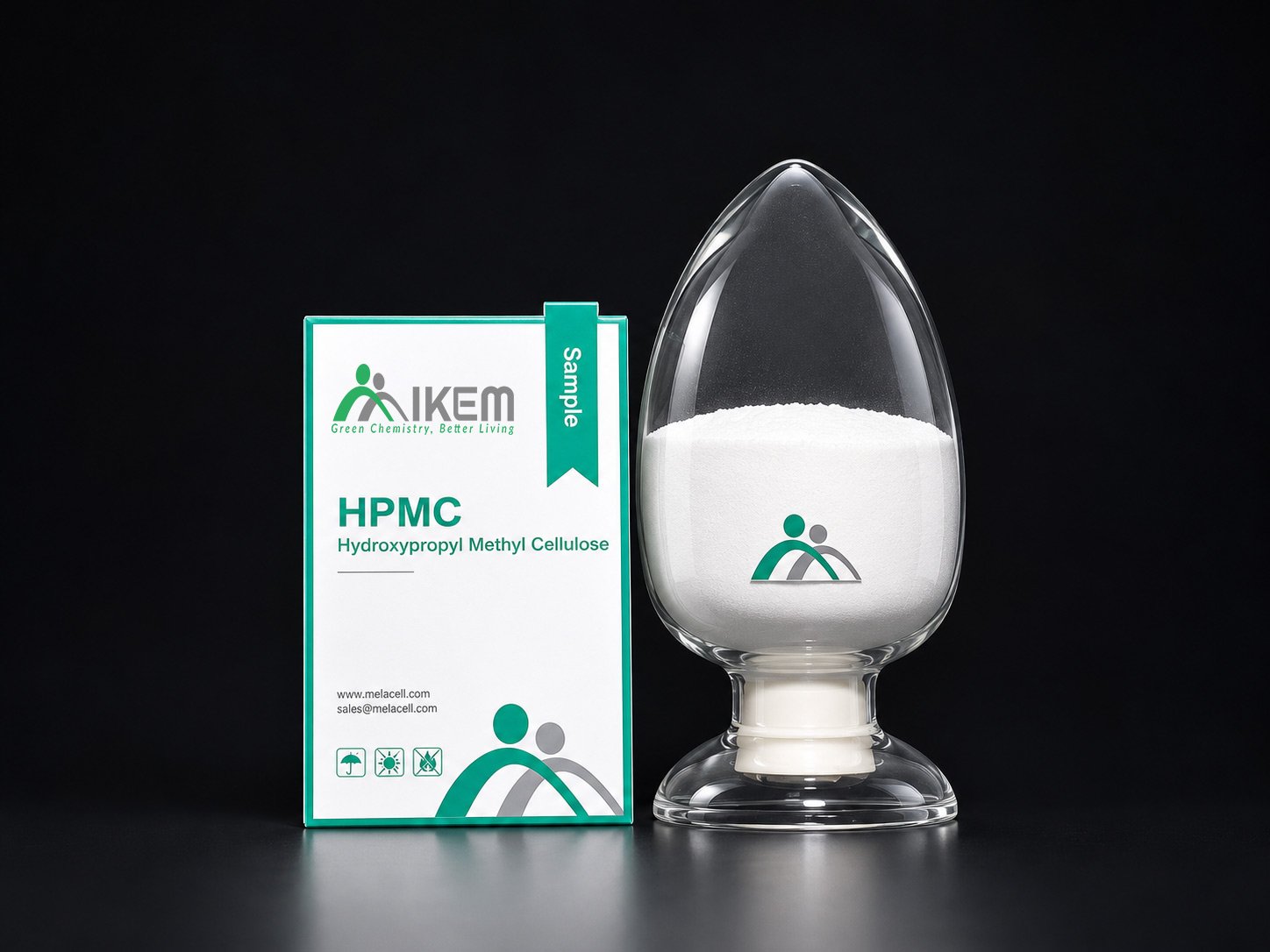
Lebensmitteltaugliches HPMC wird im Allgemeinen als weißes oder cremeweißes Pulver geliefert. Bei ordnungsgemäßer Dispergierung und Hydratation bildet es eine viskose Lösung. Eine seiner charakteristischen Eigenschaften ist die thermische Gelierung: Seine wässrige Lösung kann beim Erhitzen ein Gel bilden und beim Abkühlen in einen flüssigen Zustand zurückkehren. Die Temperatur, bei der dies auftritt, variiert je nach Sorte und Formulierungsumgebung.
Für Lebensmittelhersteller macht diese Kombination aus Viskositätskontrolle und temperaturabhängigem Verhalten HPMC zu einer interessanten funktionellen Zutat. Es wird in ausgewählten Backwaren, Saucen, zubereiteten Lebensmitteln und anderen formulierten Lebensmittelsystemen verwendet.
In Milchanwendungen muss sein Verhalten jedoch zusammen mit Milchproteinen, Mineralien, Säuregehalt und Verarbeitungstemperaturen betrachtet werden. Eine Viskositätsklasse, die in einem einfachen wasserbasierten System gut funktioniert, kann sich in einer konzentrierten Milchproteinformulierung anders verhalten.
Deshalb sollte die Auswahl von lebensmitteltauglichem HPMC mehr als den Vergleich von Viskositätswerten umfassen. Substitutionseigenschaften, Hydratationsverhalten und Kompatibilität mit der vollständigen Formulierung verdienen ebenfalls Aufmerksamkeit.
Wie ein hoher Proteingehalt die Joghurttextur beeinflusst
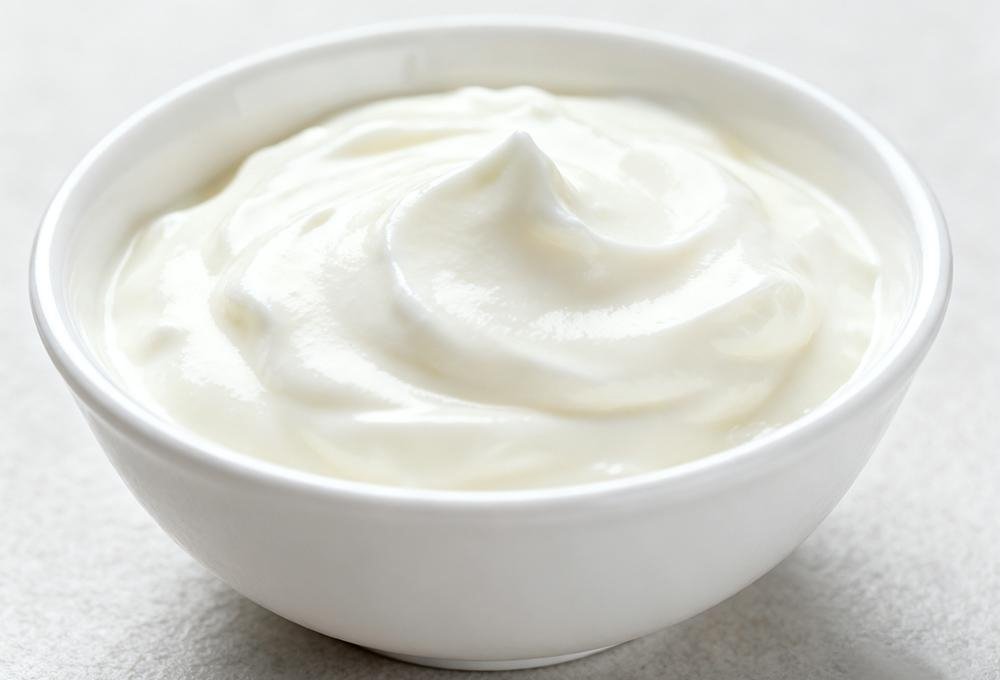
Joghurt entwickelt seine charakteristische Struktur durch die Ansäuerung von Milch. Während der Fermentation produzieren Milchsäurebakterien Milchsäure, senken den pH-Wert und verändern die Wechselwirkungen zwischen Milchproteinen. Caseinpartikel bilden allmählich ein Netzwerk, das dem Joghurt seinen Körper und seine charakteristische Konsistenz verleiht.
Wenn Hersteller die Proteinkonzentration erhöhen, verändert sich die Struktur dieses Netzwerks. Zusätzliches Protein kann zu einem festeren Gel beitragen, aber das Ergebnis hängt von der Art der Proteinzutat, ihrer Hydratation und den Verarbeitungsbedingungen ab.
Mehrere Probleme können während der Produktion oder der gekühlten Lagerung auftreten.
Molkenabscheidung
Molkenabscheidung, auch bekannt als Synärese, tritt auf, wenn sich Flüssigkeit vom Joghurtgel trennt und sich auf der Oberfläche oder um den Behälter sammelt. Sie kann durch Veränderungen im Proteinnetzwerk, Gelkontraktion, mechanische Behandlung und Lagerungsbedingungen verursacht werden.
Eine hochproteinige Formulierung ist nicht automatisch resistent gegen Synärese. Selbst Produkte mit erheblichem Proteingehalt können Flüssigkeit absondern, wenn ihre Gelstruktur und Wasservertteilung nicht ordnungsgemäß kontrolliert werden.
Übermäßige Dicke
Mehr Protein kann Joghurt fester machen, aber ein dickeres Produkt ist nicht immer ein besseres Produkt. Einige Formulierungen werden pastös oder schwer zu löffeln, insbesondere wenn Proteinkonzentration, Wärmebehandlung und Fermentationsbedingungen nicht ausgewogen sind.
Dies schafft eine Herausforderung für Hersteller, die verschiedene Joghurtstile produzieren. Ein dicker Joghurt nach griechischer Art hat andere Texturanforderungen als ein trinkbarer hochproteiniger Joghurt, sodass dasselbe Stabilisatorsystem nicht für beide geeignet sein kann.
Körnige oder ungleichmäßige Textur
Ein körniges Gefühl kann entstehen, wenn Proteinpartikel unzureichend hydratisiert sind oder wenn während der Verarbeitung Aggregation auftritt. Unterschiede in Proteinquellen, Erhitzungsbedingungen und Homogenisierung können alle die endgültige Textur beeinflussen.
Die Zugabe eines Verdickungsmittels beseitigt diese Defekte nicht automatisch. Wenn die Proteinzutaten schlecht dispergiert sind, kann sich das fertige Produkt immer noch ungleichmäßig anfühlen, selbst wenn seine Gesamtviskosität relativ hoch ist.
Aus diesem Grund sollte die Stabilisatorauswahl Teil einer breiteren Formulierungsstrategie sein und nicht ein Ersatz für die Kontrolle des Proteinsystems und des Produktionsprozesses.
Wie HPMC Hochprotein-Joghurtformulierungen unterstützen kann
HPMC bildet nicht das primäre Caseingel, das für die Joghurtstruktur verantwortlich ist. Seine potenzielle Rolle ist anders: Es modifiziert die umgebende wässrige Phase und beeinflusst die Viskosität und das physikalische Verhalten des fertigen Systems.
Für Hersteller, die hochproteinigen Joghurt entwickeln, gibt es mehrere Eigenschaften, die untersucht werden sollten.
1. Unterstützung des Wassermanagements
Wassermanagement ist eine der Hauptherausforderungen in der Hochprotein-Joghurtproduktion. Eine Formulierung kann eine relativ hohe Proteinkonzentration aufweisen, aber während der Lagerung immer noch Flüssigkeit absondern, wenn ihre Struktur Wasser nicht effektiv zurückhalten kann.
HPMC hat wasserbindende und verdickende Eigenschaften, die die Bewegung von Wasser durch ein Lebensmittelsystem beeinflussen können. Durch die Erhöhung der Viskosität der kontinuierlichen Phase kann es dazu beitragen, die Flüssigkeitsbewegung zu verlangsamen und zu einer gleichmäßigeren Textur beizutragen.
Dies ist besonders relevant, wenn Hersteller Möglichkeiten zur Reduzierung sichtbarer Flüssigkeitsabscheidung evaluieren. Verbesserte Viskosität sollte jedoch nicht mit der Beseitigung von Synärese verwechselt werden. Die Molkenabscheidung wird durch das Proteinnetzwerk, Fermentation, Wärmebehandlung und mechanische Behandlung beeinflusst, sodass die vollständige Formulierung getestet werden muss.
2. Anpassung von Viskosität und Konsistenz
Die Viskosität hat einen direkten Einfluss darauf, wie Verbraucher Joghurt erleben. Ein Produkt, das zu dünn ist, kann an Körper fehlen, während eines, das übermäßig dick ist, schwer und schwierig zu konsumieren sein kann.
HPMC bietet Formulierern eine weitere Möglichkeit, die Viskosität anzupassen, ohne sich ausschließlich auf die Erhöhung von Proteinfeststoffen zu verlassen. Je nach gewählter Sorte und Konzentration kann es die Konsistenz der umgebenden flüssigen Phase beeinflussen.
Für hochproteinigen Joghurt sollte das Ziel sein, die für das beabsichtigte Produkt geeignete Textur zu erreichen. Ein löffelbarer Joghurt nach griechischer Art, ein glattes Proteindessert und ein trinkbarer Joghurt haben unterschiedliche Viskositätsanforderungen.
Die Wahl einer HPMC-Sorte mit höherer Viskosität führt nicht automatisch zu einem besseren Ergebnis. Übermäßige Verdickung kann ein unerwünschtes gummiartiges oder pastöses Gefühl erzeugen, sodass Sortenauswahl und Dosierung gemeinsam bewertet werden müssen.
3. Beitrag zu einem glatteren Mundgefühl
Verbraucher bemerken Textur sofort. Ein hochproteiniger Joghurt kann ein attraktives Nährwertprofil haben, aber ein körniges oder übermäßig dichtes Mundgefühl kann ihn weniger ansprechend machen.
Durch die Modifizierung der Viskosität und des Verhaltens der kontinuierlichen Phase kann HPMC dazu beitragen, die Wahrnehmung von Körper und Glattheit in kompatiblen Formulierungen zu verbessern.
Dies ist es wert, in Produkten bewertet zu werden, die Milchproteinkonzentrat, Molkenproteinkonzentrat oder Milchproteinisolat enthalten. Diese Zutaten unterscheiden sich in Zusammensetzung und Hydratationsverhalten, was bedeutet, dass ihre Wechselwirkungen mit HPMC ebenfalls unterschiedlich sein können.
Es ist wichtig zu bedenken, dass Glattheit nicht allein durch ein Verdickungsmittel bestimmt wird. Proteingröße, Hydratation, Homogenisierung und Fermentation tragen alle zum endgültigen sensorischen Ergebnis bei.
4. Beeinflussung der physikalischen Stabilität während der Lagerung
Ein Joghurt, der unmittelbar nach der Produktion zufriedenstellend aussieht, behält möglicherweise nicht das gleiche Aussehen und die gleiche Textur während seiner Haltbarkeitsdauer bei. Veränderungen in der Gelstruktur und Wasservertteilung können Viskosität, Festigkeit und sichtbare Molkenabscheidung beeinflussen.
HPMC kann in kompatiblen Systemen zur physikalischen Stabilität beitragen, indem es die Viskosität der kontinuierlichen Phase modifiziert. Ob sich dies in einer besseren Lagerungsleistung niederschlägt, muss durch Produkttests festgestellt werden.
Hersteller sollten Proben über die beabsichtigte gekühlte Haltbarkeitsdauer vergleichen und dabei auf Flüssigkeitsabscheidung, Texturveränderungen und sensorische Qualität achten. Ein vielversprechendes Ergebnis in einer frisch zubereiteten Laborprobe reicht nicht aus, um kommerzielle Stabilität nachzuweisen.
HPMC vs. konventionelle Stabilisatoren in hochproteinigem Joghurt
HPMC is not the only ingredient available for controlling yogurt texture. Dairy manufacturers commonly evaluate different hydrocolloids and functional ingredients, depending on the product style and the desired result.
The choice is not simply a matter of finding the strongest thickener. Different ingredients work through different mechanisms, and their performance depends on the composition of the dairy system.
| Ingredient |
Main Functional Characteristics |
Formulierungsüberlegungen |
| HPMC |
Thickening, water management and thermal gelation |
Requires evaluation of viscosity grade, hydration and temperature profile |
| Pektin |
Texture modification and interaction with dairy proteins under suitable conditions |
Performance depends on pH, protein composition and pectin type |
| Modified starch |
Thickening and body development |
May influence texture, viscosity and processing behavior |
| Gelatine |
Gel formation and texture development |
Provides a different gel structure and has specific temperature-related behavior |
Each option has its own strengths and limitations.
Pectin is commonly considered in acidified dairy systems because of its interaction with proteins under suitable conditions. Modified starch can contribute to body and consistency, while gelatin is used where its characteristic gel structure is desired.
HPMC offers a different combination of thickening and thermal gelation behavior. It may be worth evaluating when manufacturers want to explore a cellulose ether-based functional system or adjust the viscosity of a concentrated protein formulation.
However, HPMC should not be presented as a universal replacement for pectin, starch or gelatin. Their functions are not identical, and there is no single ingredient that performs best in every yogurt formulation.
The practical approach is to compare suitable ingredients under the same production conditions, using measurable texture and stability results rather than relying on general product descriptions.
How to Evaluate HPMC in High-Protein Yogurt Production
Selecting an appropriate HPMC grade is only the first step. The way the ingredient is dispersed, hydrated and processed can have a considerable influence on the final result.
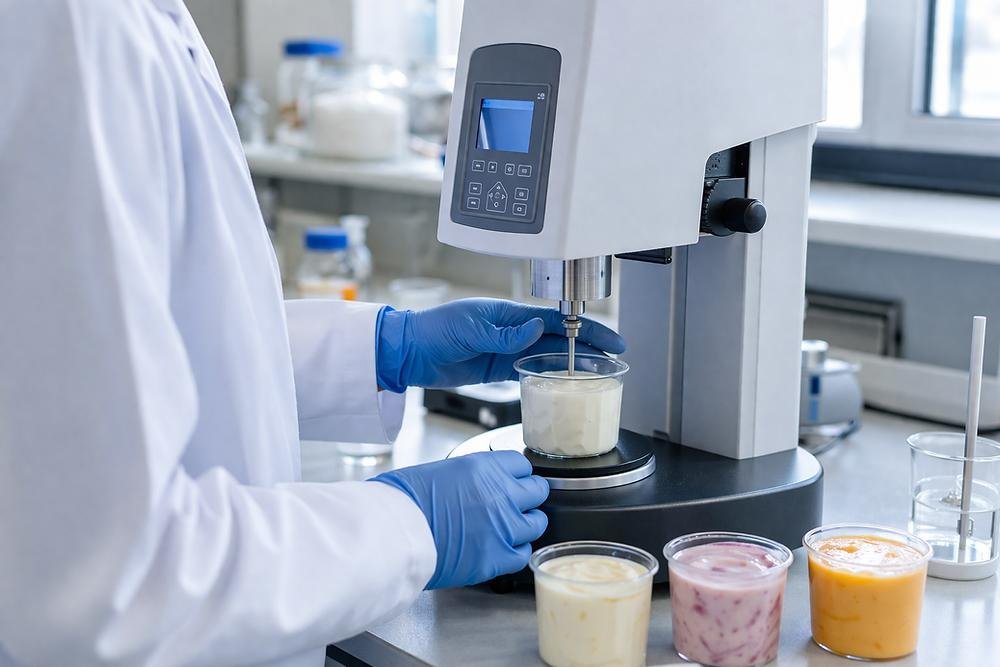
For manufacturers considering HPMC in yogurt formulation, laboratory evaluation should reflect the actual production process as closely as possible.
Ingredient Preparation and Dispersion
HPMC powder needs to be dispersed properly to avoid the formation of lumps. When powder particles come into contact with water too quickly, their outer surfaces may hydrate before the inner material has dispersed, producing agglomerates.
Manufacturers should follow the supplier’s recommended dispersion procedures. Depending on the grade and equipment, suitable methods may involve controlled powder addition, appropriate mixing intensity or a pre-dispersion step.
Hydration and Protein Blending
The hydration behavior of HPMC should be evaluated in the presence of the actual protein ingredients rather than in water alone.
Milk protein concentrate, whey protein concentrate and milk protein isolate have different functional characteristics. Their interactions with water and other ingredients may affect the final viscosity and texture.
It is therefore useful to compare different addition sequences and mixing conditions during laboratory trials.
Heat Treatment and Temperature Control
Heat treatment plays an important role in yogurt production because it affects milk protein functionality and the structure of the final gel.
HPMC also exhibits thermal gelation behavior. Its response to temperature depends on the grade and the surrounding formulation, so manufacturers should examine the heating and cooling profile rather than assume that its performance in a room-temperature solution will remain unchanged during processing.
Fermentation and pH
During fermentation, the pH of the milk mixture decreases as lactic acid is produced. This changes the interactions between milk proteins and influences the development of the yogurt gel.
HPMC should be evaluated in the actual acidic dairy environment. Manufacturers should monitor whether the selected grade affects viscosity, gel development or the sensory characteristics of the finished product.
Refrigerated Storage
Storage testing is essential before a formulation moves into commercial production. Samples should be evaluated at different points during the intended shelf life under realistic refrigeration conditions.
Several measurements are particularly useful:
- Apparent Viscosity: Determines whether the product maintains its target consistency.
- Syneresis Rate: Measures the amount of liquid released during storage.
- Water-Holding Capacity: Helps assess how effectively the yogurt structure retains water.
- Texture and Firmness: Evaluates changes in the product’s physical structure.
- Sensory Characteristics: Checks smoothness, creaminess, graininess and overall mouthfeel.
These results provide a more reliable basis for selecting an HPMC grade than viscosity measurements alone.
Choosing the Right HPMC Grade for Yogurt Formulation
Not every HPMC product is suitable for every food application. Different grades have different viscosity characteristics, substitution profiles and hydration behavior.
When evaluating HPMC for high-protein yogurt, manufacturers should consider several factors.
Viscosity Grade: The required viscosity depends on the product style and the desired mouthfeel. A spoonable yogurt and a drinkable formulation will not necessarily require the same grade.
Substitution Characteristics: Methoxy and hydroxypropoxy substitution influence the functional behavior of HPMC, including its hydration and thermal gelation properties.
Dispersion and Hydration: The selected grade should be compatible with the available mixing equipment and manufacturing process.
Product Specifications: Moisture content, purity and other relevant quality parameters should be reviewed against the manufacturer’s requirements.
Regulatory Suitability: The food-grade designation alone does not establish permission for every food category or market.
A practical approach is to identify the target texture first, then compare suitable grades through controlled formulation trials. This reduces the risk of selecting an ingredient based on a single specification that does not reflect its actual performance in the finished product.
Food Safety and Regulatory Considerations
Food additive regulations differ between countries and product categories. Manufacturers should not assume that an HPMC grade permitted in one food application is automatically authorized for every type of yogurt.
In the United States, 21 CFR §172.874 provides for the use of hydroxypropyl methylcellulose as an emulsifier, film former, protective colloid, stabilizer, suspending agent or thickener under the conditions specified in the regulation. It also addresses standardized foods that do not provide for such use.
In the European Union, HPMC is identified as E464. Its permitted applications must be checked against the applicable provisions of Regulation (EC) No 1333/2008, including the specific food category and conditions of use. Ordinary unflavoured yogurt, for example, falls within a different food category from flavoured fermented dairy products.
Before commercial use, manufacturers should verify:
- Whether HPMC is permitted in the specific finished food category.
- Applicable use conditions and maximum levels, where relevant.
- Ingredient declaration and labeling requirements.
- The suitability and documentation of the specific food-grade material.
Regulatory compliance should be confirmed for each target market before finalizing a commercial formulation.
Why Choose MIKEM for Food-Grade HPMC?
For food manufacturers, choosing an ingredient supplier is not simply about finding a product with the right name. Raw material specifications, batch consistency, production control and reliable communication all influence the efficiency of formulation development and commercial manufacturing.
MIKEM is a manufacturing-focused chemical company, not simply a supply-chain supplier. Its approach emphasizes production capabilities, quality management and customer support across its specialty chemical business, including food additives.
When sourcing Food Grade HPMC, manufacturers need to look beyond the general description of the product. Viscosity grade, substitution characteristics, moisture content and purity specifications all deserve attention because they can influence the performance of the finished formulation.
MIKEM focuses on four areas that matter to industrial customers:
Manufacturing and Production Control
A direct manufacturing approach provides a stronger foundation for product specification management and production communication. MIKEM emphasizes manufacturing capabilities and production management rather than relying solely on third-party sourcing.
Konsistente Produktspezifikationen
For food manufacturers running repeated production batches, consistency is essential. Variations in raw material characteristics can create unnecessary adjustments during formulation and processing. Quality management and controlled product specifications help customers maintain more predictable raw material requirements.
Technical Product Support
Choosing an HPMC grade requires consideration of the intended application, target viscosity and processing conditions. MIKEM can support product specification discussions and provide relevant technical information to help customers identify suitable grades for further evaluation.
Flexible Supply and Packaging
Different manufacturers have different purchasing volumes, production schedules and packaging requirements. Flexible supply and packaging arrangements help customers manage their raw material procurement according to their operational needs.
For companies developing yogurt, bakery products, sauces and other food formulations, a dependable HPMC supplier can make a meaningful difference to long-term production planning.
Häufig gestellte Fragen
1. What does HPMC do in high-protein yogurt?
HPMC can function as a thickener and texture modifier in suitable formulations. It may help adjust viscosity and influence water movement in the finished product. Its actual performance depends on the protein system, selected grade and processing conditions.
2. Can HPMC reduce whey separation in yogurt?
HPMC may influence liquid movement by increasing the viscosity of the continuous phase. However, whey separation is also affected by protein composition, fermentation, heat treatment and gel structure. Its effectiveness must be confirmed through formulation and storage trials.
3. Is HPMC better than pectin or modified starch in yogurt?
Not necessarily. HPMC, pectin and modified starch have different functional properties. The most suitable ingredient depends on the yogurt style, protein system, processing conditions and target texture. Manufacturers should compare them through controlled testing.
4. Which HPMC viscosity grade is suitable for high-protein yogurt?
There is no single grade suitable for every formulation. Selection depends on the target viscosity, protein source, processing conditions and desired mouthfeel. Comparing suitable grades in the actual dairy system is the most reliable approach.
5. Can HPMC be used with milk protein concentrate?
HPMC can be evaluated in formulations containing milk protein concentrate, but compatibility and performance need to be confirmed through laboratory trials. Protein hydration, mixing conditions and the final pH can influence the result.
6. Does HPMC affect yogurt fermentation?
Its influence should be evaluated in the complete formulation. The protein system, ingredient addition sequence, pH development and processing conditions may all affect the final result. Manufacturers should monitor fermentation and gel development during trials.
7. Is food-grade HPMC suitable for all fermented dairy products?
No general assumption should be made. Technical suitability and regulatory permission depend on the specific product category and target market. Manufacturers should check applicable food additive regulations before using HPMC in commercial products.
Fazit
Developing high-protein yogurt involves more than increasing the amount of protein in the milk base. Manufacturers also need to manage water distribution, gel structure, viscosity and mouthfeel throughout processing and refrigerated storage.
HPMC offers a combination of thickening, water-management and thermal gelation properties that may be useful in selected dairy formulations. Its value lies in what it can contribute to a carefully designed ingredient system, not in replacing the functions of protein or other stabilizers.
For manufacturers considering HPMC in high-protein yogurt, the next step is to evaluate suitable grades in the actual formulation, compare the results against the desired product characteristics and confirm regulatory suitability in the target market.
With its manufacturing-focused approach, product quality management and flexible supply capabilities, MIKEM aims to support food manufacturers in sourcing Food Grade HPMC for their formulation requirements.