Why Is Methyl Cellulose Used in Fried Food Batter and Coatings?
A fried food product can look excellent immediately after leaving the fryer, yet its quality may change considerably before it reaches the consumer. The coating may separate from the food surface, absorb too much oil or lose its crispness during storage. For manufacturers of frozen chicken, battered fish and ready-to-cook vegetables, these problems can affect both product appearance and eating quality.
Getting the right flour blend and frying conditions is important, but the functional ingredients in a batter also have a considerable influence on the finished product. Manufacturers need a coating that spreads evenly, stays attached during cooking and develops the right texture without becoming unnecessarily thick or heavy.
Methyl Cellulose (MC) is particularly useful in this type of formulation because it combines thickening, binding and temperature-responsive gelation properties. When added to a batter, it changes how the mixture behaves during application and heating. As the coated food enters hot oil, MC forms a gel structure that helps maintain the integrity of the coating while moisture moves through the product.
For food processors developing fried food coatings, this combination of properties makes methyl cellulose worth considering. MIKEM supplies methyl cellulose for food applications, including formulations where viscosity control, coating consistency and thermal behavior are important.
How Does Methyl Cellulose Work in Batter and Coatings?
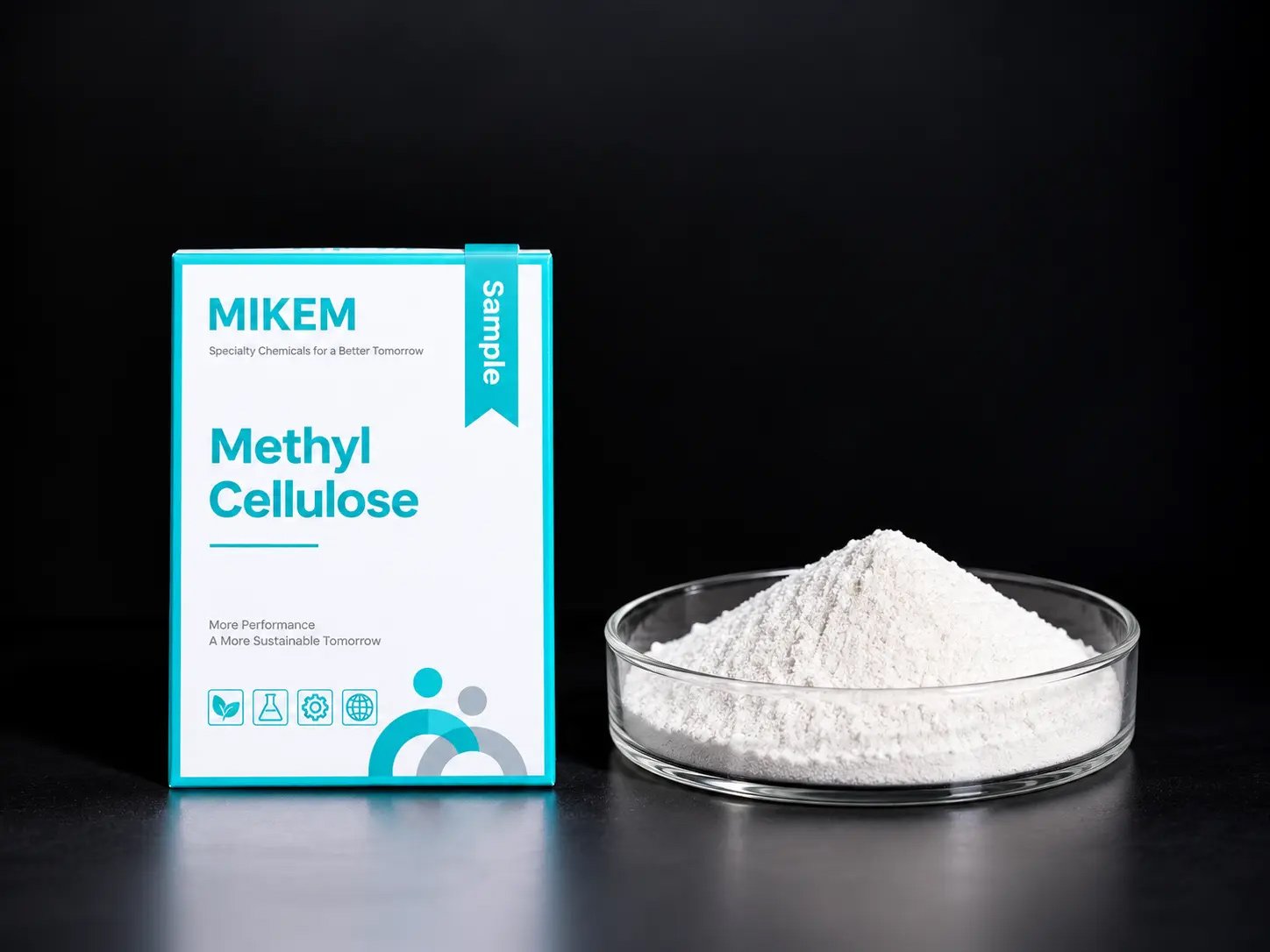
Methyl cellulose is a cellulose ether produced by chemically modifying natural cellulose. It is used in food manufacturing as a thickener, binder, stabilizer and texturizing ingredient. In food-grade applications, it is also identified as E461 in the European food additive numbering system, although permitted uses and conditions of use should always be checked against the regulations of the target market.
What makes MC different from many conventional thickeners is its reversible thermal gelation behavior.
When dispersed and hydrated in cold water, methyl cellulose forms a viscous solution. As the temperature rises, interactions between its methoxy groups become stronger, encouraging the polymer chains to associate and form a gel network. When the system cools, this thermal gel can gradually return to a more fluid state.
The temperature at which gelation occurs is not identical for every MC product. Molecular characteristics, viscosity grade, concentration and the composition of the surrounding food system can all influence its thermal behavior.
This temperature response is particularly relevant to frying. Before cooking, MC helps control batter consistency and coating pickup. Once the coated product enters hot oil, the developing gel structure helps the coating maintain its shape during the early stages of heating.
It is important to distinguish this temporary thermal gel from the final fried crust. The texture of the finished product develops through several processes, including moisture evaporation, starch gelatinization, protein changes and crust formation. MC contributes to this process, but it does not determine the final texture on its own.
4 Ways Methyl Cellulose Improves Fried Food Coatings
1. Better Batter Adhesion and More Uniform Coating
Coating adhesion is one of the first things manufacturers need to control. If batter does not attach properly to the food surface, it may slide off during processing or separate when the product enters the fryer.
This can be particularly troublesome when coating irregularly shaped chicken pieces, seafood or vegetables with relatively smooth and moist surfaces. Uneven batter pickup may leave some areas poorly covered while producing excessively thick layers elsewhere.
Methyl cellulose helps address this issue by modifying batter viscosity and contributing to coating cohesion. A properly selected MC grade allows the batter to spread across the food surface while maintaining enough consistency to remain in place during handling.
The benefit is not simply a thicker batter. What matters is achieving the right balance between flow and adhesion. If viscosity is too low, the coating may run off or provide insufficient coverage. If it is too high, the batter can become difficult to apply and may produce a heavy coating.
For commercial processors, selecting an appropriate viscosity grade is therefore just as important as determining the amount of methyl cellulose to add.
2. Moisture Retention and Better Control of Oil Uptake
Oil absorption is a major concern in fried food manufacturing, especially when producers are trying to maintain a consistent product texture without excessive oil content.
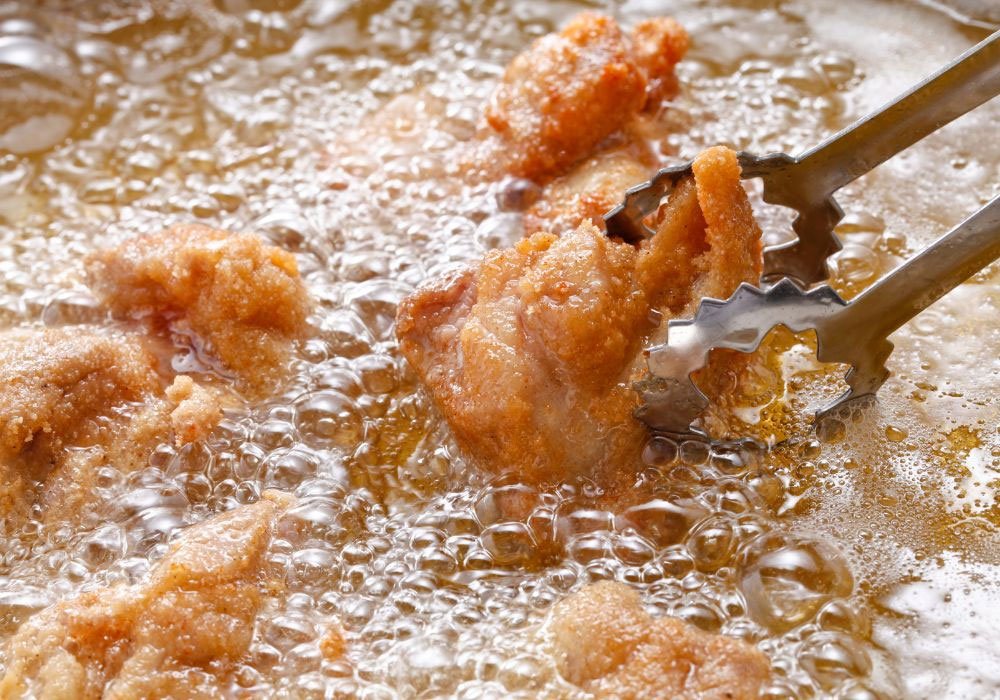
During deep frying, heat causes water inside the food and batter to evaporate. As moisture leaves, the coating develops pores and changes its internal structure. Oil can enter these spaces during frying, while additional surface oil may move into the coating as the product cools and internal vapor condenses.
Methyl cellulose can influence this process through its thermal gelation and film-forming properties.
As the coating heats up, MC forms a gel network that helps maintain the continuity of the outer layer. This structure can affect moisture movement and limit excessive moisture loss, depending on the formulation. It may also reduce the pathways through which oil enters the coating during frying and subsequent cooling.
The potential benefit is a better balance between moisture retention and oil uptake. However, methyl cellulose should not be treated as a guaranteed oil-reduction solution. Its effectiveness depends on the food matrix, coating composition, MC grade, concentration and frying conditions.
For manufacturers, the practical approach is to evaluate MC as part of the complete coating system and compare the final oil content of different formulations under controlled processing conditions.
3. Better Control of Crust Texture and Crispness
A good fried coating needs more than a golden appearance. Consumers expect a crisp outer layer that breaks cleanly when bitten, without feeling excessively hard, dense or chewy.
Methyl cellulose contributes to the structure of the batter during heating. Its thermal gelation helps the coating maintain cohesion while water evaporates, providing a more controlled environment for crust development.
However, crispness is influenced by several ingredients and processing conditions. Flour selection, starch composition, coating thickness and residual moisture all affect the final texture. Frying temperature and cooling conditions also determine how the crust develops and how long it retains its crispness.
The concentration of MC matters as well. Too much can produce a coating that feels overly firm or thick rather than light and crisp. A suitable grade and dosage should therefore be selected according to the texture manufacturers actually want to achieve.
In this context, methyl cellulose is best viewed as a tool for controlling coating structure and moisture behavior, rather than an ingredient that automatically makes every fried product crispier.
4. Improved Coating Integrity During Processing and Reheating
Commercial fried foods often pass through several processing stages before reaching the consumer. A typical production line may include predusting, batter application, breading, frying, freezing, packaging, storage and reheating.
Each stage places different demands on the coating. Handling can disturb poorly attached batter, freezing and storage can affect moisture distribution, and reheating can change the texture of the outer layer.
Methyl cellulose can help establish a more cohesive coating structure during the initial heating process. This may contribute to better coating integrity, particularly when the formulation is designed around the characteristics of the food and the production method.
Frozen fried products require additional attention. A coating that performs well immediately after frying may not deliver the same results after frozen storage and reheating. Manufacturers should therefore evaluate the complete production cycle rather than judging performance from the freshly fried sample alone.
Where Is Methyl Cellulose Used in Fried Food Formulations?
The functionality of methyl cellulose makes it relevant to several types of battered and coated foods. The exact formulation requirements vary according to the food surface, desired coating thickness and final cooking method.
| Food Application |
Main Formulation Challenge |
Potential Role of Methyl Cellulose |
| Fried Chicken |
Batter adhesion and coating integrity |
Controls batter consistency and supports coating structure |
| Battered Fish |
Delicate surfaces and moisture retention |
Helps maintain uniform coverage and coating cohesion |
| Fried Seafood |
Consistent coating on irregular surfaces |
Contributes to batter viscosity and structural stability |
| Onion Rings |
Uniform batter pickup and crust formation |
Helps control coating thickness and adhesion |
| Fried Vegetables |
Variable surface moisture |
Supports more consistent batter application |
| Potato-Based Snacks |
Oil uptake and surface texture |
Influences coating structure and moisture movement |
Different products call for different formulation approaches. Battered fish, for example, needs a coating that stays attached to a relatively delicate surface without becoming too heavy. A formulation that works well for chicken may therefore require adjustment before it can be used for seafood.
Vegetable products present another challenge because their surface moisture and natural structure can vary considerably. Manufacturers need to balance batter consistency with the ability of the coating to spread evenly.
Frozen coated foods also deserve attention. In these products, the coating must perform not only during the initial frying stage but also after storage and final preparation. This makes testing under actual production and reheating conditions particularly important.
How to Formulate Batter with Methyl Cellulose
Adding methyl cellulose to a batter is straightforward in principle, but the preparation method can influence its performance. Poor dispersion, incomplete hydration and unsuitable grade selection may lead to inconsistent viscosity or uneven coating pickup.
Varios factores merecen atención durante el desarrollo de la formulación.
1. Select the Right Viscosity Grade
Different products require different batter characteristics. A relatively thin coating for seafood may need a different viscosity profile from a thicker batter used for chicken or vegetables.
Manufacturers should consider the viscosity specification of the MC grade, the required coating pickup and the capabilities of the application equipment. The objective is to achieve a mixture that flows properly during processing but remains sufficiently cohesive on the food surface.
It is also worth considering thermal gelation behavior. Two MC grades with different specifications may not respond identically during heating, even when they are used at similar concentrations.
2. Pay Attention to Dispersion and Hydration
Methyl cellulose needs to be dispersed properly before it can develop its full thickening properties. Adding the powder too quickly or without sufficient mixing can result in lumps, leaving some portions of the formulation unevenly hydrated.
One preparation approach described in MIKEM’s product guidance is to disperse methyl cellulose in hot water at approximately 80–90°C, followed by cooling to allow hydration and dissolution.
In practice, the powder should be introduced gradually under suitable agitation. Once dispersed, the mixture can be cooled while mixing continues, allowing the MC to hydrate and develop a uniform consistency. The actual mixing speed, cooling procedure and hydration time should follow the technical recommendations for the selected grade.
For large-scale production, consistent preparation is particularly important. Variations in mixing and hydration can lead to differences in batter viscosity between batches, even when the same amount of powder is used.
3. Balance the Flour and Starch System
Methyl cellulose should be evaluated alongside the other ingredients rather than treated as an independent solution.
Wheat flour, rice flour, corn flour and modified starches each influence water absorption, batter flow and crust formation. Their interaction with MC can change the behavior of the entire coating system.
Gluten-free coatings are a good example. Without the structure normally contributed by wheat gluten, manufacturers may need to adjust the flour and starch combination to achieve the desired adhesion and texture. MC can contribute to the formulation, but its concentration and grade should be tested together with the other ingredients.
4. Match the Formulation to Frying Conditions
Frying temperature and time influence how quickly the coating heats up, when thermal gelation occurs and how moisture moves through the product.
If the temperature is too high, the outside may brown before the interior has cooked sufficiently. Excessive frying time, on the other hand, can remove too much moisture and leave the finished product hard or dry.
Manufacturers should evaluate the complete process, including batter application, frying, draining and cooling. Changes to any of these stages may affect the performance of the same MC formulation.
5. Test the Finished Product Under Real Conditions
A batter that looks smooth in a mixing tank does not necessarily produce a good fried coating. Formulation decisions should be based on the finished product rather than viscosity measurements alone.
During product trials, manufacturers should evaluate:
- Batter viscosity and coating pickup.
- Adhesion before and after frying.
- Moisture content and final oil content.
- Crust texture, appearance and coating thickness.
- Performance after freezing and storage.
- Texture following reheating or final preparation.
Comparing formulations under the same processing conditions makes it easier to identify whether a particular MC grade is delivering a measurable benefit. It also helps manufacturers avoid unnecessary ingredient additions that increase formulation costs without improving product quality.
Why Choose MIKEM as Your Food Grade Methyl Cellulose Manufacturer?
Selecting a suitable methyl cellulose grade is only one part of developing a reliable food coating. Manufacturers also need consistent product specifications, clear technical information and a dependable partner who understands the demands of industrial formulation.
MIKEM is a chemical manufacturer, not simply a supply-chain intermediary. Its business focuses on manufacturing capability, quality management, technical support and flexible supply arrangements. For customers evaluating methyl cellulose in batter and coatings, these capabilities are relevant to both initial product selection and long-term purchasing decisions.
Manufacturing and Quality Management
Consistency matters when a food manufacturer is running the same formulation across multiple production batches. MIKEM emphasizes controlled manufacturing and product quality management to help customers work with defined product specifications and more predictable raw material performance.
Application-Based Grade Selection
A methyl cellulose grade suitable for one coating system may not be the right choice for another. Viscosity requirements, thermal gelation behavior and hydration characteristics all need to be considered. MIKEM works with customers to understand their application requirements and evaluate suitable product specifications.
Technical Documentation and Product Evaluation
Introducing a new ingredient into an established production line requires more than a product description. Customers need relevant technical information to assess compatibility, prepare samples and conduct formulation trials. MIKEM supports product evaluation through technical documentation and application discussions.
Flexible Packaging and Supply Arrangements
Purchasing requirements vary between food manufacturers, from initial sample evaluation to regular industrial orders. MIKEM works with customers to discuss packaging preferences, supply arrangements and longer-term cooperation.
For companies developing fried chicken coatings, battered seafood, vegetable products or frozen fried foods, working directly with a manufacturer can make product evaluation and supply planning more straightforward.
Learn more about MIKEM Methyl Cellulose and its applications in food manufacturing.
Preguntas frecuentes
1. What does methyl cellulose do in batter?
Methyl cellulose acts as a thickener, binder and texturizing ingredient. It modifies batter viscosity, helps maintain coating adhesion and forms a gel structure when heated. These properties make it useful in fried food coatings where consistency and structural integrity are important.
2. Can methyl cellulose reduce oil absorption in fried foods?
Methyl cellulose may help reduce oil uptake in suitable formulations by influencing moisture movement and coating structure during frying and cooling. However, the actual result depends on the food matrix, MC grade, concentration, coating composition and processing conditions. Controlled formulation trials are necessary to confirm its effectiveness.
3. What is the difference between methyl cellulose and HPMC in food coatings?
Both methyl cellulose (MC) and hydroxypropyl methylcellulose (HPMC) are cellulose ethers, and both can provide thickening and thermal gelation properties. However, their chemical substitution patterns and functional characteristics are different. Their viscosity and gelation behavior may vary by grade, so they should not be treated as interchangeable ingredients without formulation testing.
4. Is methyl cellulose suitable for frozen coated foods?
Methyl cellulose can be considered in formulations for frozen coated chicken, seafood and vegetable products. Its contribution to coating structure during heating may be useful, but performance should also be checked after freezing, storage and reheating. A formulation that works well immediately after frying may behave differently after frozen storage.
Looking for a Reliable Food Grade Methyl Cellulose Manufacturer?
Developing a good fried food coating requires more than selecting the right flour or adjusting the frying temperature. Batter adhesion, moisture movement, oil uptake and final crust texture all depend on how the ingredients work together throughout processing.
Methyl cellulose offers food manufacturers a useful combination of thickening, binding and reversible thermal gelation properties. When the right grade is used at an appropriate concentration, it can help maintain coating cohesion, influence moisture loss and contribute to more consistent fried food formulations.
For manufacturers looking to improve their batter and coating systems, choosing a reliable raw material partner is equally important.
Looking for a reliable Food Grade Methyl Cellulose manufacturer for your batter and coating formulations?
Contactar a MIKEM to discuss product specifications, technical documentation, sample evaluation, packaging and supply requirements.