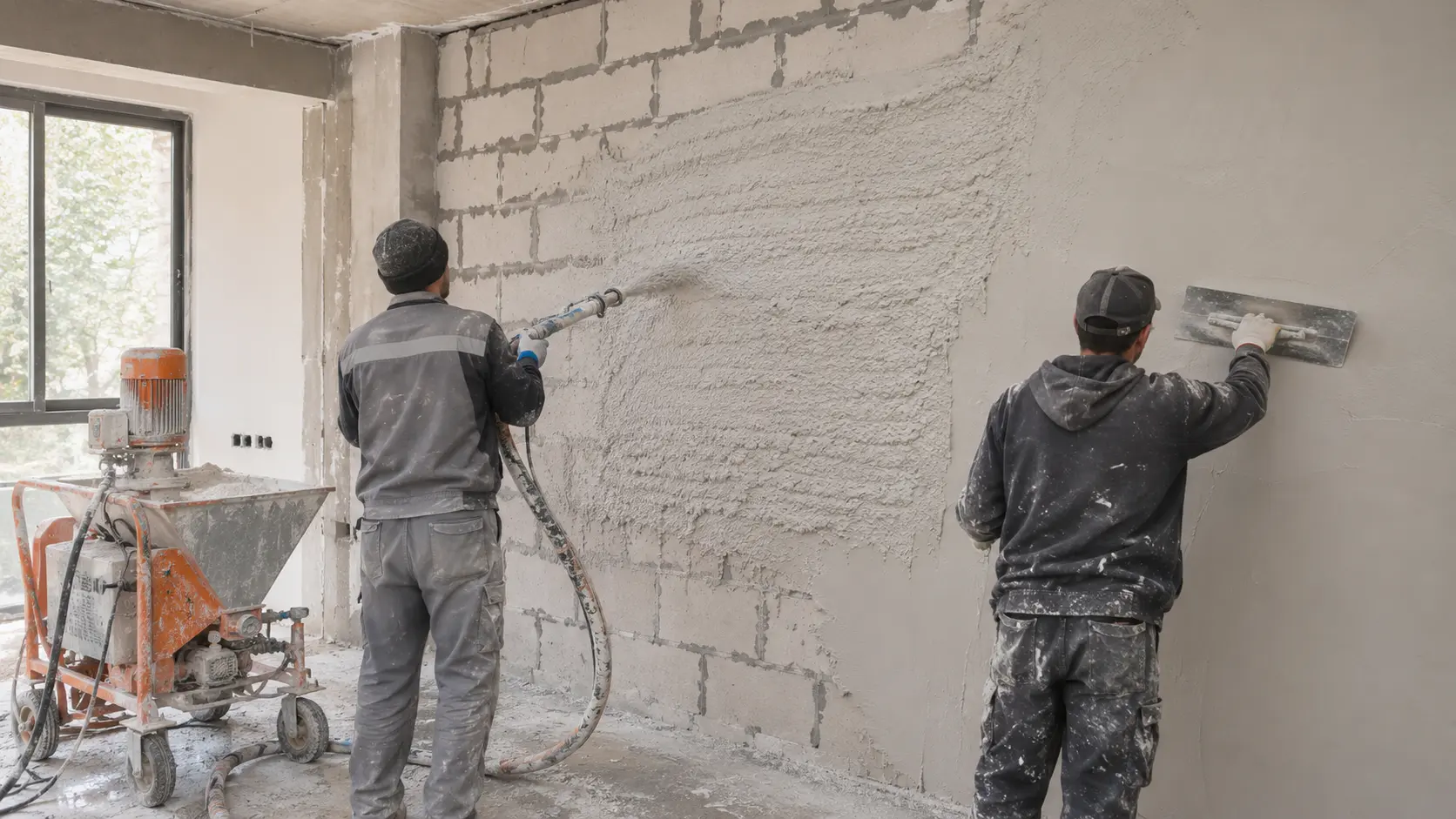
Anyone who has worked with machine-applied gypsum plaster knows how quickly a mix is put to the test. It passes through a mixing chamber, travels along a hose, and lands on a wall in a continuous layer. The plaster must be easy to pump and spray, yet still hold its shape well enough to be leveled and finished. HEMC in gypsum machine plaster helps formulators balance those demands.
HEMC, or hydroxyethyl methyl cellulose, is a water-soluble cellulose ether used in gypsum-based products. In spray plaster, it can help manage water retention, consistency and application feel. The right grade may support a smoother working mix, but the result depends on the gypsum binder, other ingredients, equipment and site conditions. That is why grade selection should be tested in the actual formulation rather than based on a viscosity number alone.
What Makes Machine-Applied Gypsum Plaster Different?
A hand-mixed plaster has time for gradual adjustment. A machine-applied product has to work within the mixer’s cycle and then remain stable as it moves through the pump and hose. If the powder does not wet and disperse evenly, the mix may develop dry pockets or lumps before it reaches the wall. If the fresh plaster is too thin, too sticky or poorly balanced, the applicator may struggle to build an even layer or smooth the surface.
The working window matters, too. After spraying, plasterers need enough time to level and finish the material, but the plaster must still set in line with the needs of the job. A formulation that feels acceptable in a bucket can behave differently under machine mixing and continuous spraying. For that reason, HEMC in gypsum machine plaster should be assessed under realistic mixing and application conditions.
How HEMC Supports Spray Plaster Performance
Water retention and consistency
Gypsum plaster can lose water to an absorbent substrate or through evaporation. HEMC helps the formulation retain water, which can support a more consistent working mix during application. This is particularly relevant when the product is sprayed onto substrates with different absorption rates or used in conditions that encourage faster moisture loss.
Water retention is only one part of the result. The plaster also needs a consistency that suits the machine and the wall. A well-selected cellulose ether can help build body and improve the way the wet mix spreads, while still allowing it to be pumped and sprayed. The objective is not simply to make the plaster thicker; it is to develop a balance between flow through the equipment and stability on the surface.
Application feel and finishing
A plasterer notices the mix through the whole job. It needs to land on the wall evenly, stay workable long enough to level and respond predictably to the finishing tools. HEMC can influence how the fresh plaster moves and feels during these steps, which is why formulators often evaluate application feel alongside laboratory measurements.
A mix that sprays well but drags during leveling can slow down finishing. One that feels smooth under a trowel but lacks enough standing strength may slip or sag. When testing HEMC for gypsum machine plaster, both stages matter: the material’s behavior as it leaves the nozzle and its workability after it has been applied.
Working time and setting behavior
HEMC can influence water movement and rheology, which may affect the practical working window. It should not be treated as a substitute for a setting retarder or accelerator. Gypsum binder characteristics and setting-control additives play their own roles, and changes to one part of the formula may affect how the whole mix performs.
A useful trial therefore tracks more than the initial spray. Formulators should note when the plaster can be leveled, when it becomes ready for further finishing and whether the surface develops as expected. The goal is a manageable application window that fits the product and job conditions, not simply the longest possible working time.
Controlling Lumps in Gypsum Machine Plaster
Lumps can be especially troublesome in spray plaster. Dry or partially wetted agglomerates may interfere with pumping, leave imperfections on the wall or make leveling less consistent. They can also create extra work if the applicator has to stop and remove material from the equipment or surface.
HEMC grade and powder properties can contribute to how quickly the additive disperses and dissolves, but lumps do not have a single cause. Water addition, mixing sequence, mixing time, powder distribution and the formulation’s other components all matter. A cellulose ether that performs well with one gypsum source or machine setup may need to be re-evaluated after a change to the raw materials or process.
If lumps appear, changing the dosage immediately may not solve the problem. First check whether the powder is being dispersed evenly, whether the mixing cycle is appropriate and whether the water feed is stable. Then compare candidate grades in the full dry mix. This makes it easier to see whether the issue comes from the additive, the process or the interaction between them.
Choosing an HEMC Grade for Gypsum Machine Plaster
Viscosity can help narrow the options, but it should not be the only selection criterion. Two grades with similar viscosity values may behave differently during dispersion, hydration and machine application. The right choice depends on the desired water retention, consistency, spray behavior, leveling and finishing performance.
Start by defining the problems the formulation needs to solve. Is the plaster difficult to pump, prone to lumping, too sticky during leveling or losing water too quickly on absorbent substrates? A clear target helps the team select relevant grades and compare them more efficiently.
Next, keep the gypsum binder and process in view. Gypsum sources, fillers and setting-control additives can change water demand and setting behavior. Machine type, hose length, water feed and mixing time also affect the results. A trial should use the same conditions expected in production or at the job site wherever possible.
MIKEM’s MelaColl HEMC range includes grades for gypsum-based construction formulations. Confirm the suitable grade against product documentation and application trials rather than assuming that one viscosity or dosage will work for every system. Review the MIKEM HEMC product information when comparing available options.

How to Test HEMC in a Spray Plaster Formulation
A useful evaluation should cover the entire application sequence. Begin with a controlled laboratory blend and observe whether the powder disperses evenly. Check the fresh mix for consistency, water demand and visible lumps, then assess whether it remains workable during the intended application window.
The next step is a machine trial. Record how the plaster moves through the equipment, whether the spray pattern is steady and whether the material adheres to the substrate as expected. After spraying, assess standing strength, leveling, stickiness and ease of finishing. If the product will be used on different substrates or in varied climates, repeat the trial under representative conditions.
Keep the formulation records clear. Note the gypsum source, HEMC grade and dosage, water amount, mixing time, machine settings and time between spraying and finishing. If a result changes, these details help identify what changed and prevent teams from drawing conclusions from a single test.
Common Selection Mistakes
A common mistake is choosing HEMC only by viscosity. Viscosity is useful, but it does not describe every feature that affects dissolution and spray performance. Testing the complete formulation gives a more reliable basis for selection.
Another mistake is evaluating the plaster only after hand mixing. Machine mixing and hose delivery introduce conditions that a bucket test cannot reproduce. A grade that appears suitable in the laboratory still needs to be checked in the equipment it is meant to run through.
Finally, avoid changing several formula variables at once. If the gypsum source, water level, retarder and HEMC grade all change together, it becomes difficult to tell which change improved or weakened the application. Adjusting one variable at a time makes the trial results more useful.
Preguntas frecuentes
What does HEMC do in gypsum machine plaster?
HEMC helps manage water retention and the fresh plaster’s consistency and workability. Its effect depends on the grade, dosage, gypsum binder and other formulation ingredients.
Can HEMC prevent all lumps in gypsum spray plaster?
No single additive can guarantee a lump-free mix under every condition. Grade properties matter, but dispersion, water addition, mixing time, machine setup and the rest of the formulation should also be checked.
Is a higher-viscosity HEMC grade always better?
No. The best grade depends on the performance target and processing conditions. A higher viscosity value does not automatically mean better sprayability, faster dissolution or easier finishing.
How should I compare HEMC grades?
Compare candidate grades in the complete dry mix, using the intended water level, mixing process and spray equipment. Assess both the fresh mix and the plaster’s behavior during leveling and finishing.
Selecting HEMC for Your Formulation
Good spray plaster depends on the balance between machine performance and work on the wall. HEMC can help support that balance, but the best result comes from matching the grade to the gypsum system, production process and application conditions.
MIKEM supplies MelaColl HEMC grades for gypsum-based construction formulations and can help customers review grade requirements. Share the gypsum type, target performance and processing conditions with the team to discuss an appropriate starting point and arrange evaluation samples.