HPMC in controlled-release tablets does more than hold a formulation together. As the tablet meets fluid, the polymer hydrates and forms a gel layer around the remaining dry core. That layer slows the movement of the drug into the surrounding medium, helping the formulation release its contents over time.
The result depends on more than the HPMC name on a specification sheet. Viscosity grade, polymer level, the drug’s solubility, other ingredients, and manufacturing conditions all influence how the tablet behaves. A grade that works well in one formulation may give a different release profile in another, even when the active ingredient and target release time appear similar.
That is why developers should evaluate HPMC as part of the whole matrix system. This article looks at how the polymer works, why grade matters, and what to consider during formulation and testing.
What HPMC Does in a Controlled-Release Tablet
Hydroxypropyl methylcellulose, commonly called HPMC or hypromellose, is a water-soluble cellulose ether used in pharmaceutical formulations. In a matrix tablet, the drug and HPMC are blended and compressed together. The polymer is distributed throughout the tablet rather than applied only as a coating.
When the tablet contacts an aqueous medium, HPMC at the surface hydrates and swells. The resulting gel layer creates a barrier between the tablet core and the surrounding liquid. Drug molecules can move through this hydrated layer, while the outer portion of the matrix may gradually erode. Depending on the formulation, release can involve diffusion, erosion, or a combination of both.
This process explains why the gel layer matters so much. If it forms too slowly, the tablet may release a large amount of drug early in the test. If the layer forms and holds together as intended, it can help moderate release as the tablet hydrates. HPMC’s performance therefore depends on how quickly it hydrates, how strong the gel becomes, and how the matrix changes during dissolution.
How HPMC Grade Influences Drug Release
Viscosity grade is a useful starting point
Pharmaceutical HPMC is available in different viscosity grades. Viscosity is often used as a practical indicator of polymer characteristics, including molecular weight, and it can help formulators compare grades. In many formulations, a higher-viscosity grade can form a stronger or more persistent gel layer and may slow release.
That pattern is useful, but it is not a universal rule. A higher-viscosity grade will not automatically produce the desired release profile in every tablet. The active ingredient, polymer concentration, excipient mix, and tablet structure can all change the outcome. Grade selection should be confirmed through dissolution testing rather than based on viscosity alone.
Hydration and substitution characteristics also matter
HPMC grades differ in more than the viscosity value printed on a product specification. Their substitution characteristics and hydration behavior can affect how the polymer interacts with water and develops the gel layer. These properties may influence swelling, gel strength, and how quickly the matrix erodes.
For a formulator, that means two grades with similar headline viscosity values should not automatically be treated as interchangeable. The best comparison comes from testing the grades in the intended formulation and under the relevant process conditions.
There is no single “best” viscosity grade
The right HPMC viscosity grade for sustained release depends on the formulation’s target. Some products need a relatively gradual release over a defined period; others need to avoid a rapid initial release while maintaining a reliable profile through the full test. A grade that creates an overly viscous blend or complicates processing may also be a poor fit, even if its release results look promising in a simple laboratory mixture.
A useful starting point is to define the target release profile, then screen suitable grades at more than one polymer level. This gives developers a clearer picture of how grade and concentration work together.
Match HPMC Selection to the Drug
The drug’s solubility in the dissolution medium is one of the factors that shapes release from HPMC matrix tablets. A highly soluble drug may move through the hydrated gel layer more readily. A less soluble drug may be released more gradually or be affected more strongly by changes in the tablet’s erosion behavior.
That difference matters when selecting the polymer level and grade. In some systems, developers may need to pay particular attention to early release. In others, the challenge may be maintaining a predictable profile as the tablet gradually hydrates and loses material. The same HPMC grade can behave differently when paired with drugs that vary in solubility, dose, or other physical properties.
The tablet’s full composition deserves the same attention. Fillers, binders, lubricants, and other excipients can affect how the tablet wets, swells, and maintains its structure. The active ingredient’s particle size and distribution can also influence formulation performance. Looking at HPMC in isolation may help with early screening, but it cannot replace evaluation of the complete tablet.
Polymer Concentration and Formulation Design
Choosing a grade is only one part of designing a controlled-release matrix. The amount of HPMC in the tablet can affect how continuous and resilient the gel layer becomes. A formulation with too little polymer may be more sensitive to changes in the surrounding conditions or the physical stresses applied during testing. Increasing the polymer amount may improve matrix integrity, though it can also affect tablet size, drug loading, and processing.
The relationship is formulation-specific. Research on HPMC matrices has shown that both viscosity and polymer amount can matter, particularly in formulations containing highly soluble, high-dose drugs. Those findings should be treated as a reason to evaluate the formulation carefully, not as a universal recipe. The polymer level needed for one active ingredient may not suit another.
Developers typically screen more than one HPMC level with more than one candidate grade. Early comparisons can help identify which combinations are worth taking into more complete dissolution and robustness studies. Keeping the other formulation variables controlled during initial screening makes those comparisons easier to interpret.
Processing Can Change the Outcome
A promising HPMC grade still needs to work in the chosen manufacturing process. Blend uniformity, particle characteristics, mixing conditions, granulation, drying, and compression can all affect the finished tablet. Differences in processing may influence how consistently the polymer is distributed and how the compact responds when it first meets water.
For example, development teams should consider whether the formulation is intended for direct compression or a granulation process. Each approach has its own demands on powder flow, mixing, and tablet formation. HPMC selection should fit the process, not just the desired dissolution curve.
It is also useful to keep the material’s handling requirements in view. HPMC is water-soluble, so moisture exposure and dispersion practices may affect processing behavior. A consistent approach to storage, sampling, blending, and batch documentation can help teams understand whether a change in release results comes from the polymer grade, the process, or another formulation variable.
Testing HPMC Matrix Tablets
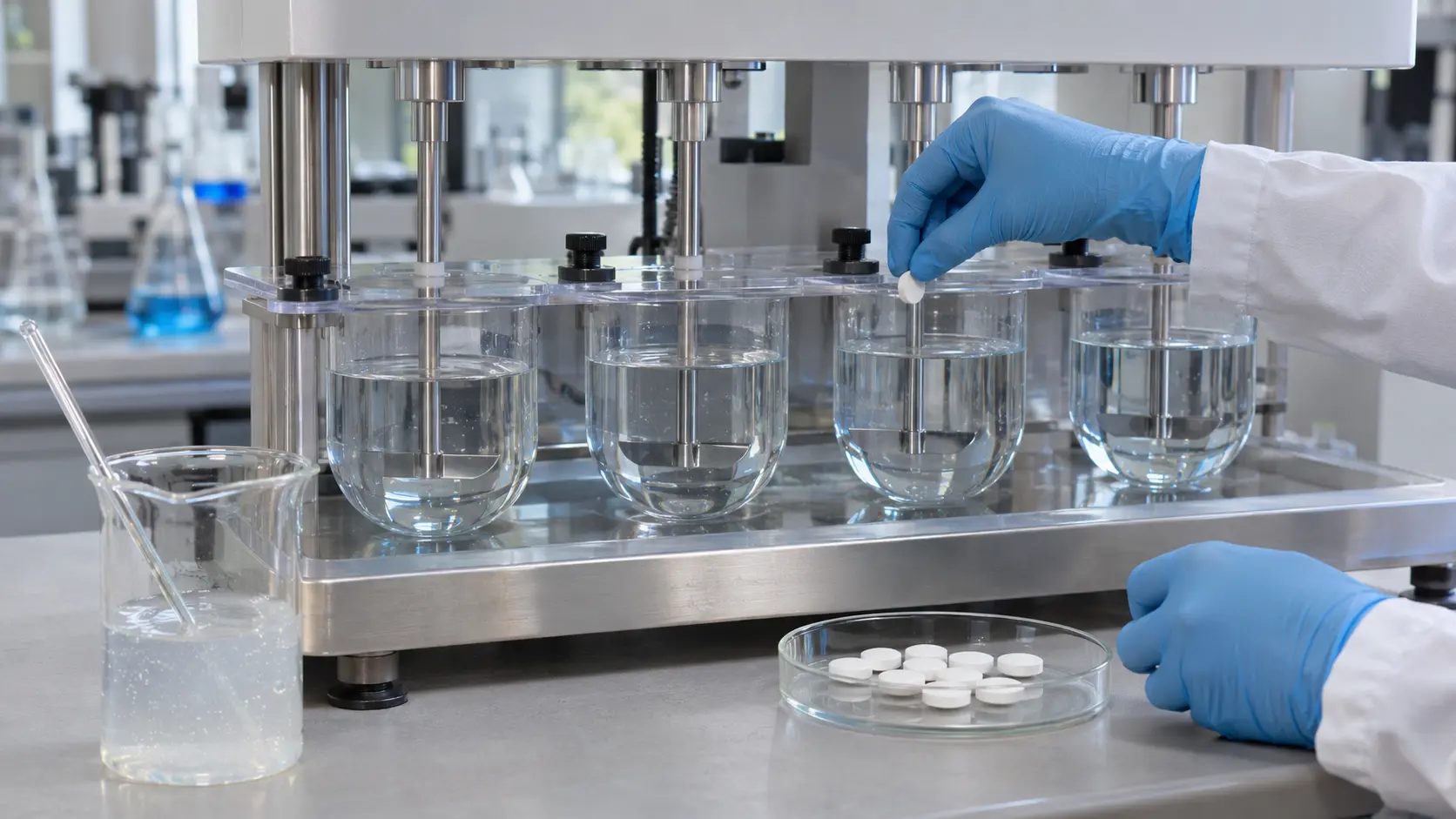
Dissolution testing is central to evaluating HPMC in controlled-release tablets. It helps show how the formulation releases drug over the test period and whether the profile remains consistent between batches or under different test conditions. A single early time point is not enough; developers need to review the full release curve and identify where meaningful changes occur.
Testing should reflect the questions the formulation team is trying to answer. A grade-screening study may compare release profiles across candidate HPMC viscosities and polymer levels. Later studies may examine the effects of agitation, media conditions, or mechanical stress on the matrix. The testing plan should be appropriate for the product and follow applicable development and quality requirements.
When a profile changes unexpectedly, it helps to review the full set of variables rather than switching HPMC immediately. Check the polymer specification and batch records, then consider blend uniformity, compression conditions, tablet dimensions, and dissolution setup. This makes troubleshooting more systematic and can prevent unnecessary formulation changes.
Common Mistakes When Choosing HPMC for Controlled Release
One common mistake is selecting a grade based only on its viscosity number. Viscosity is important, but it does not describe every property that can influence hydration, swelling, and release. Comparing grades in the intended formulation gives more useful evidence than relying on the specification alone.
Another mistake is changing the HPMC grade and polymer concentration at the same time. If both variables change, it becomes difficult to tell which one affected the release profile. Testing them in a structured way makes the results easier to interpret.
A third mistake is treating results from a model formulation as a guarantee of performance in the final tablet. The active ingredient, excipients, dose, and process can all shift the outcome. A grade that looks suitable at the screening stage still needs evaluation in the complete formulation.
Häufig gestellte Fragen
What is HPMC used for in controlled-release tablets?
HPMC is used as a matrix-forming polymer. It hydrates when exposed to fluid and forms a gel layer that can slow drug release through diffusion and matrix erosion.
Does a higher-viscosity HPMC grade always slow drug release?
No. Higher viscosity may contribute to a stronger or more persistent gel layer, but the effect depends on the active ingredient, polymer amount, other excipients, and manufacturing process. Confirm the grade’s performance through testing.
How do I choose an HPMC viscosity grade for sustained release?
Start with the target release profile and the active ingredient’s properties, including its solubility. Screen suitable grades at different polymer levels, then evaluate the most promising combinations in the complete tablet formulation.
Can one HPMC grade work for different controlled-release products?
Possibly, but each formulation needs its own assessment. Differences in drug properties, dosage, excipients, and processing can change how the matrix behaves.
Choosing Pharmaceutical-Grade HPMC with MIKEM
Reliable formulation work starts with a clear match between the product specification and the application. MIKEM supplies pharmaceutical-grade HPMC for uses that include controlled-release tablets, along with technical support for grade selection and formulation requirements. You can review the MIKEM pharmaceutical-grade HPMC page and contact the team to discuss viscosity range, target performance, and supply needs.
For HPMC in controlled-release tablets, the right choice is the one that performs consistently in the complete formulation and manufacturing process. Define the target profile, compare suitable grades, and verify the results with dissolution testing before moving toward production.