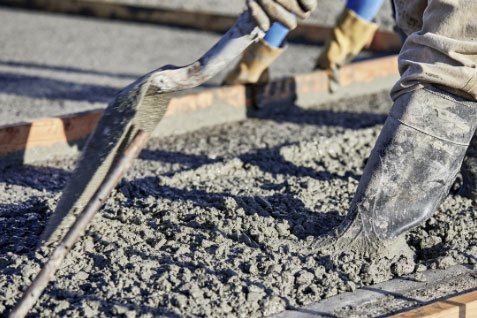
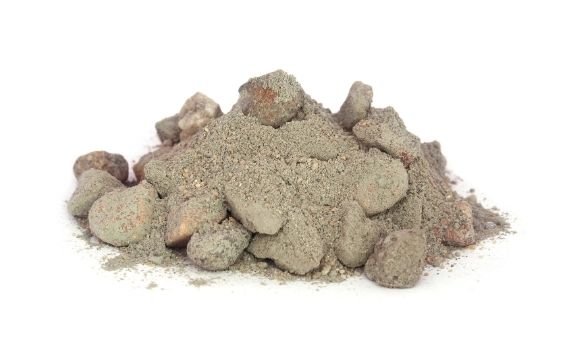
Recycled aggregate concrete can be a practical way to reuse processed concrete and construction waste, but it often takes more work to make fresh batches behave consistently. A mix may leave the plant with an acceptable slump, then become stiff before placement. In other cases, adding water to recover flow can affect the intended water-to-cement ratio and the concrete’s final properties.
A polycarboxylate superplasticizer in recycled aggregate concrete can help control this challenge. It disperses cement particles and supports flow at a lower water content. But the admixture cannot compensate for every change in aggregate quality. Recycled aggregate grading, absorption, moisture condition and fine content all influence how a mix performs. Reliable results come from matching the admixture to the materials and validating the mix through trials.
Why Recycled Aggregate Concrete Can Lose Workability
Recycled concrete aggregate differs from natural aggregate because it may carry remnants of old cement paste or mortar. These attached materials can make the particles more porous and absorbent. If their moisture condition is not measured and accounted for, they can draw water from the fresh mix, reducing the water available for cement hydration and particle movement.
The material can also vary from one batch to another. Its source, processing method, particle size distribution and proportion of fine particles all affect concrete behavior. A mix made with one recycled aggregate may retain slump well, while a mix made with another requires changes to its water correction or admixture strategy.
This variability is why recycled aggregate concrete mix design needs more than a standard water adjustment. Producers need to understand the aggregate’s condition before batching and observe how the complete mix performs over time.
What a Polycarboxylate Superplasticizer Does
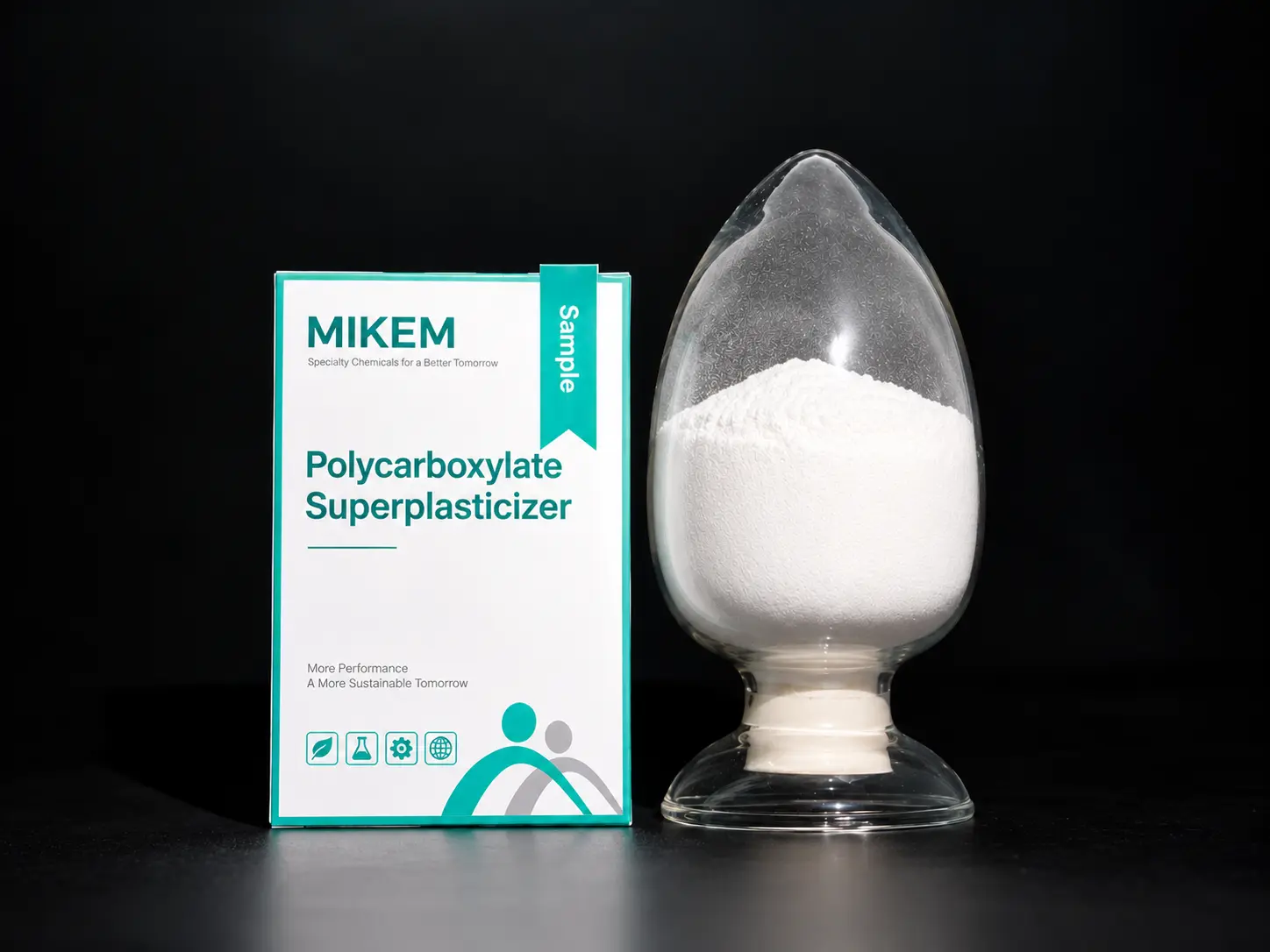
Polycarboxylate superplasticizers, often called PCEs, are high-range water-reducing admixtures. They help disperse cement particles so that a concrete mix can flow more easily without relying on extra water. Depending on the product and formulation, a PCE may be selected to support high initial flow, water reduction, or better slump retention.
For recycled aggregate concrete, that flexibility is useful. A well-matched PCE can help achieve the required workability while keeping the water content under control. This matters in ready-mix operations, where concrete may need to remain workable during transport, and in precast production, where consistent placement and compaction are important.
However, PCE performance depends on the entire cementitious system. Cement type, supplementary cementitious materials, aggregate fines and recycled concrete powder can affect admixture adsorption and dispersion. A product that works well with one combination of materials may not behave the same way with another.
Why PCE Compatibility Matters in Recycled Mixes
Recycled aggregate concrete should not be treated as a single standardized material. Aggregate characteristics and replacement levels can change the response to a superplasticizer. Experimental studies have found that PCE compatibility can differ with recycled fine aggregate size and composition; in one test series, a developed PCE performed better than a conventional option under comparable slump conditions. These results illustrate why trial testing matters, but should not be treated as a universal performance guarantee.
Recent work on fully recycled aggregate concrete has also examined combined admixture systems designed to address absorption and slump retention. The practical lesson is to tailor the admixture approach to the mix rather than assuming that increasing the dosage of a standard PCE will solve every workability problem. Results from an individual study apply to its materials and test conditions, not automatically to every commercial mix.
For concrete producers, the takeaway is straightforward: assess the aggregate, choose an appropriate PCE performance profile, then verify both initial workability and retention in the intended mix.
How to Use PCE in Recycled Aggregate Concrete Mix Design
1. Characterize the recycled aggregate
Before adjusting admixture dosage, review the recycled aggregate’s source, grading, absorption and moisture condition. Check the proportion of fines and look for batch-to-batch changes. If aggregate characteristics shift, the mix may need to be retested even when the nominal replacement rate stays the same.
2. Correct for aggregate moisture
Account for the water already present in the aggregate and the water it may absorb during mixing. Dry recycled aggregate can take up part of the mix water, while aggregate close to a saturated surface-dry condition behaves differently. A consistent moisture-correction procedure helps prevent workability changes that might otherwise be misattributed to the PCE.
3. Establish a control mix
Prepare a reference batch using the intended cementitious materials and natural aggregate, if applicable. Then substitute recycled aggregate at the planned replacement level and compare the mixes. This gives the producer a clearer picture of what the recycled material changes: initial slump, cohesion, slump loss, bleeding or strength development.
4. Adjust the PCE through trials
Follow the admixture supplier’s product guidance, then test a practical dosage range with the actual materials. Avoid treating a higher dosage as an automatic fix. The most suitable dosage is the one that delivers the required performance without causing segregation, excessive bleeding or an impractical setting profile.
5. Measure slump retention over time
An initial slump reading is only part of the picture. Record workability at batching and at intervals that reflect the actual delivery or production cycle. For ready-mix concrete, that may include checks around the expected transport and placement window. Also observe cohesion and signs of segregation; a high slump is not useful if the mix becomes unstable.
6. Check hardened concrete performance
After fresh-state testing, assess compressive strength and any other properties required by the project specification. If the concrete is intended for structural or regulated work, the mix must meet the relevant design, code and approval requirements. The admixture is one part of a verified mix design, not a replacement for it.
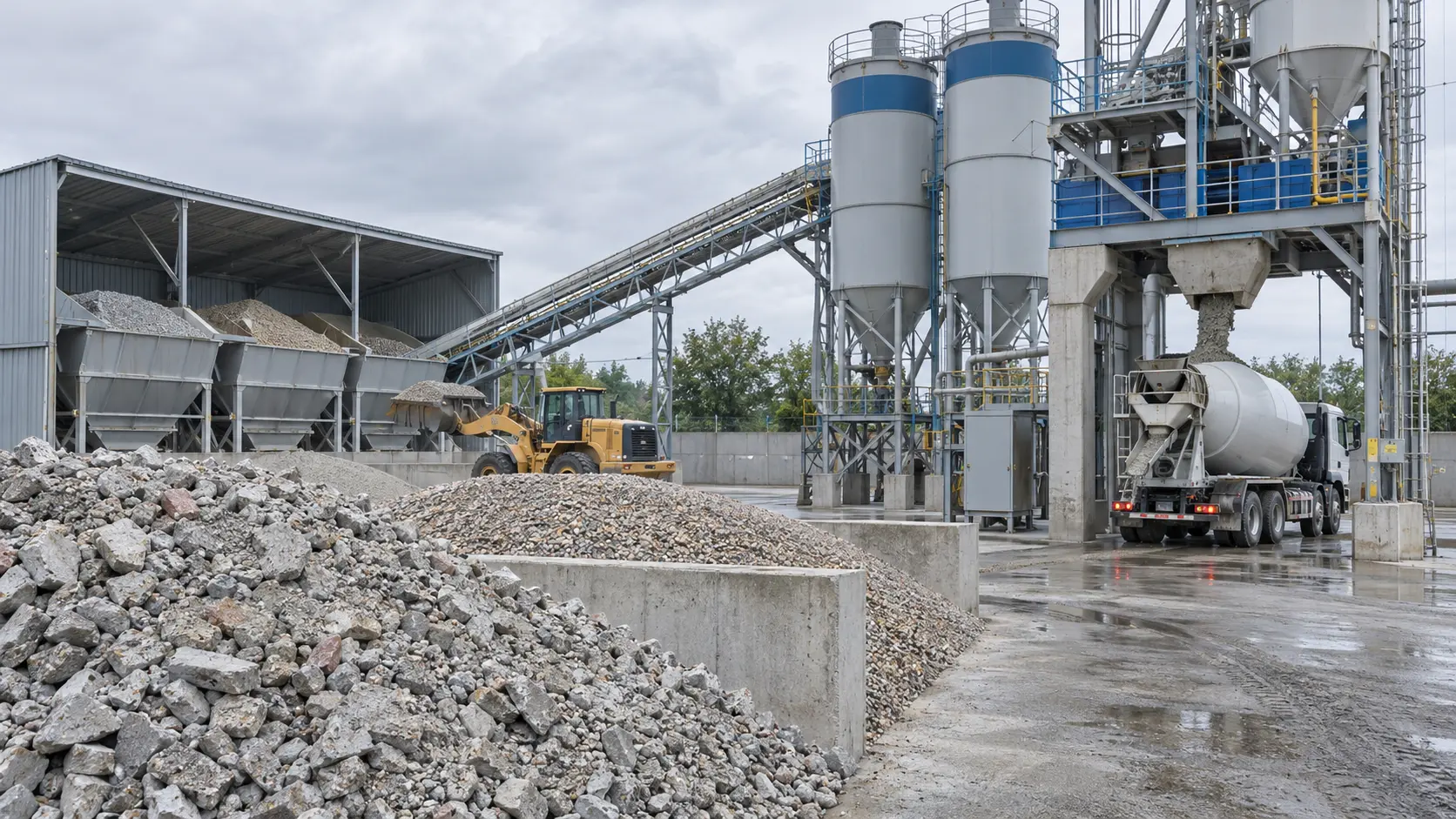
Choosing a PCE Superplasticizer for Recycled Concrete
When selecting a PCE superplasticizer for recycled concrete, consider the performance target and the production process together. A ready-mix producer may prioritize workability retention during transport, while a precast plant may focus on repeatable flow, filling and compaction. A product should be evaluated with the cement, supplementary materials and aggregate that will actually be used.
Ask for technical guidance on product form, dosage range, addition sequence and compatibility testing. Liquid PCE products are commonly considered in ready-mix concrete production, while powder products may suit other manufacturing or dry-mix requirements. The right choice depends on how the material is batched and the performance the concrete must achieve.
MIKEM offers polycarboxylate superplasticizer products for construction applications. For a recycled aggregate project, discuss the aggregate source, target slump, retention period and mix materials with the manufacturer so that product trials can be planned around the real formulation.
Common Workability Problems and What to Check
| Mix issue |
Possible factors to review |
| Slump is low immediately after mixing |
Aggregate moisture correction, grading, fines, mixing sequence and PCE compatibility |
| Slump falls quickly |
Aggregate absorption, recycled aggregate condition, temperature, cementitious materials and PCE retention profile |
| Mix feels harsh or lacks cohesion |
Grading, paste volume, water correction and admixture balance |
| Bleeding or segregation occurs |
Excessive fluidity, dosage, aggregate grading and the overall mix proportions |
These are starting points for troubleshooting, not substitutes for testing. Change one factor at a time where practical and record the effect on the fresh and hardened concrete.
Часто задаваемые вопросы
Can polycarboxylate superplasticizer improve recycled aggregate concrete workability?
It can improve flow and help reduce water demand when it is compatible with the cementitious materials and recycled aggregate. The result depends on aggregate quality, moisture condition, grading and mix proportions, so it should be confirmed through trials.
Does a PCE eliminate the need to correct recycled aggregate moisture?
No. Moisture correction remains important because recycled aggregate can absorb water differently from natural aggregate. A PCE can support workability, but it does not replace accurate batching and aggregate moisture management.
Should I increase the PCE dosage if slump drops too quickly?
Not automatically. First check aggregate moisture, absorption, fines, cementitious materials, temperature and mixing procedure. If testing shows that the admixture is not providing the needed retention, evaluate a more suitable PCE option or adjust the formulation with technical guidance.
Can recycled aggregate concrete meet strength requirements?
It can be designed to meet specified performance requirements, but results depend on the recycled material, replacement level, mix design and production controls. Strength and other required properties need to be verified through testing for the intended application.
Is one PCE product suitable for every recycled aggregate source?
No. Different sources and processing methods can produce aggregates with different absorption, grading and fine content. A PCE that works well in one mix may require adjustment or a different performance profile in another.
Building a More Consistent Recycled Aggregate Mix
Polycarboxylate superplasticizer can help make recycled aggregate concrete workable while supporting controlled water use. Its performance depends on how well it matches the aggregate, cementitious materials and production process. Characterize the recycled material, correct for moisture, test slump retention and confirm hardened properties before adopting the mix at scale.
MIKEM manufactures construction chemicals, including polycarboxylate superplasticizers. Share your target application and mix requirements with the MIKEM team to discuss product selection and testing for recycled aggregate concrete.