Methylcellulose (MC), auch bekannt als Methylcellulose oder Lebensmittelzusatzstoff E461, ist ein Celluloseether, der aus natürlicher pflanzlicher Cellulose gewonnen wird. Er wird durch chemische Modifizierung von Cellulose mittels eines Veretherungsprozesses hergestellt, wobei Methylgruppen in die Molekülstruktur eingeführt werden.
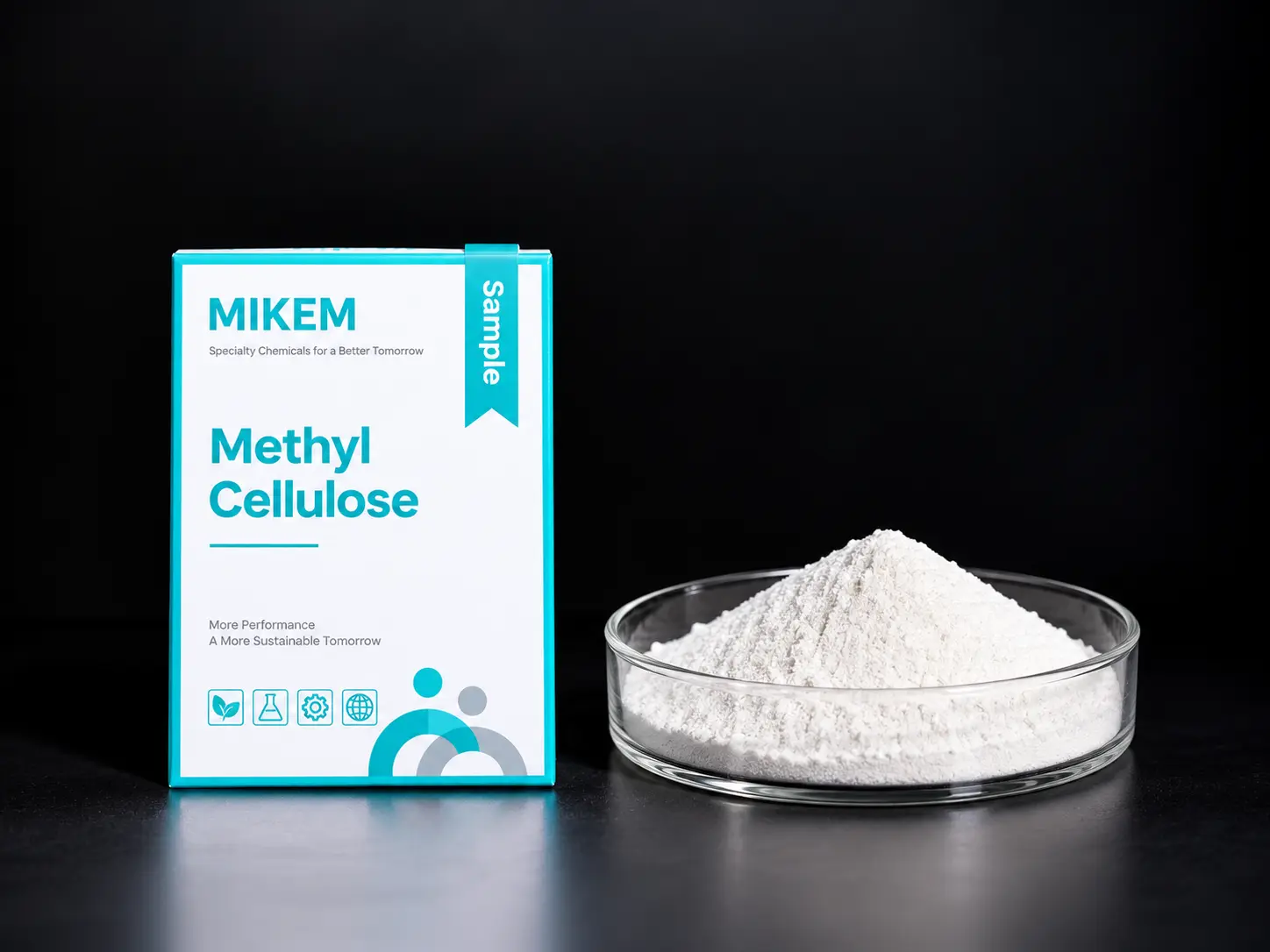
Das Ergebnis ist ein weißes oder cremeweißes Pulver mit hervorragenden Verdickungs-, Bindungs-, Wasserretentions-, Filmbildungs- und Emulgiereigenschaften. Bei ordnungsgemäßer Dispergierung und Auflösung in Wasser bildet Methylcellulose eine viskose Lösung. Eine seiner charakteristischsten Eigenschaften ist sein thermisches Gelierungsverhalten: Seine wässrige Lösung kann beim Erhitzen ein Gel bilden und beim Abkühlen wieder in den flüssigen Zustand zurückkehren.
Diese Eigenschaften machen Methylcellulose zu einer vielseitigen funktionellen Zutat in der Lebensmittelverarbeitung, in pharmazeutischen Formulierungen, Baustoffen, Körperpflegeprodukten und anderen industriellen Anwendungen.
Für Hersteller ist Methylcellulose mehr als nur ein einfaches Verdickungsmittel. Es trägt zur Verbesserung der Produktkonsistenz, der Verarbeitungsleistung und der physikalischen Eigenschaften fertiger Formulierungen bei.
Wichtige Eigenschaften und Vorteile von Methylcellulose
Warum ist Methylcellulose in verschiedenen Branchen weit verbreitet? Ihr Wert ergibt sich aus mehreren funktionellen Eigenschaften, die Herstellern helfen, gängige Formulierungsherausforderungen zu lösen.
Hervorragende Verdickungsleistung
Methylcellulose erhöht die Viskosität wässriger Systeme und hilft Herstellern, die gewünschte Dicke und Textur zu erzielen. Sie ist besonders nützlich in Saucen, Füllungen, Beschichtungen und anderen Formulierungen, die eine kontrollierte Konsistenz erfordern.
Thermische Gelierung
Im Gegensatz zu vielen herkömmlichen Verdickungsmitteln zeigt Methylcellulose eine thermisch reversible Gelierung. Ihre Lösung kann beim Erhitzen ein Gel bilden und beim Abkühlen in den flüssigen Zustand zurückkehren. Diese Eigenschaft ist besonders wertvoll in der Lebensmittelverarbeitung und bei der Entwicklung hitzeempfindlicher Formulierungen.
Wasserretention
Methylcellulose trägt zur Feuchtigkeitsretention in geeigneten Formulierungen bei. In Lebensmitteln kann dies die Textur und Verarbeitungsstabilität unterstützen. In Baustoffen kann sie dazu beitragen, die Feuchtigkeit während der Anwendung zu erhalten.
Bindung und Adhäsion
Ihre Bindeeigenschaften helfen, Inhaltsstoffe oder Partikel zusammenzuhalten. Dies macht Methylcellulose nützlich in Lebensmitteln, pharmazeutischen Formulierungen und ausgewählten Bauanwendungen.
Filmbildungsvermögen
Methylcellulose kann nach dem Trocknen flexible, transparente Filme bilden. Diese Eigenschaft unterstützt Beschichtungs-, Oberflächenschutz- und filmbezogene Anwendungen.
Emulgierung und Stabilisierung
Methylcellulose kann zur Stabilisierung geeigneter Formulierungen beitragen, indem sie die Viskosität verbessert und die Verteilung der Inhaltsstoffe unterstützt, wodurch unerwünschte Trennung reduziert wird.
Die tatsächliche Leistung hängt von der Viskositätsklasse, den Substitutionseigenschaften, der Konzentration, den Verarbeitungsbedingungen und der Kompatibilität mit anderen Inhaltsstoffen ab.

Hauptanwendungen von Methylcellulose in verschiedenen Branchen
Methylcellulose wird in vielen Branchen eingesetzt, da ihre funktionellen Eigenschaften an unterschiedliche Produktionsanforderungen angepasst werden können.
Methylcellulose in der Lebensmittelindustrie
Methylcellulose wird unter der Bezeichnung E461 häufig als Lebensmittelzusatzstoff verwendet. Sie dient als Verdickungsmittel, Stabilisator, Bindemittel und Texturierungsmittel.
Häufige Anwendungen umfassen:
- Pflanzliche Fleischalternativen: Hilft, Inhaltsstoffe zu binden und die Produktstruktur zu erhalten, insbesondere während des Erhitzens.
- Backwaren: Unterstützt die Teigverarbeitung, die Textur und die strukturelle Stabilität in ausgewählten Backwarenformulierungen.
- Saucen und Dressings: Hilft, die Viskosität zu kontrollieren und eine gleichbleibende Textur zu erhalten.
- Tiefkühlkost: Unterstützt die Produktstruktur und -textur während des Gefrier- und Erhitzungsprozesses.
- Verarbeitete Lebensmittel: Bietet Bindungs- und Verdickungsfunktionen in verschiedenen Lebensmittelsystemen.
- Füllungen und Desserts: Hilft, die Konsistenz und Formulierungsstabilität zu verbessern.
Eine besonders nützliche Eigenschaft ist die thermische Gelierung. Beim Erhitzen kann Methylcellulose ein Gel bilden, das Lebensmittelprodukten hilft, ihre Form und Struktur während des Kochens zu erhalten.
Für Lebensmittelhersteller ist die Auswahl der richtigen lebensmittelechten Methylcellulose unerlässlich. Viskosität, Reinheit, Hydratationsverhalten und regulatorische Konformität sollten alle berücksichtigt werden.
Methylcellulose in der pharmazeutischen Herstellung
Methylcellulose wird auch als pharmazeutischer Hilfsstoff verwendet. Ein Hilfsstoff ist ein Inhaltsstoff, der die Herstellung, Stabilität oder physikalischen Eigenschaften einer pharmazeutischen Formulierung unterstützt.
Je nach Qualität und Formulierung kann Methylcellulose dienen als:
- Bindemittel: Hilft, die Kohäsion in geeigneten Tablettenformulierungen zu verbessern.
- Verdickungsmittel: Passt die Viskosität von flüssigen und halbfesten Zubereitungen an.
- Filmbildner: Unterstützt die Bildung von Filmen und Beschichtungen.
- Stabilisator: Hilft, die physikalische Konsistenz geeigneter Formulierungen zu erhalten.
Pharmazeutische Hersteller sollten besonders auf Produktreinheit, Viskositätskonsistenz, Feuchtigkeitsgehalt und geltende Arzneibuchanforderungen achten.
Es ist auch wichtig, Methylcellulose (MC) von Hydroxypropylmethylcellulose (HPMC) zu unterscheiden. Obwohl beide Celluloseether sind, haben sie unterschiedliche chemische Strukturen und funktionelle Eigenschaften. HPMC wird häufig in pharmazeutischen Kapselhüllen verwendet, während MC ihre eigenen spezifischen Hilfsstoffanwendungen hat.
Methylcellulose in Baustoffen
In Bauanwendungen kann Methylcellulose als Wasserretentionsmittel, Verdickungsmittel, Bindemittel und filmbildender Zusatzstoff fungieren.
Typical application areas include:
- Cement-based mortars
- Wall coatings and surface finishing materials
- Adhesive formulations
- Selected gypsum-based materials
Its water-retention and thickening properties can help improve workability and application consistency.
However, the suitability of MC depends on the formulation. For many modern dry-mix mortar systems, HPMC and HEMC are more commonly selected cellulose
ethers. Manufacturers should evaluate the appropriate cellulose ether rather than treating MC and HPMC as interchangeable products.
Methylcellulose in Home and Personal Care
Methylcellulose can also be used in selected personal care and household formulations.
Its thickening, film-forming and stabilizing properties make it suitable for applications such as:
- Personal care gels
- Creams and lotions
- Cleansing formulations
- Other water-based cosmetic systems
The appropriate grade depends on the desired viscosity, texture, compatibility and processing conditions.

Methylcellulose vs. HPMC: What Is the Difference?
| Comparison |
Methylcellulose (MC) |
HPMC |
| Chemical structure |
Methyl-substituted cellulose |
Methyl- and hydroxypropyl-substituted cellulose |
| Thermal behavior |
Thermally reversible gelation |
Thermal gelation with grade-dependent behavior |
| Main functions |
Thickening, binding, gelation |
Thickening, water retention, binding and film formation |
| Food applications |
Meat alternatives, sauces, bakery products |
Bakery, sauces, coatings and processed foods |
| Construction applications/td> |
Selected formulation systems |
Widely used in dry-mix mortars |
| Pharmaceutical applications |
Selected excipient applications |
Tablets, coatings and capsule shells |
Why Choose MIKEM for Methylcellulose?
Choosing the right methylcellulose manufacturer is an important part of maintaining product quality and production efficiency.
MIKEM is a specialty chemical manufacturer with product capabilities serving the food and beverage, building and construction, pharmaceutical intermediates, and home and personal care industries.
Our focus is on manufacturing capability, product quality and application-oriented customer support.
Manufacturing-Oriented Quality Control
We focus on controlled production processes and quality management to support consistent product specifications and dependable performance.
Application-Based Product Selection
Different industries have different requirements. MIKEM supports customers in identifying suitable chemical products according to their formulation needs and intended applications.
Professionelle technische Unterstützung
Our team helps customers understand product characteristics, technical specifications and application considerations to make the selection process more efficient.
Flexible Business Cooperation
We work with customers to discuss product specifications, packaging requirements and cooperation arrangements based on their individual business needs.
For manufacturers looking for a reliable methylcellulose source, MIKEM aims to provide more than a product quotation. We focus on building long-term cooperation through manufacturing, quality and technical support.
Frequently Asked Questions About Methylcellulose
Q1: What is methylcellulose mainly used for?
Methylcellulose is mainly used as a thickener, binder, stabilizer, water-retention agent and film-forming ingredient. Its applications include food processing, pharmaceutical manufacturing, construction materials and personal care products.
Q2: Is methylcellulose the same as HPMC?
No. Both are cellulose ethers, but their chemical structures and functional properties differ. HPMC contains both methyl and hydroxypropyl groups, while methylcellulose primarily contains methyl groups.
Q3: What is E461 in food products?
E461 is the food additive identification number for methylcellulose. It is used as a functional ingredient for thickening, stabilizing, binding and modifying food texture, subject to applicable food regulations.
Q4: Does methylcellulose dissolve in water?
Methylcellulose can form aqueous solutions, but its dispersion and dissolution behavior depend on temperature and processing conditions. It is generally dispersed in hot water and dissolved upon cooling.
Q5: How do I select the correct methylcellulose viscosity?
The appropriate viscosity depends on the desired thickness, processing conditions and final product performance. Manufacturers should evaluate viscosity specifications alongside concentration, hydration and application requirements.
Q6: What should I check when purchasing methylcellulose?
Important factors include viscosity, purity, moisture content, application suitability, relevant regulatory documentation, packaging and batch consistency.
Q7: Can methylcellulose be used in construction materials?
Yes. It can provide thickening, water-retention and binding functions in selected construction formulations. However, HPMC and HEMC are more commonly used in many modern dry-mix mortar systems.
Looking for a Reliable Methylcellulose Manufacturer?
The right methylcellulose grade can make a meaningful difference in formulation performance, production efficiency and finished product quality.
Whether you are developing a food formulation, pharmaceutical product or industrial application, choosing a manufacturer with reliable production capabilities and technical support is an important step.
MIKEM is ready to discuss your methylcellulose requirements and help identify a suitable product solution.
Contact our team today for product specifications, technical information and a quotation.