

MIKEM supplies food-grade Sodium Carboxymethyl Cellulose (CMC), a versatile thickener and stabilizer for bakery products, beverages, dairy applications, sauces, and processed foods. Our CMC solutions help manufacturers improve viscosity control, texture consistency, and formulation stability.
LEBENSMITTELZUSATZSTOFFE
Sodium Carboxymethyl Cellulose Manufacturer
PRODUKTÜBERSICHT
Sodium Carboxymethyl Cellulose for Food Formulations
Sodium Carboxymethyl Cellulose (CMC), also known as Cellulose Gum or Sodium CMC, is a water-soluble anionic cellulose derivative widely used as a thickener, stabilizer, and texture modifier in food formulations. Food-grade CMC helps control viscosity, improve water retention, stabilize suspended ingredients, and enhance texture consistency across a wide range of food applications.
MIKEM supplies Sodium Carboxymethyl Cellulose for food manufacturers seeking consistent product quality, appropriate viscosity grades, and application-oriented technical support.

CORE FUNCTIONS
Performance Built Into Every Formulation
CORE-USE MARKETS
Anwendungen über Lebensmittelsysteme hinweg

Backwaren & mehlbasierte Lebensmittel
Helps improve texture and moisture retention and may support shelf-life stability

Getränke
Provides viscosity and suspension stability.

Dairy & Frozen Desserts
Enhances texture, smoothness and stability.

Saucen, Dressings & Würzmittel
Improves consistency and prevents separation.

Verarbeitete Lebensmittel
Supports texture, stability and moisture control.

Pflanzliche Lebensmittel
Helps optimize texture and water retention.
WHY PARTNER WITH MIKEM
Mehr als ein Chemikalienlieferant



MANUFACTURING EXCELLENCE
Konzipiert für zuverlässige Lieferung und gleichbleibende Qualität
From production control and batch consistency to application-focused support, MIKEM helps food manufacturers source CMC with confidence.


LET’S WORK TOGETHER
Looking for a Reliable Sodium Carboxymethyl Cellulose Manufacturer?
Talk with MIKEM about product grades, technical support, and sourcing solutions for your food formulations.
Häufig gestellte Fragen
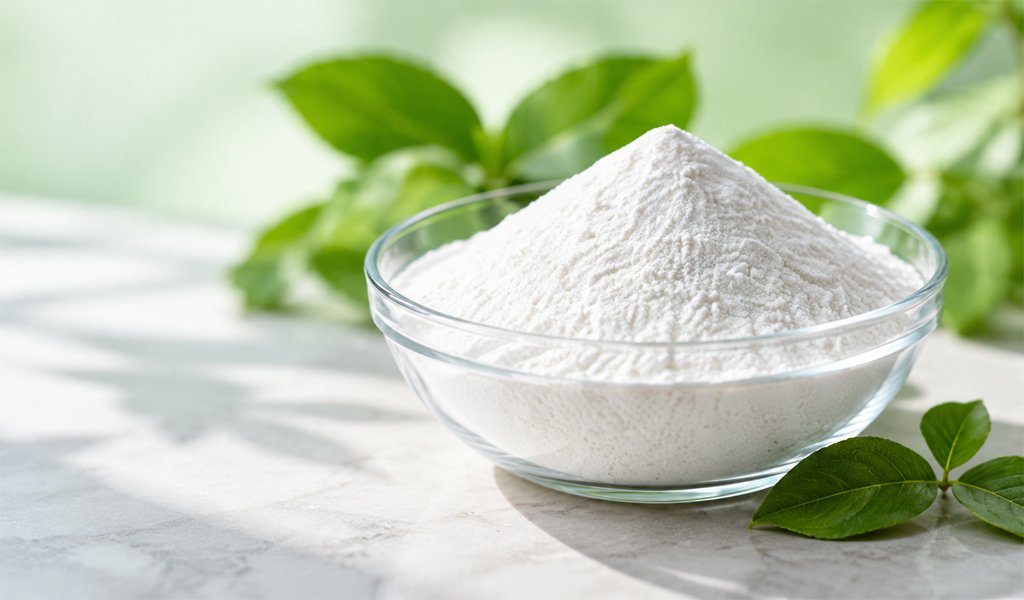
Sodium Carboxymethyl Cellulose (CMC) is a water-dispersible, anionic cellulose ether derived from cellulose. It is typically a white or milky-white fibrous powder or granule that is odorless, tasteless, and hygroscopic. In food formulations, CMC is widely used as a thickener, stabilizer, water-retention agent, and suspension agent.
Food-grade CMC serves several important functions, including thickening, water retention, suspension, adhesion, and stabilization. It helps control viscosity, improve texture and mouthfeel, reduce moisture separation, and maintain the consistency of various food products.
CMC provides effective thickening at relatively low concentrations, helping control the viscosity and improve the smoothness and lubricity of food products. It can also improve the texture and processing performance of starch-based foods, including noodles, bread, and frozen snacks.
CMC can help improve moisture retention, reduce syneresis, and maintain texture consistency during storage. These functions may contribute to better product quality retention. However, any shelf-life extension should be verified through product-specific stability and microbiological testing.
Yes. Food-grade CMC can be used in selected dairy and plant-based beverage formulations to support viscosity control and physical stability. In acidic protein-containing systems, suitable CMC grades may help reduce protein aggregation and sedimentation. Performance depends on pH, protein composition, CMC grade, and processing conditions.
Yes. CMC is used in noodles, bread, and quick-frozen snacks to improve adhesion, control paste viscosity, and support texture and processing performance. It may also be combined with suitable emulsifiers, konjac gum, or phosphates to achieve specific formulation objectives.
Yes. CMC provides suspension-supporting capacity in many food systems, helping maintain the distribution of dispersed ingredients. According to MIKEM’s product information, CMC can also work synergistically with agar in suitable formulations.
CMC has a high molecular weight and contains hydrophilic groups, including carboxyl and hydroxyl groups. These characteristics enable it to retain water and help reduce dehydration, shrinkage, and moisture separation in suitable food applications.
KONTAKTIEREN SIE UNS
Aufbau einer zuverlässigeren chemischen Lieferkette
Teilen Sie uns mit, wonach Sie suchen. Unser Team wird sich so schnell wie möglich bei Ihnen melden.